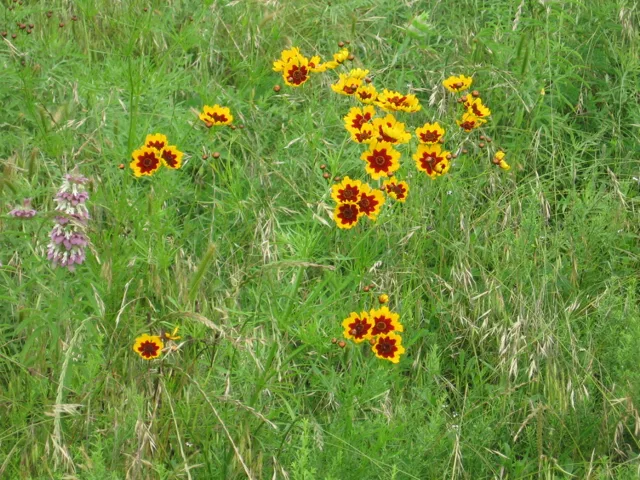
“Native plants give us a sense of where we are in this great land of ours. I want Texas to look like Texas and Vermont to look like Vermont.”, “Lady Bird” Johnson
Many people when hearing about native plants, wonder what it means and why it is important. It is a great question, one that involves many facets.
Native plants in North America are plants that were in a geographic area prior to European settlement. These plants have survived for thousands of years, and have evolved and adapted to our weather, soil types, topography, and many other variables. As part of their adaption, they have coexisted with other flora and fauna in our intricate and highly interconnected ecosystems.
Surviving in the unique conditions of an area makes native plants more resilient than non-native species. Below are the top 10 benefits of using plants native to North Texas:

- Increases scenic and property value. Native plant’s beauty increases scenic values, and when done effectively, also enhances property values. As awareness of the environment increases, so does the public’s desire to do their part. A National Association of Realtors survey found that nearly 90% of home buyers considered environmentally friendly features important in their buying decision.
- Less overall maintenance. Once established, native plants require less cost and effort to maintain. They were here long before us, so they do not require as much coddling as introduced species. A study found that a native landscape over the long-term costs half as much as a traditional manicured lawn with non-native plants.
- Provides habitat and food for wildlife. Whether you are looking to entice birds to your backyard or create a thriving sanctuary on your ranch, native plants provide a biologically rich and diverse assortment of resources for wildlife. Birds, insects, and other wildlife benefit from them as a food source, shelter, and nesting material. By using plants of varied sizes and heights in your landscape, you can create the range of options necessary for wildlife to flourish.
- Lowers water requirements. Native plants typically need less water to survive and prosper than non-native plants. This is primarily due to robust root systems that better utilize the moisture available in the soil. Our environment benefits from the reduced stress on our water supply and as homeowners, we benefit from the lower water bills. According to an EPA study, by converting even parts of your yard to native plants, you can reduce your outdoor water usage by 20 – 50%.
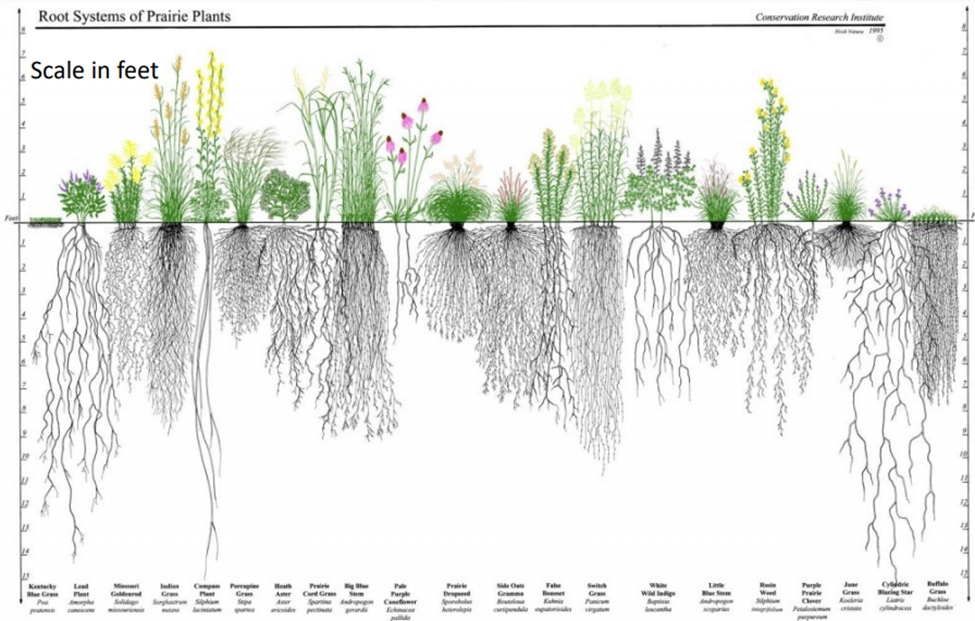
- Prevents erosion. When we get too much rain, native plants help to absorb the excess water with their deeper root systems and also hold the soil in place. Their deeper roots reduce water runoff and erosion. Some native plant root systems are up to 15 feet deep.
- Fertilizers are not required. Native plants have thrived for eons without the help of humans, adapting to the area’s soil composition for their needs. By utilizing native plants, you do not need to use fertilizers. Thus, helping both the environment and your bank account.
- Fewer diseases. Their time evolving to an area makes native plants much more resilient to diseases than exotic plants. It results in less time and money for you in treating diseases. Non-natives are often more vulnerable to diseases, such as Crepe Myrtle bark scale or Rose Rosette disease.
- No pest control necessary. As part of an intricate balanced local ecosystem, native plants have adapted to provide for insects, such as butterflies, but also defend their survival against other insects. Non-natives provide neither the benefits nor have the defenses to protect themselves against aggressive infestations. This results in the need to provide costly pest control measures to save these plants. Natives are more resilient, requiring no pesticides for their survival.
- Plant diversity. Paraphrasing Lady Bird Johnson, using native plants in your landscape helps make Texas look like Texas, not like California or New York. Big box stores have made certain introduced plants ubiquitous across the United States. By using plants native to our area, you help increase biodiversity that avoids the monoculture environment that enables disease, infestation, and invasive behaviors.
- Native North Texas plants are more beautiful. Admittedly not a very objective measure, but who can argue with the beauty of our native North Texas plants. Whether it is an Indian Blanket (Gaillardia pulchella) or Englemann Daisy (Engelmannia peristenia) in the spring, American Beautyberry (Callicarpa americana) in the summer, or Possumhaw Holly (Ilex decidua) in the fall and winter, we have an abundance of native beauties. Our native plants are available in a plethora of colors, textures, heights, and blooming seasons, providing gorgeous displays throughout the year.
With over 2,000 plants native to North Texas, there are many native plants to choose from for your landscape. With a bit of effort, choosing native plants offers great benefits to you and our environment.