

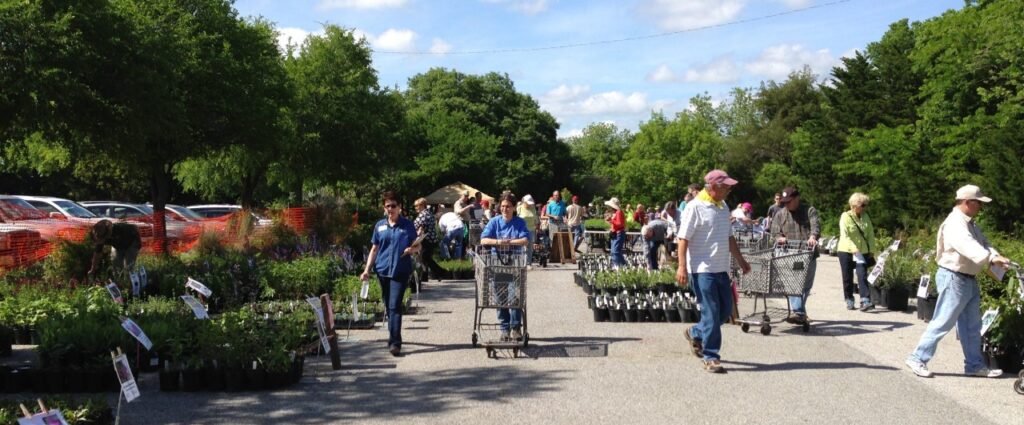
Our chapter is proud to partner with the Heard Natural Science Museum and Wildlife Sanctuary in McKinney to support their annual native plant sale. It is one of the oldest (30+ years) and largest native plant sales in the state. Proceeds from the sale benefit the Heard Museum, a private nonprofit organization.
How to Prepare
For all lovers of native plants, a native plant sale is indispensable for finding the “right plant for the right place” in your landscape. But, if you are a newcomer to native plants, determining what plants to buy can be a daunting challenge.
We are here to help with a guide to preparing, planning, and successfully executing your visit to the Heard Native Plant Sale. To paraphrase a familiar adage, good things come to those who prepare. By walking around your yard and doing a bit of research, you can develop a plan for your landscape and your shopping list.
Get Started Now
To start, realistically answer the question, “How much time am I willing to spend caring for my native plants?” This will help drive the size of your planting area and plant types. For example, while beautiful, perennials are more time-consuming to maintain than shrubs and trees.
Next, if you do not already have an idea for your native garden, start by going outside and walking around your landscape. While the NPSOT would love for you to fill your entire yard with native plants, the best and most realistic path is to start with a small patch of your existing landscape. For example, this can entail:
- Removing a small area of Bermuda or St. Augustine grass from your yard and replacing with native plants.
- Taking a neglected corner and adding some native shrubs, trees, or perennials.
- Eliminating some non-native plants and replacing them with natives. Especially focus on removing invasive plants such as Ligustrum, Nandina, Periwinkle, and Japanese Honeysuckle.
After determining the location for your native plants, make note of the area’s sun, moisture, and soil conditions. Preparing the site before the day of the sale will increase your odds of the plant’s success. To help guide you, here is information on Texas’ ecosystems and planting instructions.
Pinpoint Your Target List
Now that you have gathered that vital information, you can begin formulating your targeted list of native plants. Below are some tips for developing your list:
Think Local – For the greatest chance of success, look for plants native to North Texas or your locale. While a plant can be a Texas native, if it is native to the Gulf Coast or West Texas, it will not be suited to North Texas’ environment.
Be Assertive – A suggestion based on personal experience, when in doubt, choose more assertive native plants. While these plants might become a problem to adjacent plants, you at least have healthy growing plants.
Power of Three – Even within a small area, think in 3’s and a variety. Three of a species gives you a good starting number, avoids the “Lone Ranger” look, and is enough to put on a nice display. While just planting beautiful flowering perennials can be an attractive idea, the reality is that it usually results in a short-lived show. By utilizing a variety of plants, if one of your species does not work out, you still have others to take up the slack.
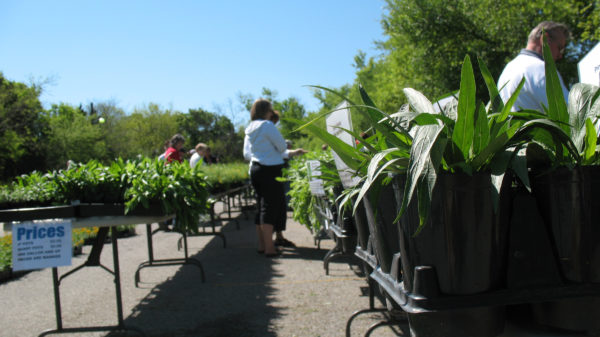
Always have Alternatives – Include more species on your list than you need to mitigate the potential lack of availability of a specific plant.
Do your Homework – Below are some resources that can help you find the right native plant:
- Collin County Chapter’s Native Plant Resources Listing
- NPSOT State Website
- Lady Bird Johnson Wildflower Center
- NICE (Natives Improve & Conserve Environments) Plant Program
The Heard plant sale inventory list comes out close to the sale date; look for it and begin lining it up with your listing.
The Big Day
So now you have your target list for the plant sale. Fast forwarding to the day of the plant sale, below are a few suggestions:
- Arrive early at the sale. Depending on the weather, the crowds can be sizable, and inventory can be depleted quickly.
- If possible, bring your own cart to carry your plants. Carts can be in short supply on the day of the sale.
- Admission to the museum is not required to attend the plant sale.
- Do not forget to bring your carefully crafted plant list.
- Credit cards are accepted, but cash is appreciated.
Lastly, you triumphantly arrive home with your new native plants – what’s next?
- It is always best, as we mentioned above, to get your plants into the ground as soon as possible.
- Water them for at least the first few days, and maybe more depending on the amount of rain.
- The first two years are crucial for native plants as they require some pampering. But once settled, your maintenance chores decrease substantially. Keep in mind the adage: “The first year a native garden sleeps, the second year it creeps, and the third year it leaps.”
Making the most out of the Heard Native Plant Sale and other native plant sales results from taking a little time to prepare your landscape and plan your shopping list.
