

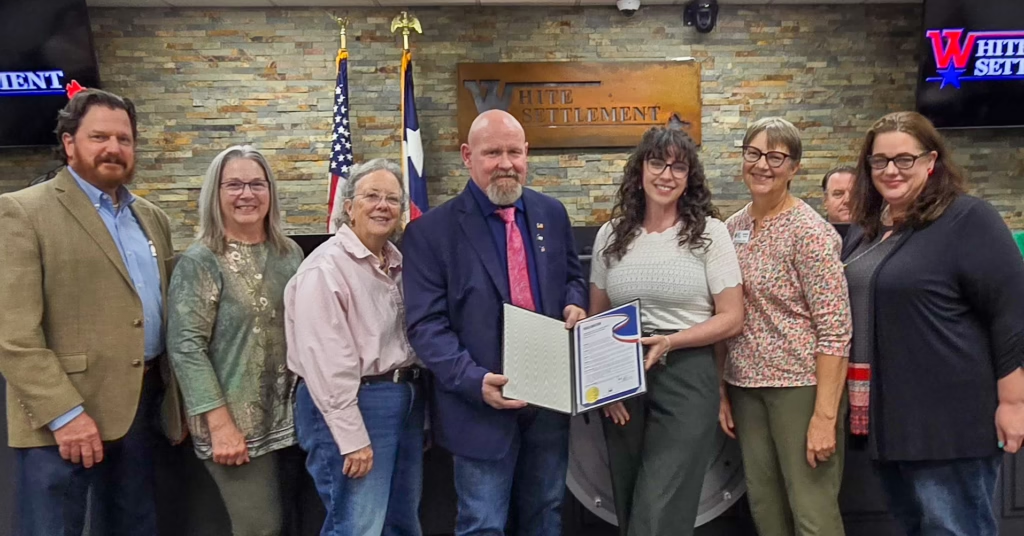
The volunteers of the White Settlement Monarch Waystation were recently honored with a formal proclamation from Mayor Faron Young, reaffirming the City of White Settlement’s participation in the Mayor’s Monarch Pledge and its continued commitment to monarch and pollinator conservation.
The proclamation recognizes the monarch butterfly as an iconic migratory species whose populations have declined across North America due to habitat loss, climate pressures, and the loss of native milkweed and nectar plants. It underscores the essential role municipalities play in restoring habitat, fostering environmental stewardship, and engaging communities in meaningful conservation action.
Since first joining the Mayor’s Monarch Pledge in 2017, the City has continued enhancing parks, open spaces, and natural areas to support pollinators and wildlife. The renewed proclamation outlines goals to expand pollinator-friendly habitats, strengthen educational programming and partnerships, encourage conservation practices among residents and businesses, and deepen collaboration across the community.
In presenting the proclamation, Mayor Young expressed his appreciation for the White Settlement Monarch Waystation and its dedicated volunteers, acknowledging their leadership in native plant restoration, public education, and community engagement. His support reflects a shared vision: that local action can contribute to large-scale conservation.
For members of the North Central Chapter of the Native Plant Society of Texas, this moment represents more than recognition; It affirms that native plant advocacy, when rooted in partnership and persistence, can shape public policy and inspire lasting change.
Looking ahead, we are energized by this renewed commitment. We envision expanding the Waystation as a living classroom, a refuge for migrating monarchs, and a gathering place where future generations can connect with the natural world. Our goal is not only to support monarch populations along their migratory journey, but also to cultivate a community that values and protects native habitats.
Together, we look forward to growing the White Settlement Monarch Waystation for future generations of both monarchs and people.
