For humans, Coralberry’s (Symphoricarpos orbiculatus) dense tangle of branches can appear to be unruly and uninviting. But for wildlife, that dense thicket serves many functions. This native Texas shrub’s ecological engineering abilities give inhabitants of our local ecosystems shelter, protection, and sustenance.
Habitat and Range Connections
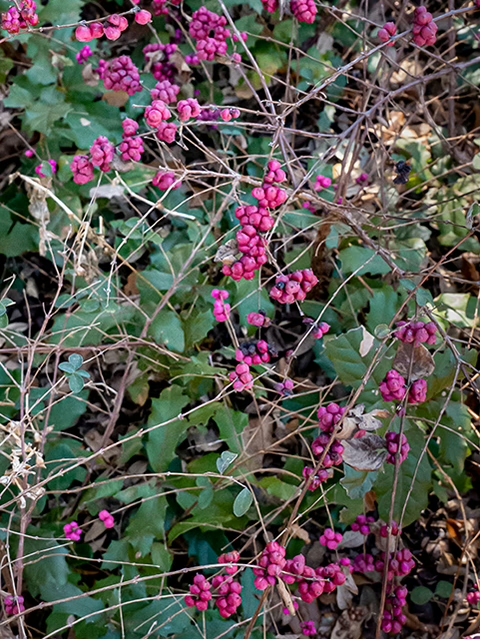
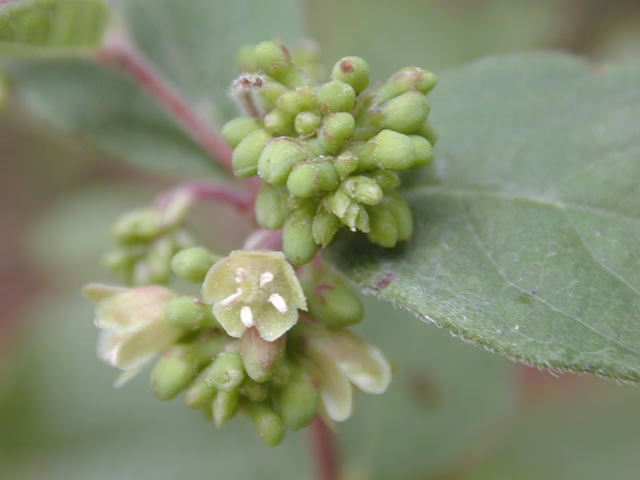
Often found growing in the Post Oak Woodlands, Coralberry’s native range is much of the eastern United States. In the understory, Coralberry typically grows to about 4 feet in height and spreads by root suckers and basal shoots. A mound-shaped, deciduous shrub, it has shredding bark on older branches and smooth, dull-green leaves. In the spring, it produces greenish-white flower clusters, followed by coral-pink to purple fruit up to 1/4 inch in diameter, which often remain through the winter.
Its range is remarkably similar to that of Post Oak (Quercus stellata) trees. Despite their obvious differences, both plants share certain preferences and characteristics:
- Soil – Both species favor well-drained, acidic soils. In Texas, it is often found in the Post Oak Savannah and Cross Timbers regions. Post Oak is especially intolerant of poorly drained soil, and Coralberry does best where the dirt drains easily but retains some moisture.
- Scattered Canopy Cover – Post Oak, with its light, airy crown, creates scattered canopy cover in open woodlands or savannahs. With its shade-tolerance, Coralberry grows well beneath Post Oaks and other hardwoods.
- Fire and Disturbance – Historically, the Post Oak Savannah and Cross Timbers were disturbed by periodic fires. With its thick bark, Post Oaks can often survive fires, and Coralberry resprouts vigorously from rhizomes after fires. It also takes advantage of other disturbances, such as grazing, clearing, or storm damage, which open the canopy and stimulate new growth.
- Range Boundaries – The result of these shared preferences is a distribution for both species across the eastern Great Plains down into Texas, but excludes wetter, denser forests to the east and the dry grasslands to the west.
Symphoricarpos orbiculatus also mirrors the range of the Cedar Elm (Ulmus crassifolia) tree, especially in Texas. This fit is more about the Coralberry’s shade and soil adaptability. It can still prosper under the denser canopy of the Cedar Elm and the heavier soils the tree tolerates.
Building the Understory
In colonies of Coralberry, there is much going on among the jumble of branches. You will often see birds pecking at the leaf litter, rabbits and other small mammals darting under the stems, and insects working among the leaves on the ground. All this activity is the result of Coralberry being an engineering marvel of the undergrowth. Akin to building a neighborhood, Coralberry supplies the streets, houses, and support systems that create a wildlife haven that persists year after year.
Through its underground runners, Coralberry plants knit together into tight clusters. These webs of branches form a living infrastructure for the understory, filling the gaps between trees and grasses. Thanks to its shade tolerance, where other shrubs falter, Coralberry fills the ground layer and links plant communities, providing wildlife with continuous habitat across woodlands and grasslands. It serves as a connective tissue, binding together the diverse pieces of ecosystems and forming a network of protective corridors for wildlife. But Coralberry does not dominate its environment; instead, it integrates with its neighbors, weaving through them to help connect ecosystems.
Wildlife, such as Brown Thrashers, nest in Coralberry’s intertwined branches for concealment and protection. Ground-nesting birds like White-throated Sparrows find shelter below the shrub’s canes. Beneath the soil, native bees take advantage of the dry, protected ground to build their nests. In the spring, when the unassuming flowers bloom, bees find nectar where few others look. By winter, the berries become a food source for Robins, Cardinals, and other birds.
Additionally, just as engineers must solve issues under constraints, Coralberry helps to do the same in poor soils, deep shade, and other marginal habitats. It protects the ground layer by helping to prevent erosion with its maze of roots and branches.
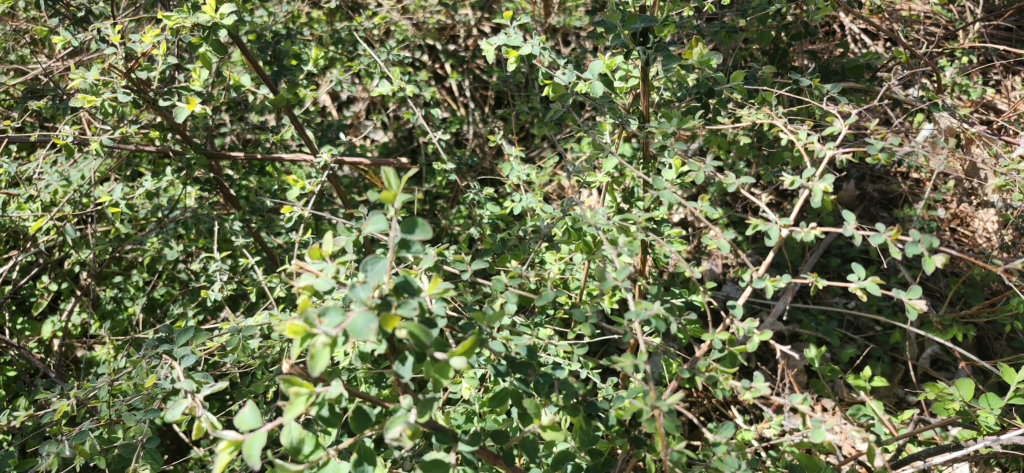
By closing the gaps, it defines the edges. In nature, the boundary where woodland meets prairie is often the most dynamic zone for wildlife activity. Coralberry serves as an Ecological Engineer, creating mini-ecosystems where other plants and animals can thrive.
Coralberry is not a showy prima donna but a builder, a shrub whose sprawling nature helps form the physical and ecological layout of its environment. Its thickets provide shelter and sustenance for wildlife and stabilize soils. That tangle of Coralberry branches is the engineer of a dynamic community that helps sustain life in the understory.