

Faced with a challenging climate and increasing weather extremes, how can Texas gardeners adapt?
Pam Penick, a Texas garden writer, speaker, and advocate for climate-resilient design, 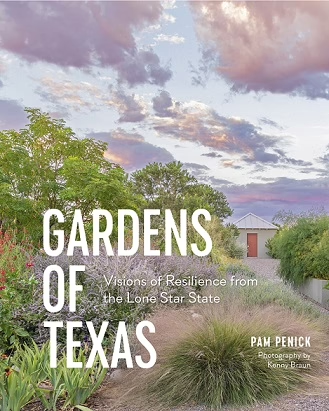 has been known for inspiring waterwise, wildlife-friendly landscapes for nearly two decades. Drawing from the visionary landscapes in her new book, Gardens of Texas, Growing with Resilience, she shares how resilient gardeners are embracing change, shifting their plant palette toward Texas natives, nurturing wildlife, and finding deeper joy in the process. Discover practical strategies for creating gardens that weather the storms and grow stronger — see how cultivating resilience in your landscape can also cultivate it in yourself.
Penick’s writing has appeared in Better Homes & Gardens, Fine Gardening, American Gardener, and other publications. For 10 years she ran a landscape design business helping Texas homeowners replace thirsty lawns with waterwise gardens of native and well-adapted plants. 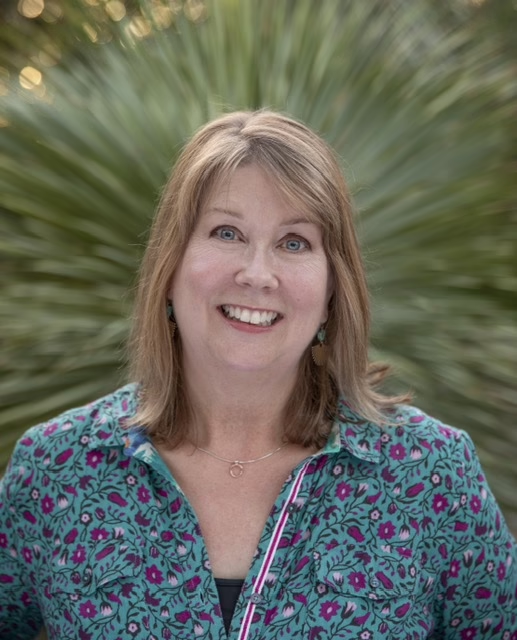 Drawing on her experiences, Pam authored Gardens of Texas, Lawn Gone!, and The Water-Saving Garden. She’s also the founder of Garden Spark, an Austin-based speaker series on design and ecology, where she brings fresh ideas and bold voices to the local gardening community.
In her own “rather spiky garden under live oaks” in northwest Austin, she keeps an eye out for screech owls and foxes – but could do with fewer deer. Then she becomes the voice and photographer behind Digging, her influential website about gardening in a hot climate. Visit Digging at penick.net.
Gardens of Texas: Growing with Resilience, Pam’s new book, will be for sale at this month’s meeting on March 24 at St.Joseph’s Halle (212 W. San Antonio St., Fredericksburg). Meetings are free and open to the public.
Come early at 6:30 pm for cookies and visit with friends. The short business meeting and program begins at 7:00. This month’s presentation will not be available on our YouTube channel.
Explore the Fredericksburg NPSOT chapter and the gardening community online at Facebook (@fbgtxnpsot), Instagram (@npsot_fredericksburg_chapter), and https://npsot.org/chapters/fredericksburg/.
