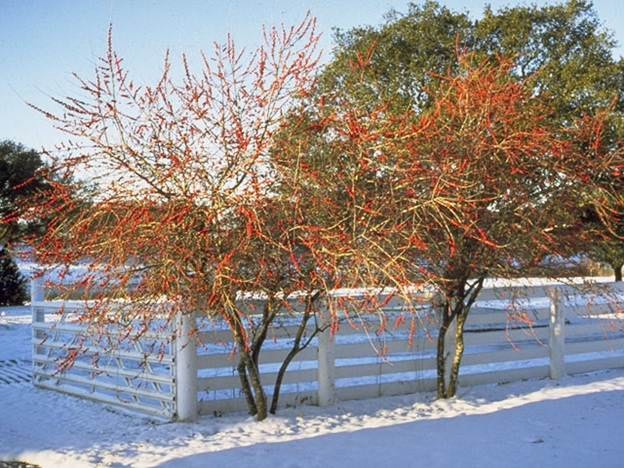
As winter returns, let’s explore one of North Texas’ most dramatic native trees – the Possumhaw Holly (Ilex decidua). With its bright crimson berries, this native understory tree provides a feast for the eyes.
Origin of Name
The quirky common name of “Possumhaw Holly” for the Ilex decidua plant is rooted in its native environment and the fauna it attracts. “Possumhaw” is derived from two words:
- “Possum” refers to the animal that enjoys the berries.
- “Haw” is an old term for “hedge,” originating from a resemblance to hawthorn fruits.
Additionally, its scientific name gives away a unique feature for a holly. Ilex is the genus for all hollies, and decidua means “deciduous”, losing its leaves in the winter. While we associate hollies with being evergreen, around the globe, including Ilex decidua, of the 400+ species, only about 30 are deciduous.
Growing Conditions and Characteristics
Native to the southeastern United States, Ilex decidua is well-suited for the climate of North Texas. Typically growing between 12-25 feet, it prefers full sun to partial shade. Adaptable to various soil types, the one characteristic it requires is well-draining soils.
In addition, it is drought-tolerant, making it perfect for Texas’s hot summers. Plus, unlike many other holly species, the Possumhaw Holly does not have spiny leaves, making it a friendlier option for landscapes used by children.
A Pollinator’s Friend
Humans are not the only ones to benefit from the Possumhaw; our local North Texas wildlife also reap the rewards of this vital food source. The Possumhaw Holly is dioecious, with separate male and female plants. The female plants produce the iconic red berries and need a nearby male partner for pollination. In the spring, the tree has small, inconspicuous white flowers. These flowers attract a variety of pollinators, helping to make a vibrant berry display in the winter.
In addition, birds such as Cedar Waxwing, Mockingbird, and American Robin seek out the Possumhaw Holly berries in the winter when their food sources dwindle. Many mammals, including squirrels, opossums, and raccoons, also partake of the berries.

Berries Galore
The bright red berries are especially beautiful in the fall and winter when they provide a splash of color against the bare branches. If you plan to add a Possumhaw Holly to your landscape for its berries, be sure to have both male and female plants or confirm that there’s a male plant nearby to ensure pollination.
Landscaping with Possumhaw Holly
With its moderate size, hardiness, and year-round interest, the Possumhaw Holly is a versatile addition to any Texas garden. Below are some ways to incorporate it into your landscape:
- Winter Focal Point: After shedding its leaves, the berries become very pronounced and create a dramatic accent for your yard.
- Understory Tree: Ideally, position the tree as it is in the wild, as an understory tree. This places it in a suitable environment and showcases it against taller trees.
- Natural Hedge: You can create a beautiful living fence or privacy screen by planting several trees (males and females) in a row.
- Bird-Watching Corner: If you are a bird enthusiast, plant a Possumhaw Holly to attract various bird species to your garden.
Beauty and Versatility
Possumhaw Holly can bring eye-catching beauty and versatility to your landscape. Often available at native plant sales, they are also occasionally available at local nurseries. If you are looking for a mid-sized native tree to add to your North Texas garden, Possumhaw Holly is a great option.