Fredericksburg Chapter

Gulf Muhly Grass, the N.I.C.E. grass that dances into Fall with a sweep of deep pink

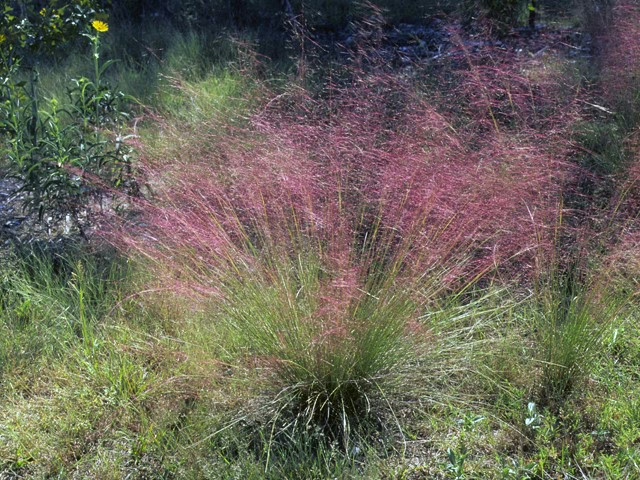
Gulf Muhly Grass, Muhlenbergia capillaris, creates a stunning perennial grass display in the fall when delicate, feathery, rose-colored spikelets (flowers) dance in autumn breezes above slender dark green leaves.

This beautiful grass is a great complement to those landscape beds with fading summer annuals. Consider mixing it with agaves and yuccas to soften a xeriscape landscape.

Gulf Muhly Grass, a beautiful native, is the 2025 Fall N.I.C.E. plant for Fredericksburg and Kerrville chapters of the Native Plant Society of Texas. The N.I.C.E. acronym stands for “Natives Improve and Conserve Environments.” The goal of the program is to introduce people to great native plants that are available locally to use in place of non-native species.

Attributes to consider: Gulf Muhly is not fussy about soil type, as long as it is well-drained. Its natural habitat includes clay and thin rocky soils in open dry woodlands and savannas. This is a good, drought tolerant, xeric grass with low to medium water usage.          

*Easy-to-grow, long lived, perfect for the low-maintenance garden, it works in any garden style as a single beauty or in groups. While it thrives in plenty of Texas sun, it can be as beautiful in mottled shade

*To our benefit, it is highly resistant to grazing deer.

What should you anticipate? Delicate pink flower stalks that stretch about half again as tall as the entire plant. It can reach a height of 4 feet and a width of 3 feet as fall progresses. Tiny, purplish seeds mature in tan seed plumes adding interest in the garden into the winter.
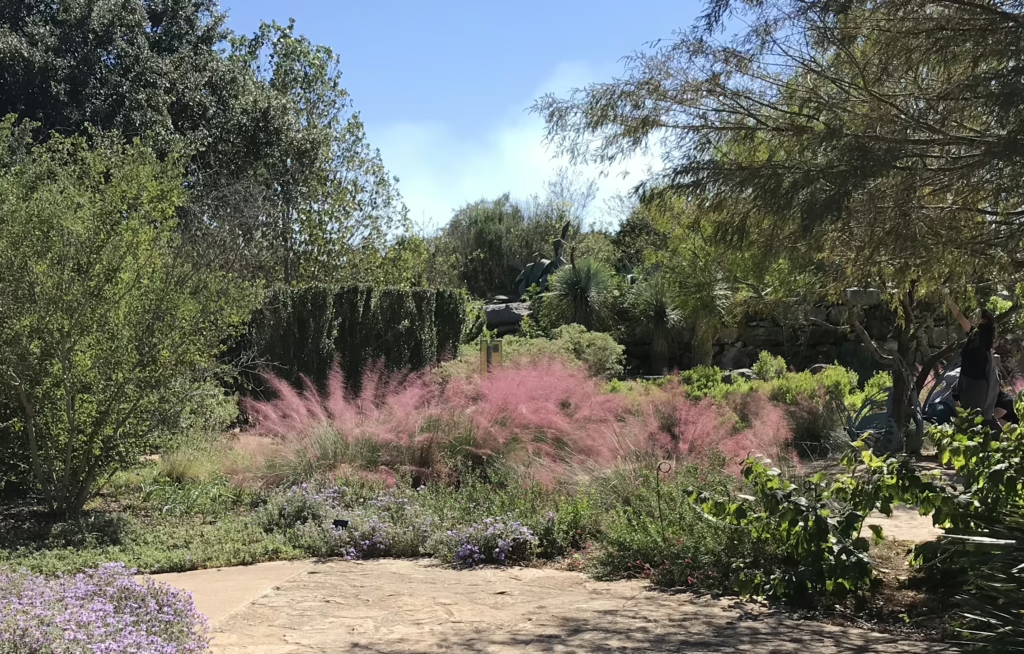
Gulf muhly loves to sway in the wind, and is particularly gorgeous when backlit by a rising or setting sun.

WHERE TO FIND IT 

Our local N.I.C.E. nurseries have happily agreed to stock up on our Plant of the Season in order to have it available to the  public. These independent nurseries carry only the best plants for our area, as well as high-quality soil amendments and  gardening supplies.  

Look for the “N.I.C.E. Plant of the Season” sign stake at these nurseries and growers in Fredericksburg, Medina,  Kerrville, and Comfort: 

∙ Friendly Natives, 1107 N. Llano Street, Fredericksburg, 830-997-6288 

∙ Medina Garden Nursery, 13417 Tx. Highway 16, Medina, 830-589-2771 

∙ Natives of Texas, 4256 Medina Highway, Kerrville, 830-896-2169 

∙ Plant Haus 2, 604 Jefferson Street, Kerrville, 830-792-4444 

∙ The Gardens at The Ridge, 13439 S. Ranch Road 783 (Harper Rd.), Kerrville, 830-896-0430 ∙

The Garden Haus, 109 FM 473, Comfort, 830-995-5610 

,

About the Region

2026 Fall Symposium Logo

This low-elevations region of Texas extends inland from the barrier islands, about 60 or so miles, and stretches from Brownsville to Louisiana. In total, it covers about 9.5 million acres, with a high point of 150 feet in elevation. More than 1000 species of plants can be found in this region. On the southern end, species more common in Mexico (such as Sabal mexicana) and Central America occur.

The barrier islands provide us with dune systems, and clay flats to the inland side, which have species found in these areas alone. Many plants here, such as Ipomoea pes-caprae (beach morning glory), can be found throughout tropical regions of the globe. I’ve encountered the same species on the beaches of Guam.

Once inland, vast marshes and wet prairies occur. Occasionally, oak (Quercus fusiformis) groves can be found. Common grasses include species of Bothriochloa, Paspalum, and Sporobolus; eastern gamagrass (Tripsacum dactyloides); and switchgrass (Panicum species). Many rivers and creeks cut through the Gulf Prairies, and along these riparian areas various species of trees, Sabal minor, and other plants adapted to clay soils can be found. Due to overgrazing, farming, and fire suppression, woody species such as mesquite (Prosopis glandulosa) and huisache (Acacia farnesiana), and invasive species such as chinaberry (Melia azedarach), Brazilian pepper (Schinus terebinthifolius), and Chinese tallow (Sapium sebiferum) have increased and displaced our native flora.

Source: Wildflowers of Texas by Michael Eason
