Fredericksburg Chapter

Native Food Plants of Texas: foraging in Austin – based on historical indigenous ethnobotany.

We live in the heart of Texas, cradled by  high tablelands, prairies, and desert. This was a rich, diverse region supporting a widespread native population long before Europeans arrived. How did the indigenous people use the naturally occurring resources of this area thru all aspects of their lives. What can we learn from them about caring for the land that supports us?
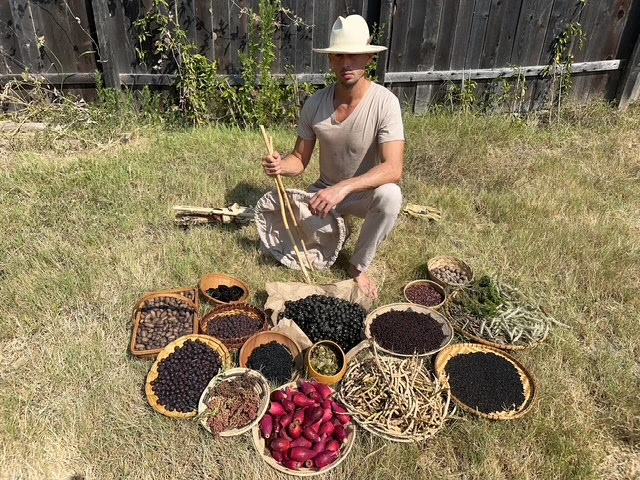
Cyrus Harp, explores the wild food plants of central Texas with us Tuesday, May 26 as we walk in footprints that are centuries old.

An ethnobotanist, Harp is both a foraging instructor and the author of “Native Food Plants of Texas: an Austin Forager’s Guide Based on Indigenous Knowledge.”

“I I have spent a decade foraging wild plant foods in Central Texas, replicating historical practices of Indigenous peoples throughout North America who used the species occurring in this area.”

Harp continued, “I hope to inspire a deeper appreciation for native Texas plants and their habitats, to motivate their conservation in this region plagued by destructive development.”

The founder of Paleo Foraging, Cyrus Harp is dedicated to preserving and sharing knowledge of wild plant uses. He has taught courses at UT Austin and UC Berkeley and was named a National Geographic Young Explorer. His extensive experience led to his recognition as a Paleolithic technology expert.

NPSOT Fredericksburg chapter holds its monthly meetings on the 4th Tuesday of the month at St. Joseph’s Halle   (click link for a map) (212 W. San Antonio St., Fredericksburg).. There is a social time with snacks at 6:30 p.m. The meeting and address from the speaker starts at 7 p.m.


Meetings are free and open to the public either in attendance in person or via online streaming . Information is also online at Facebook (@fbgtxnpsot),

About the Region

Fall Symposium 2025 Logo - Teach for the Future

Salado, the location of our Fall 2025 Symposium, lies at the intersection of two ecoregions: the Edwards Plateau (Limestone Cut Plain) and Blackland Prairie (Northern Blackland Prairie).

The Edwards Plateau area is also called the Hill Country; however, this general term covers a much larger area extending farther north. Spring-fed creeks are found throughout the region; deep limestone canyons, rivers, and lakes (reservoirs) are common. Ashe juniper is perhaps the most common woody species found throughout the region. Additional woody species include various species of oak, with live oak (Quercus fusiformis) being the most common. Sycamores (Platanus occidentalis) and bald cypress (Taxodium distichum) border waterways. This area is well known for its spring wildflower displays, though they may be viewed in spring, late summer, and fall, as well. According to Texas Parks and Wildlife, average annual rainfall in the Edwards Plateau ranges from 15 to 34 inches.

The Blackland Prairie extends from the Red River south to San Antonio, bordered on the west by the Edwards Plateau and the Cross Timbers, and on the east by the Post Oak Savannah. Annual rainfall averages 30 to 40 inches, with higher averages to the east. This region is dominated by prairie species. The most common grass species include little bluestem (Schizachyrium scoparium) and Indian grass (Sorghastrum nutans) in the uplands and switchgrass (Panicum virgatum) in the riparian areas and drainages. Common herbaceous flowering plants include salvias, penstemons, and silphiums. This area has suffered greatly from overgrazing and agricultural use. Few intact areas remain, though many of the plants can be found along county roadsides throughout the region.

Our fall Symposium host chapter, the Tonkawa Chapter, includes both of these ecoregions.

Source: Wildflowers of Texas by Michael Eason