

 Have you wondered which native tree will shade your backyard, not drop leaves in the pool, and also doesn’t need a lot of water? Do you have acreage and are trying to restore your landscape after fire or grazing? Are you wondering what to consider when picking trees for color or to create a visual screen between you and the neighbors without irrigation?
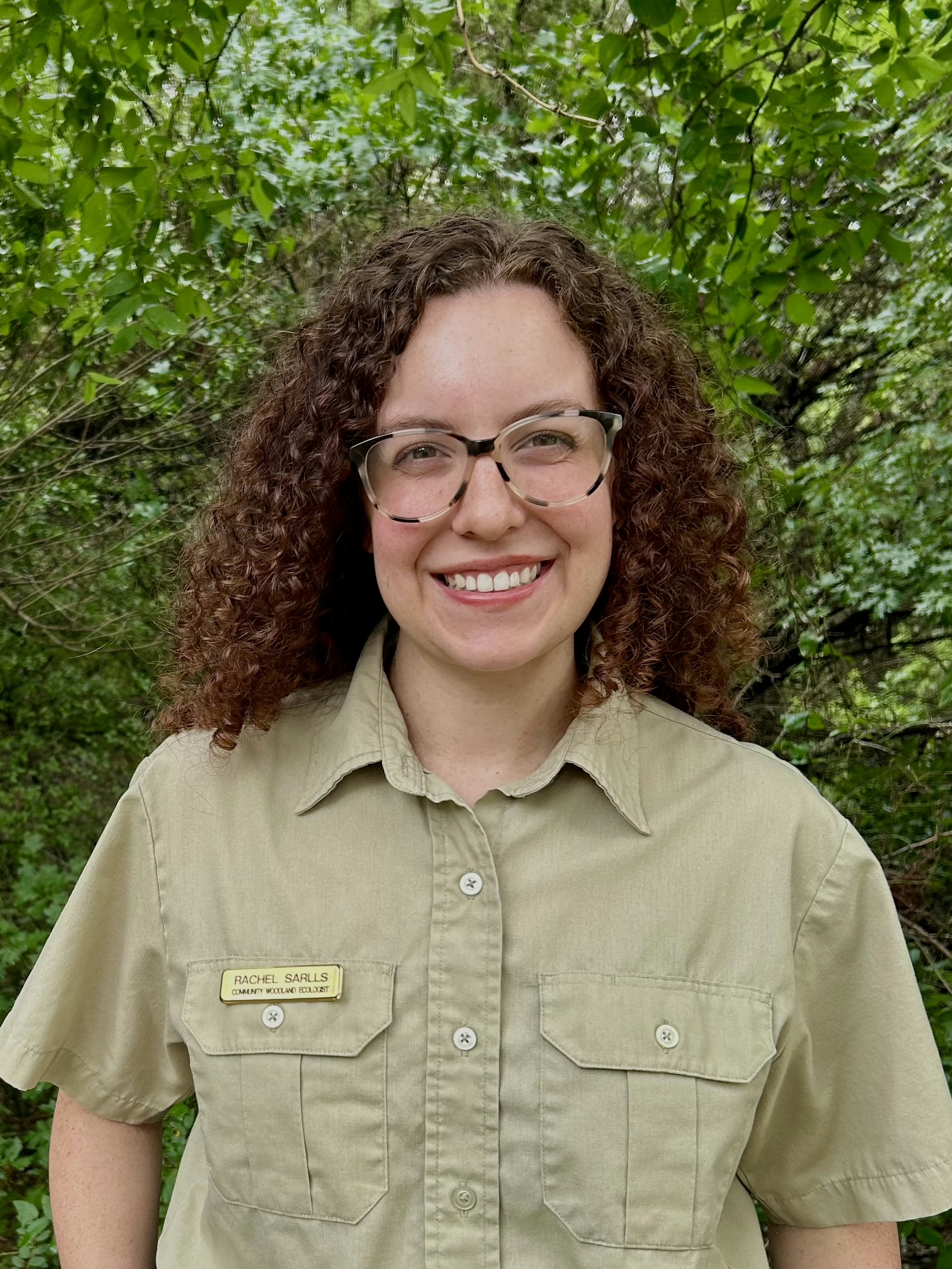
Rachel Sarlls, Regional Urban Ecologist with the Texas A&M Forest Service-San Antonio region, addresses these questions and others during this month’s meeting. Her topic: how to select the perfect native tree for your various spaces and how to care for them.
“Our region has suffered greatly from drought for many years, oak wilt, severe freezes and wildfires.” Jonathan Watt, president of the Fredericksburg chapter of NPSOT, commented in introducing this month’ topic. “Her talk will be interesting for new homeowners and long-time landowners alike,” Ms. Sarlls has been with Texas A & M Forest Service since December 2024. She graduated from Sam Houston State University with a bachelor’s degree in plant and soil sciences.
“I’m looking forward to speaking about native trees that do well in the Edwards Plateau and to answer everyone’s tree-related questions,” said Sarlls. “It’s so important to learn about the best trees to plant on your property so that you can take care of them and enjoy them for years to come.”
Sarlls is an International Society of Arboriculture (ISA) Certified arborist with specialized qualifications in tree risk assessment and Oak Wilt management. She has worked as an arborist in the Houston region, managing work from tree removals and pruning to fertilization and planting. Her passion is for empowering communities through education and outreach, to help people understand the vital role trees play in urban environment and how to effectively care for them.
NPSOT Fredericksburg holds its monthly meetings on the 4th Tuesday of the month at St. Joseph’s Halle. A social time with snacks begins at 6:30 p.m.; the meeting starts at 7 p.m. Meetings are free and open to everyone. The public is invited to attend in person or via online streaming.
