By Logan Dovalina, Rio Grande Valley Chapter
I grew up in Shary Heights in Mission, Texas—a lush, historic neighborhood that defined my childhood. Along Miller Avenue sits our family home, which we’ve lived in since 1970. Before our time, Shary Heights served as a model for the Mission Garden Club and the American Poinsettia Society. Women like Doris Buescher, Ruth Duncan, and Ann Armstrong worked together to beautify their homes along the botanically-named Ebony Lane, Poinsettia Street, and Bougainvillea Drive. Landscape plans developed by architects relied heavily on delicate floral selections, significantly influenced by the “Magic Valley,” a fertile, well-irrigated agricultural era in the Rio Grande Valley. A beneficent climate and plenty of available water meant residents of Shary Heights could plant almost anything successfully. However, as the decades passed and the climate warmed, the landscape underwent a dramatic shift.
Extreme heat, unpredictable storms and seemingly annual freezes have hindered the neighborhood’s botanical ambitions in the past couple of decades. The days of geraniums, plumbagos, and amaryllis planted in full sun are gone. In April 2023, we lost six native full-sized trees to a freak storm. Our banana landscape, planted in 1949, was also decimated by Winter Storm Uri in 2021. The horticultural landscape of Shary Heights has dramatically changed, but now we are aware of the challenges facing us and have proactively taken action.
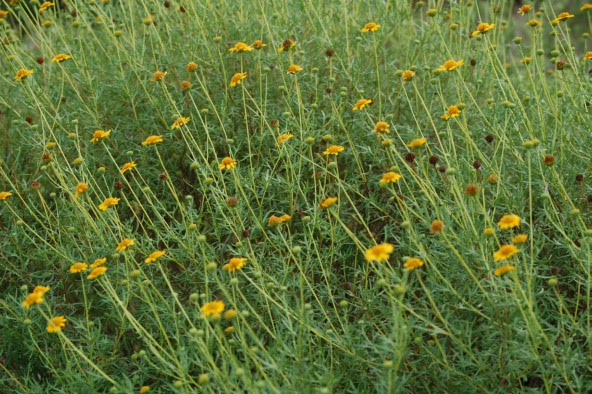
Almost 20 years ago our neighborhood project, the Shary Heights Butterfly Garden, was formed as a testament to heat tolerance, diversity, and native beauty. In late 2007, my family and two other families collaborated with the City of Mission to gain access to an unused section of the Shary Municipal Golf Course, which borders Shary Heights. City officials agreed to our plan and we began planting abundant amounts of Antelope Horns Milkweed (Asclepias asperula),
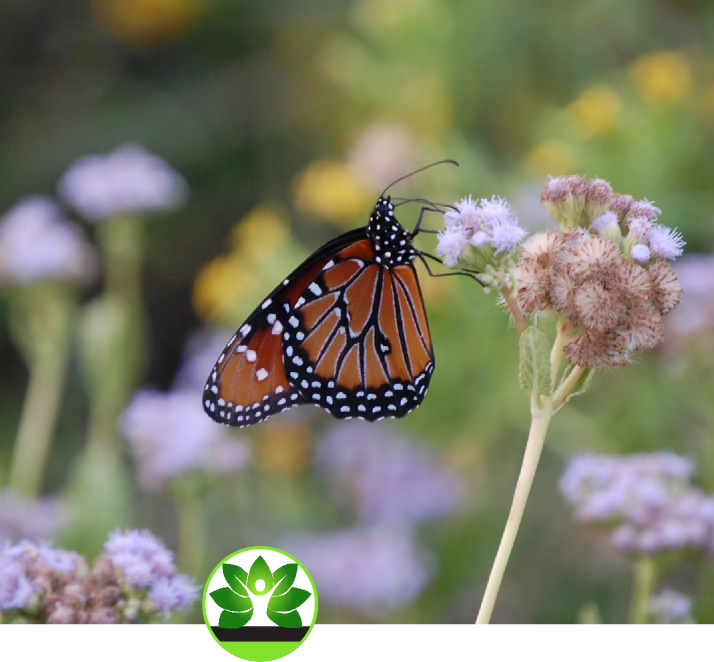
Blue Mistflower (Conoclinium coelestinum), and Frogfruit (Phyla nodiflora) set the foundation for the new garden, and it wasn’t long before we welcomed our first visitors. My father remarked how he began to see “ butterflies, birds, even some snakes—but more than that, it became a meeting place for people, and it was all because of the plants.” As a conservationist, this simple analogy guides me whenever I engage in field restoration work. Simply put: the plants bring the people.
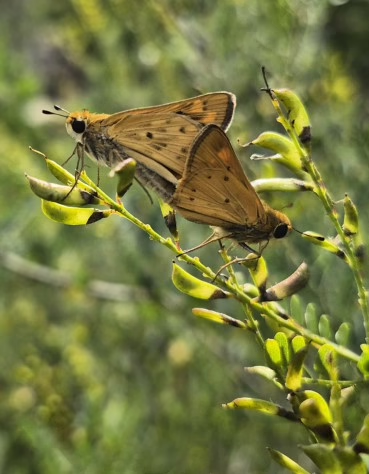
In 2020, I acquired Texas Master Gardener and Texas Master Naturalist certifications. With this knowledge I began viewing the garden differently, ensuring it became more than a pollinator garden. I wanted it to serve as a model for community and residential gardens, especially with the high volume of foot traffic from the neighboring golf course, demonstrating that heat-tolerant native plants like
Anacua (Ehretia anacua), Whitebrush (Aloysia gratissima), and Turk’s Cap (Malvaviscus arboreus var. drummondii) can be both beautiful and functional. We also began restoring a second plot of disused land near the garden, where I have since observed dragonflies, native bees, and small thrashers pecking into the soil.
It wasn’t until 2024 that we collaborated with and were inspired by renowned botanist Joey Santore, a Mission resident with a strong following on social media. Joey has worked hard to inspire the digital generation on the importance of native Texan flora. Through his initiative and knowledge of native plants, we are transitioning the Shary Heights Butterfly Garden into a microcosm of ecological succession and horticultural complexity.
The garden has begun a slow transition into a tiny woodland, with species carefully selected to withstand the brutal Texas sun and compact enough to be tended by just a few people if necessary. After 17 years, with over 60 species of native plants, it still feels like we are just beginning. In recent years, we have fundraised for a butterfly sculpture and welcomed a new generation of neighbors into the space, hosting workdays and other activities. It has become a vibrant community space.
Shary Heights has a new horticultural story—and that story’s theme is “resilience”. A Sugar Hackberry (Celtis laevigata) has replaced the Southern Magnolia (Magnolia grandiflora) in our yard, and the flower beds of cannas and lilies have given way to hardier, native species. Hardy, old-growth Texas Ebony (Ebenopsis ebano)trees, and misshapen Honey Mesquites (Prosopis glandulosa) continue to thrive in the area’s public and private gardens, and we will continue to look ahead and plant what we think will work over uncertainty of the next half-century.
Did you like this article? It’s from our Summer 2026 Texas Native Plants magazine. Read more here