

Tag: Native Plant Garden

Chapter

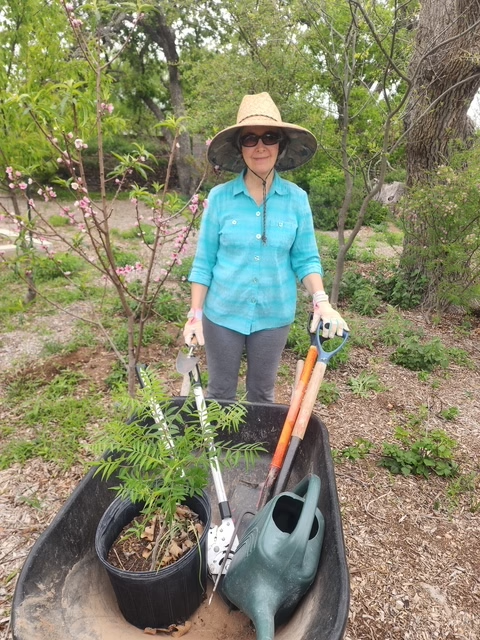
Designing for Maintenance with Paula

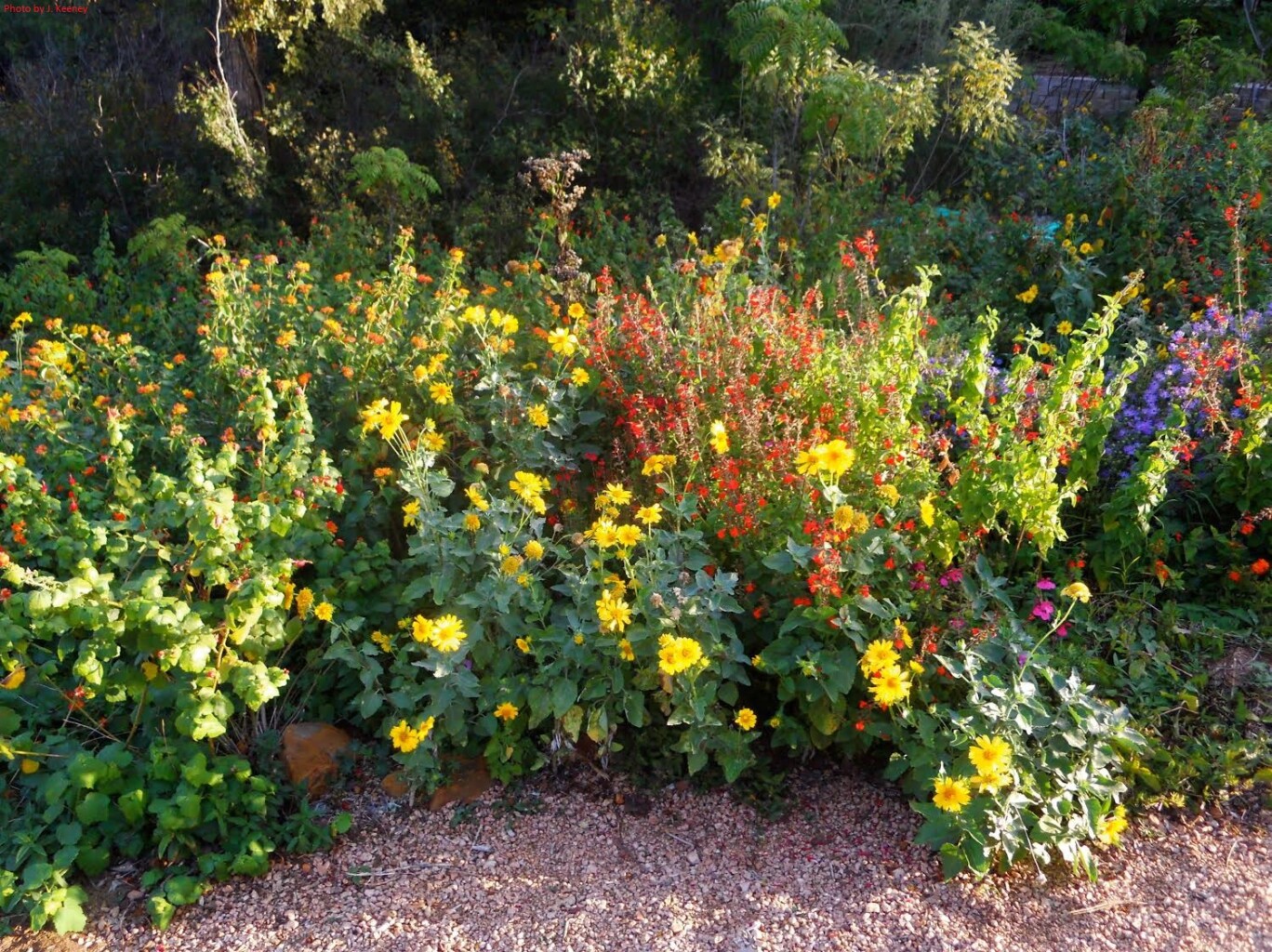
In 2009 Paula Stone bought 10 acres of worn out land on the edge of Fredericksburg. The vision this avid native plant gardener had was not what she saw – a land littered with tires, washing machines and golf balls – but of one that incorporated the natural beauty and life of Texas.

Chapter Meeting

Gardens of Texas: Growing with Resilience

Pam Penick, our March 24 Fredericksburg speaker, is a Texas garden writer, speaker, and advocate for climate-resilient design. This month she shares practical strategies for creating gardens that weather the storms in our changing climate and grow stronger — and see how cultivating resilience in your landscape can also cultivate it in yourself.

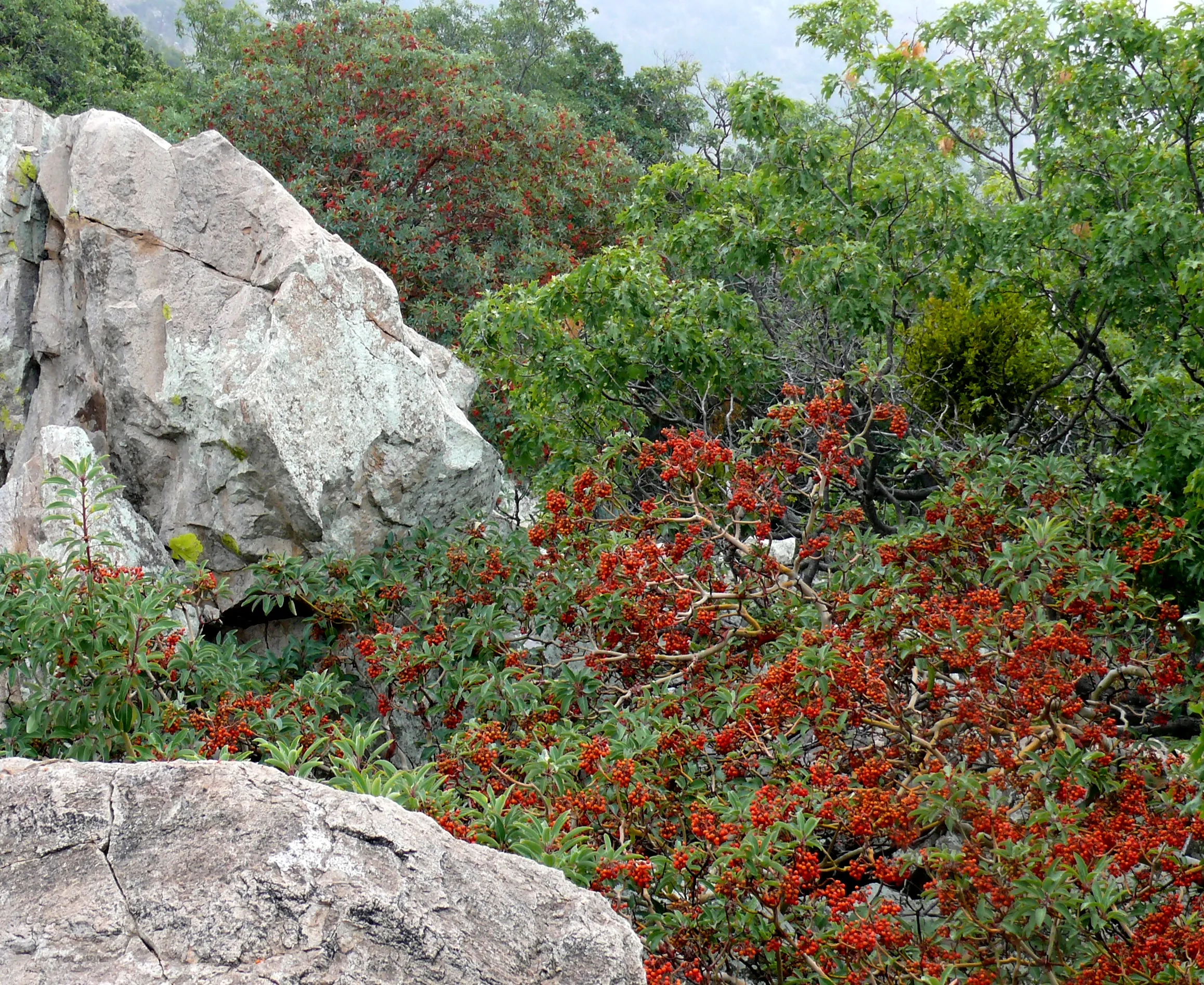
Landscape photo looking up hill at large stone outcrops and trees covered in red blooms
Uncategorized

Lessons Learned Running a Native Plant Nursery.

Nurseries didn’t offer native plants in the early 1990s when the Winninghams began searching for those plants that thrive and support the ecology of the Texas Hill Country. As they explored western Texas as far as Big Bend, they began collecting seeds and cuttings, including some for the madrone trees that the nursery has become famous for. “There are a whole host of positive aspects about a native plant business. I want to share the amazing and unexpected things I have leaned.” Dr David Winningham said.

garden design

My Path to Cues to Care

The term Cues to Care originated in the late 1980s from landscape architect Joan Nassauer of the University of Michigan. Nassauer’s research uncovered an interesting paradox. She noted that, “A large body of landscape perception research…leaves no doubt that people prefer to see landscapes that they perceive as natural.” However, there is a fine line, as “too much nature” is uninviting.

Native Plants

Button, Button, Who’s Interested in the Buttonbush?

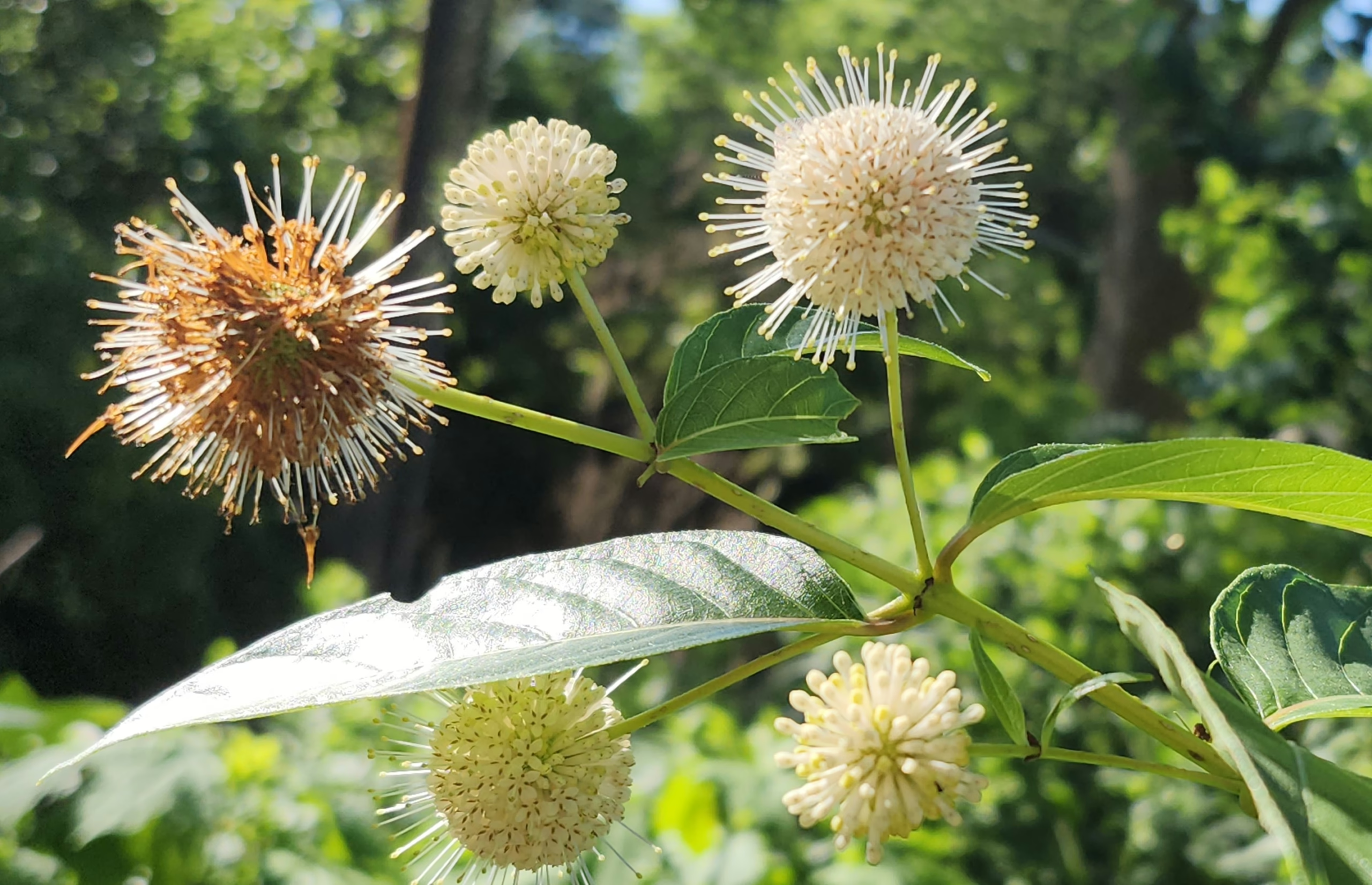
Are you looking for a native shrub with an unmistakable flower, a feast for pollinators, and that is adaptable to a variety of soil conditions? The Buttonbush (Cephalanthus occidentalis) could be the plant for you.

Chapter

What Happened to that Plant?

It’s time to reflect on what happened in your landscape this year as you head into prime native planting season. Arlon Motsch, an avid native plant gardener, photographer, and water conservationist will share his insights about what worked, what didn’t, and look at a few plants that need more time to tell. “Learning,” he said, “has come from many local sources like NPSOT, friends, friendly neighbors, nature centers, gardening programs, and just hands-on getting it done.”

Conservation

Texas Lantana – a N.I.C.E. plant for a HOT summer

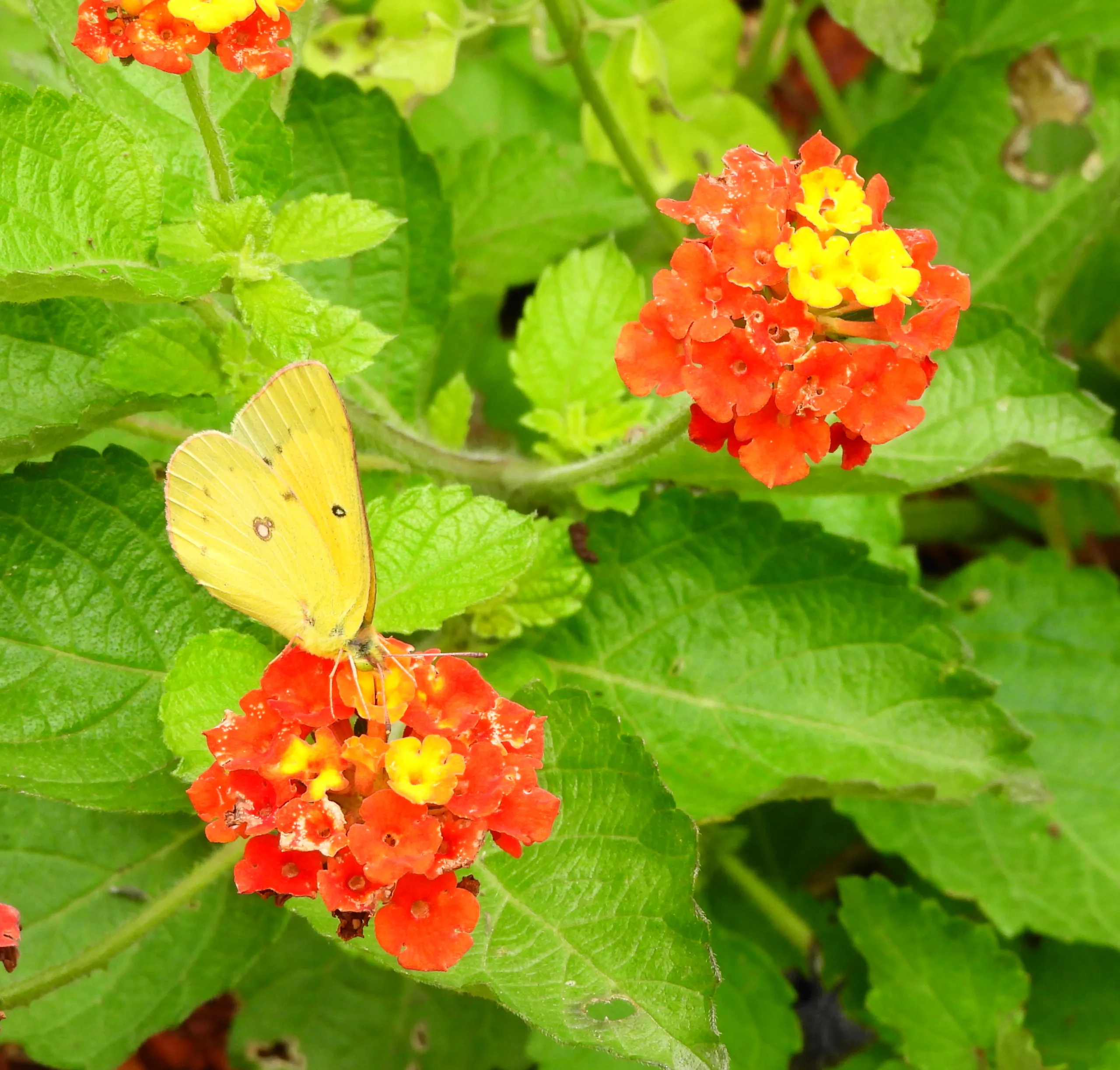
A native, bullet-proof plant for the hot Texas summer, the Texas lantana resists drought, heat, and deer. The Texas lantana is sometimes called “Calico Bush” for the patchwork colors in the flower clusters that change from yellow to orange to red as they age.
PLEASE DON’T PLANT THE PINK AND YELLOW LANTANA

About the Region

2026 Fall Symposium Logo

This low-elevations region of Texas extends inland from the barrier islands, about 60 or so miles, and stretches from Brownsville to Louisiana. In total, it covers about 9.5 million acres, with a high point of 150 feet in elevation. More than 1000 species of plants can be found in this region. On the southern end, species more common in Mexico (such as Sabal mexicana) and Central America occur.

The barrier islands provide us with dune systems, and clay flats to the inland side, which have species found in these areas alone. Many plants here, such as Ipomoea pes-caprae (beach morning glory), can be found throughout tropical regions of the globe. I’ve encountered the same species on the beaches of Guam.

Once inland, vast marshes and wet prairies occur. Occasionally, oak (Quercus fusiformis) groves can be found. Common grasses include species of Bothriochloa, Paspalum, and Sporobolus; eastern gamagrass (Tripsacum dactyloides); and switchgrass (Panicum species). Many rivers and creeks cut through the Gulf Prairies, and along these riparian areas various species of trees, Sabal minor, and other plants adapted to clay soils can be found. Due to overgrazing, farming, and fire suppression, woody species such as mesquite (Prosopis glandulosa) and huisache (Acacia farnesiana), and invasive species such as chinaberry (Melia azedarach), Brazilian pepper (Schinus terebinthifolius), and Chinese tallow (Sapium sebiferum) have increased and displaced our native flora.

Source: Wildflowers of Texas by Michael Eason