

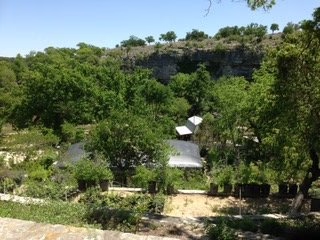
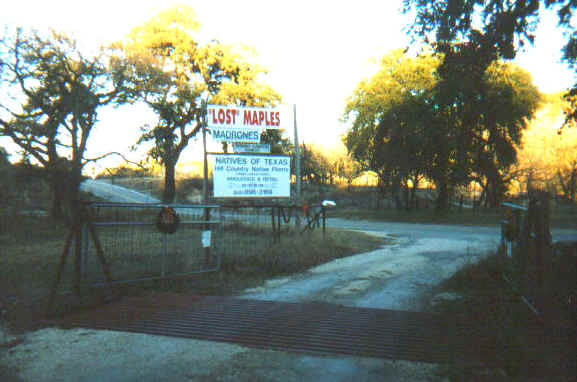
 Dr. David Winningham, our February speaker for the Fredericksburgs chapter of NPSOT, may have a PhD in physics but his love is the “hobby that got out of hand” – the Natives of Texas Nursery in the hill country between Kerrville and Medina.
Nurseries didn’t offer native plants in the early 1990s when the Winninghams began searching for those plants that thrive and support the ecology of the Texas Hill Country. As they explored western Texas as far as Big Bend, they began collecting seeds and cuttings, including some for the madrone trees that the nursery has become famous for. In 1994 Betty (now deceased) retired from a teaching career, put all their expanding experiments into action and started Natives of Texas Nursery, specializing in local plants that are water conscious.
“There are a whole host of positive aspects about a native plant business. I want to share the amazing and unexpected things I have leaned.”
As he traveled the world exploring the means of reaching the planets, Dr. Winningham also experienced spectacular natural countryside and visited some of the best gardens the world has to offer. Upon his wife’s death, he took early retirement and now runs Natives of Texas.
He discovered that a nursery – built into a canyon, away from the city – attracts visitors. People come to learn and experience the beauty the couple had developed.
“There is a longing and a lack of knowledge among the urban population. Very few people have access to the countryside. There are state parks but most of the really good stuff is behind closed gates. [The Nursery] works like a B&B. It lets people walk around and experience not only about plants and things, but about the Hill Country.
“Related to this is the pyscho sociological impact this disconnect has in the mental and physical health of people.” he explained. “[This is my laboratory now], learning about people and modern day society.”
NPSOT Fredericksburg holds its monthly meetings on the 4th Tuesday of the month at St.Joseph’s Halle (212 W. San Antonio St., Fredericksburg). Meetings are free and open to the public.
We invite you to attend in person or via online streaming at Fredericksburg Texas Native Gardening
Come early at 6:30 pm to meet us and enjoy a snack. The short business meeting and program begins at 7:00.
