Planning Your Fall Colors Show
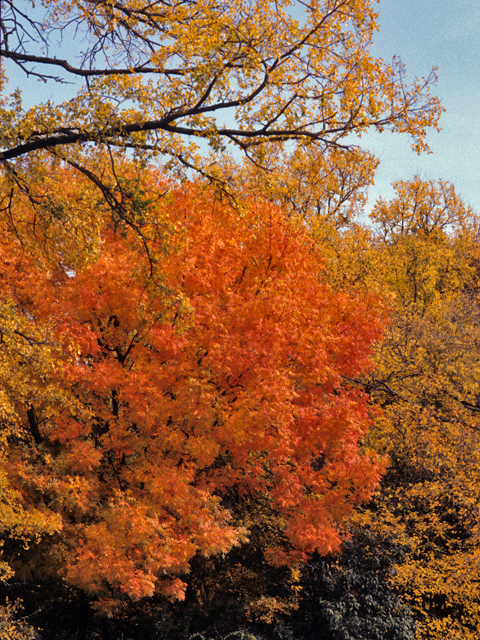
Admittedly, North Texas is not Vermont, East Tennessee, or Michigan when it comes to beautiful fall foliage displays. Our temperate zone’s deciduous trees do not display the amount and breadth of vibrant golds, oranges, and reds of more northern states. However, we do have some native trees and large shrubs available for your landscape that put on a showy color display in the fall.
Why Tree Leaves Change Colors
A quick primer on why deciduous tree leaves change color. It occurs as part of the plant’s preparation for winter dormancy. They stop producing chlorophyll, and when the leaf’s green color fades, the other pigments already in the leaves temporarily become visible. You can typically expect trees in North Texas to change colors in late October to mid-November.
For your landscaping planning, November – February is an ideal time to plant trees and large shrubs, so they have the best opportunity to provide many years of beautiful autumn colors.
Top North Texas Native Trees for Fall Color
We have compiled a listing of seven of the top native North Texas trees and shrubs for fall colors. An informal survey was done of native tree availability at six local DFW nurseries, home stores, and tree farms in mid-October. Each of the below native trees and shrubs were available at multiple stores:
- Texas Redbud (Cercis canadensis var. texensis) – A small tree or large shrub, typically only 10 – 20 feet tall. In addition to its fall color, the Texas Redbud provides attractive glossy leaves, spring flowers, and red seed pods. In autumn, the leaves turn a golden or red color.
- Texas Ash (Fraxinus albicans) – Compared to the White Ash (Fraxinus americana), the Texas Ash is a smaller tree, in the range of 30 – 45 feet. It displays brilliant fall colors – with shades of yellow, orange, and maroon.
- Mexican Plum (Prunus mexicana) – A single-trunked 10 – 35 foot tall tree with fragrant white flowers in spring. Edible fruit is produced in late summer, and then fall brings red, yellow, and orange leaves.
- Chinquapin Oak (Quercus muehlenbergii) – An adaptable and drought-tolerant native shade tree that can grow to 30 – 50 feet tall. In autumn, this under-appreciated tree’s leaves turn a rich bronze color.
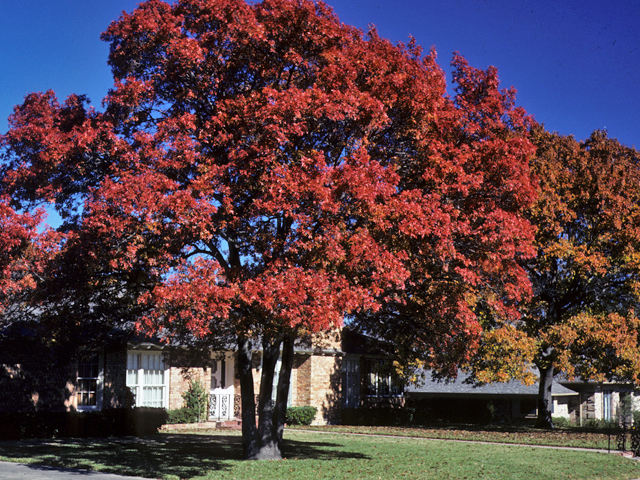
- Shumard Red Oak (Quercus shumardii) – The largest of the selected trees, growing 50 – 90 feet tall. They are typically a fast-grower, hardy, and long-lived. In autumn, the leaves turn a beautiful reddish hue.
- Prairie Flameleaf Sumac (Rhus lanceolata) – A small, fast-growing tree that forms thickets, typically 15 – 20 feet high. In the summer, Rhus lanceolata produces white blossoms, which precede red fruit in the fall. As the name implies, the leaves become a vivid orange in the autumn.
- Cedar Elm (Ulmus crassifolia) – A tough oval-shaped tree, usually 50 – 70 feet in height. The small, serrated leaves turn a golden-yellow color in the fall.
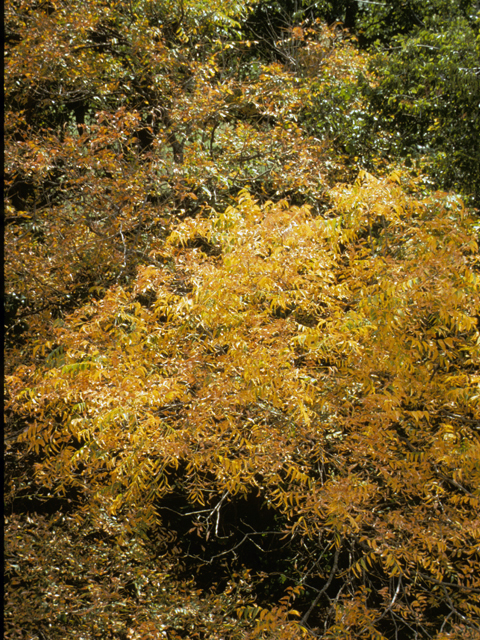
Honorable Mentions – The following North Texas native trees also provide wonderful autumn color but were unavailable at multiple local retailers. It may be possible to special order the plants, or they are often available at native plant sales.
- Fragrant Sumac (Rhus aromatica) – Smaller than its relative, Prairie Flameleaf, it is a fast-growing, spreading 6 – 12 foot tall shrub with aromatic foliage. In the fall, the leaves turn red, yellow, and orange.
- Western Soapberry (Sapindus saponaria var. drummondii) – Depending on the habitat, this single-stemmed tree can range from 10 – 50 feet in height. It produces cream-colored flowers in late spring, followed by abundant yellow fruit. The long, narrow leaves turn a pleasing orange, gold, and yellow in the fall.
- Rusty Blackhaw Viburnum (Viburnum rufidulum) – The plant can develop into a shrub or tree shape, growing typically up to 20 feet tall. Handsome glossy dark-green leaves turn a variety of dramatic reddish tones in the autumn.
Enhance Your Landscape with Native North Texas Trees and Shrubs
Planting native North Texas trees in your landscape helps to save water, encourages biodiversity, and reduces maintenance. These trees will not only help reduce your air conditioning but can increase the value of your property. With a little bit of planning, these readily available native trees and shrubs can brighten your landscape with their rich, warm fall colors.