Pre-order for trees & shrubs is open from August 26 to September 5.
Purchase online, pick up on October 20 from 4 to 6 pm and October 21 from 8 to 10 am.
Pick up Location (same location as in-person plant sale):
Environmental Institute of Houston (Google Map)
University of Houston-Clear Lake
North Office Annex (NOA) 1 Building
2700 Bay Area Blvd.
Houston, TX 77058
All sales final. Inventory is subject to availability. In the event that an item becomes unavailable, a refund will be issued for that item after the in-person plant sale.
Note: We may have a limited inventory of trees and shrubs available at our plant sale; however, we will not know the species or quantities until the plant sale, and they will be first come, first serve.
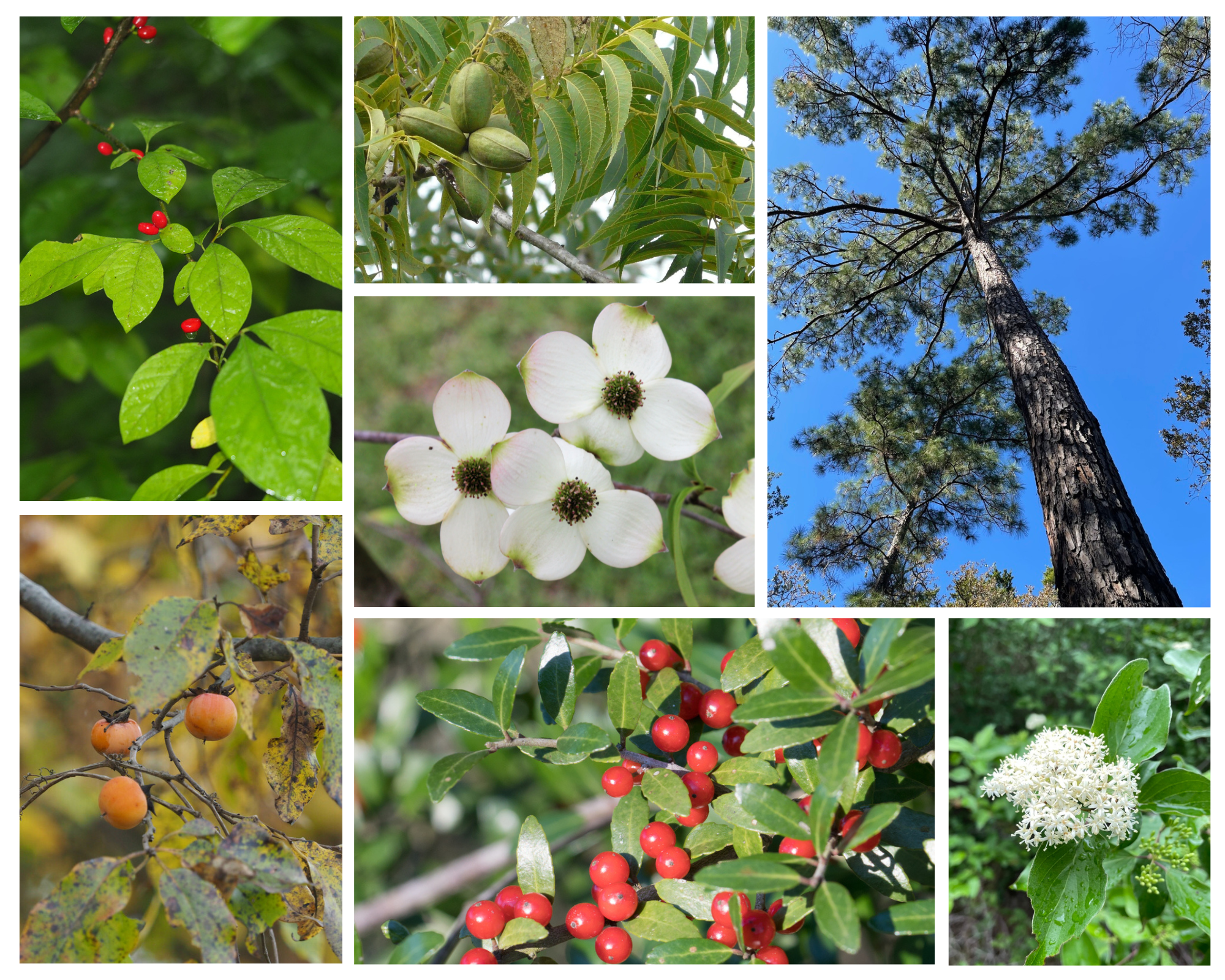
Available for Pre-order
Acer rubrum – Red Maple
Acer rubrum var. drummondii – Drummond Red Maple
Aesculus pavia – Red Buckeye
Betula nigra – River Birch
Carpinus caroliniana – Hornbeam
Carya illinoinensis – Native Pecan
Castanea pumila – Chinkapin
Celtis laevigata – Sugarberry
Celtis occidentalis – Hackberry
Cephalanthus occidentalis – Buttonbush
Cornus drummondii – Roughleaf Dogwood
Cornus florida – Dogwood
Crataegus opaca – Mayhaw
Diospyros virginiana – Common Persimmon
Hammamelis virginiana – Witch-hazel
Ilex vomitoria – Yaupon Holly
Lantana urticoides – Texas Lantana
Lindera benzoin – Spicebush
Muhlenbergia capillaris – Gulf Coast Muhly
Nyssa aquatica – Water Tupelo
Nyssa sylvatica – Blackgum Tupelo
Pinus palustris – Longleaf Pine
Pinus taeda – Loblolly Pine
Prunus americana – American Plum
Prunus mexicana – Mexican Plum
Prunus serotina – Black Cherry
Quercus alba – White Oak
Quercus laurifolia – Laurel Oak
Quercus lyrata – Overcup Oak
Quercus macrocarpa – Bur Oak
Quercus michauxii – Swamp Chestnut Oak
Quercus muehlenbergii – Chinquapin Oak
Quercus pagoda – Cherrybark Oak
Quercus phellos – Willow Oak
Quercus shumardii – Shumard Oak
Quercus texana – Nuttalls Oak
Taxodium distichum – Bald Cypress
Ulmus americana – American Elm
Ulmus crassifolia – Cedar Elm
Xanthoxylum clava-herculis – Herculese Club
Resources
Plant Sale committee members talk about the importance and benefits of trees, how to select a tree for your yard, and how to plant a tree.