Strategies for Deploying Native Plants to Defeat Invasives
If there’s one opponent Texas native plants are constantly facing, it’s invasive species. The influx of invasives, in large part, created the need for our group in 1981, and by generating awareness of native Texas plants, NPSOT helps fight back against invasives.
The battle to prevent further encroachment of invasive plants across North Texas is a difficult and long-term struggle. However, knowing the best approaches to take against this often overwhelming issue can be challenging. By understanding potential strategies to thwart them in your landscape, you can be more effective in your efforts.
What is an Invasive Plant?
A quick refresher on the term “invasive” since there is some misunderstanding. The USDA’S Executive Order 13112, establishing the National Invasive Species Council, will be our guide. It describes an invasive species as:
- “Non-native (or alien) to the ecosystem under consideration
- Whose introduction causes or is likely to cause economic or environmental harm or harm to human health
- Human actions are the primary means of invasive species introductions”
Invasive species’ success is due to the absence of their natural predators, competitors, and diseases that would naturally temper their advancement. As a result, they endanger the survival of our native plants and animals and can quickly reproduce and establish themselves over a large area with a propensity to create a monoculture.
Building your “Native Defense Team”
Utilizing new strategies to combat invasives that go beyond herbicides and back-breaking manual pulling of the plants is needed to help stop their advance. Football, and specifically the defensive player’s positions and roles, offer apt metaphors for how we can defend, compete, and win against invasives through our use of native plants. With a helmet tip to Nancy Lawson’s blog on “How to Fight Plants with Plants”, you need to deploy multiple, broad, and layered defensive strategies.
These approaches, much like a football team’s defensive game plan, are built upon players having specific roles, but operating together, to thwart advances by the opponent. In addition, just as a sound defense requires having players deployed across the field, our methods to stop invasives include tiers of native plants with specific purposes. Below are the strategies for defending against invasives:
Guerilla Gardening – Defensive Line

- Just as a football team’s defensive line is tasked with disrupting the offense by creating pressure to stop their drives, so can placing natives within patches of invasives disrupt their growth and expansion and (hopefully) lead to eventual elimination.
- Our focus here is placing natives that will thrive in your micro-environment and be robust growers to plunge into the heart of the invasives. The approach requires some pulling of invasives to create a space for the inclusion of native plants.
- If properly selected, these natives, with some assistance, will be able to shade out invasive germination and crowd out their development. In time, the natives will overwhelm and eliminate the invasive plants
- Nancy Lawson adds an important tip regarding this strategy, “One thing I’ve found is that if I simply clear an area without densely replanting all of it right away, it just gets filled again. But when I tackle one small area at a time in this fashion, I can make headway.”
- Below are some applicable North Texas native species for this approach, depending on your situation and needs:
- Golden Groundsel (Packera aurea)
- Buffalo Grass (Bouteloua dactyloides)
- Virginia Creeper ((Parthenocissus quinquefolia)
- Coralberry (Symphoricarpos orbiculatus)
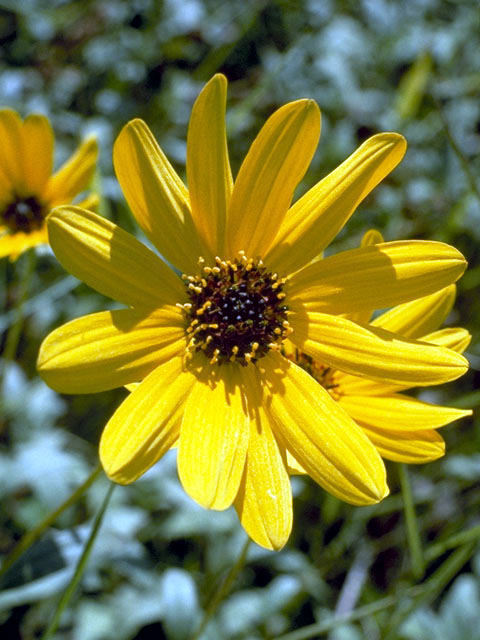
- Black-eyed Susan (Rudbeckia hirta)
Preventive Planting – Linebackers
- “Competitive exclusion” can be applied to both a linebacker’s job of filling holes to overpower and stop the offense from gaining yardage, and so can assertive native plants be utilized to stop and push back against invasives.
- This is a “brute-force” approach, utilizing brawny native plants to counter the invasives. Competitive exclusion is when two species compete for the same limited resources, and that scarcity results in the species with even a slight advantage most likely prevailing.
- These native plants will aggressively expand their footprint and prevent invasives from creating a stronghold or advancing further in your landscape.
- As mentioned earlier regarding Guerrilla Gardening, also applies here – it is best to take this approach over multiple years to observe the results and adjust as needed to allow time for the natives to thrive. Keep in mind the adage regarding many native plants’ growth pattern, “The first year they sleep. The second year they creep. The third year they leap”.
- Below are some potential North Texas native species for this strategy:
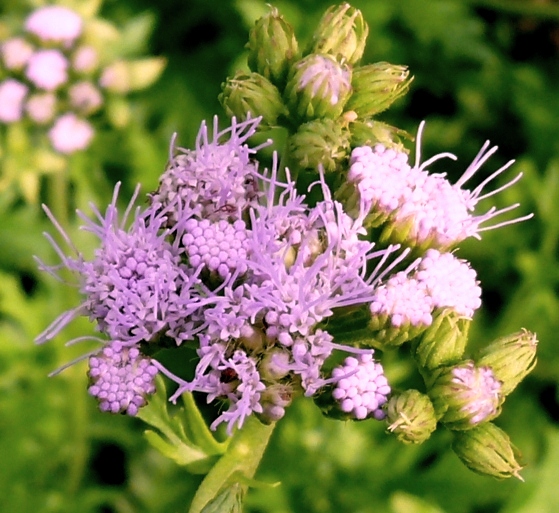
- Blue Mistflower (Conoclinium coelestinum)
- Illinois Bundleflower (Desmanthus illinoensis)
- Inland Sea Oats (Chasmanthium latifolium)
- Frostweed (Verbesina virginica)
- Tall Goldenrod (Solidago altissima)
Layered Landscaping – Defensive Backfield
- As cornerbacks and safeties are tasked with horizontally covering the gridiron from the line of scrimmage to deep downfield, a similar scheme should be employed vertically with native plants. By deploying species of varying heights, you can build a robust synergistic defense against invasives.
- Utilizing native plants that span hugging the soil to towering over the landscape, and all sizes in between, provides the coverage to help stop invasive incursions. With this approach, you can help prevent invasive germination and add an aesthetically-pleasing backdrop for your landscape.
- Just like in football, overlap and convergence of native flora is required to ensure complete coverage. As a result, you are better at mimicking nature, increasing flora diversity to create a more resilient micro-ecosystem, and reducing your landscape maintenance chores.
- “On a team, what matters is not the strength of the individual players, but the strength of the unit and how they all function together” Bill Belichick, NFL Head Coach and 6-time Super Bowl winner
- Below are some additional North Texas native species for each layer:
- Ground covers
- Texas Frogfruit (Phyla nodiflora)
- Eastern Woodland Sedge (Carex blanda)
- White Avens (Geum canadense)
- Annuals / Perennials / Grasses
- Annual Sunflowers (Helianthus annuus)
- Beebalm (Monarda fistulosa) and Lemon Beebalm (Monarda citriodora)
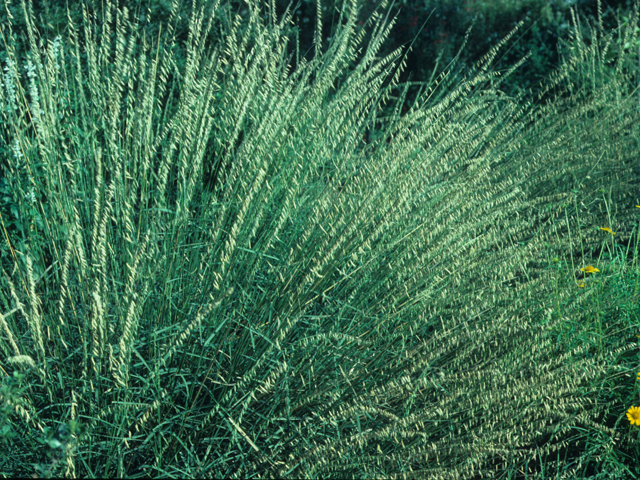
- Sideoats Grama (Bouteloua curtipendula)
- Understory and Large Trees
- American Beautyberry (Callicarpa americana)
- Texas Redbud (Cercis canadensis)
- Chinquapin Oak (Quercus muehlenbergii)
- Ground covers
A Long-term Solution
Unfortunately, there is no easy fix to North Texas’ invasive plant problem. The issue has been years in the making, and the approaches we described are not quick fixes. For a sustainable native plant-driven solution, you need to utilize a mix of proven strategies, patience, and diligence to combat and persevere over our opponent.
Lastly, Lady Bird Johnson, namesake of the Wildflower Center in Austin, succinctly addressed one of the reasons why native plants are so important and why we should always be diligent against invasives – “Native plants give us a sense of where we are in this great land of ours. I want Texas to look like Texas and Vermont to look like Vermont.”