

The Native Plant Society of Texas places a well-deserved emphasis on helping our state insect, the Monarch butterfly. But there are several hundred other butterflies in Texas that depend on our native plants. In Texas, we have over 400 species of butterflies, the most of any state, and making up over half of the species in the United States.
Butterflies are Critically Important to our Ecosystem
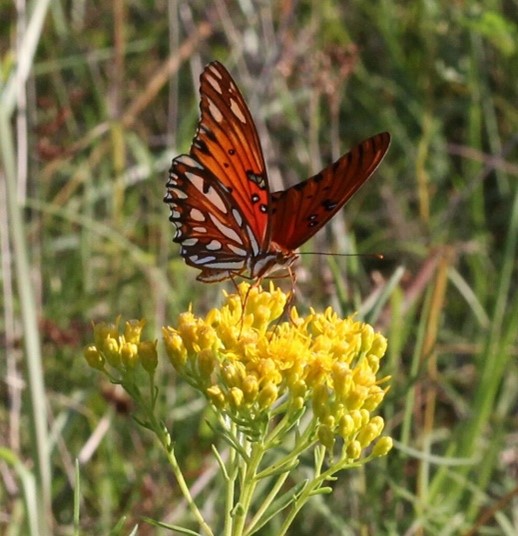
Whether due to their limited range, small stature, or unassuming looks, many of us are not aware of the enormous diversity of our butterfly neighbors. They play a vital role in our ecosystem pollinating native plants and feeding other species.
As pollinators, they are important to a wide variety of plants. However, dwindling native habitats are reducing our pollinators, and 90% of plants need pollinators for reproduction.
They are a preferred food choice of birds, bats, and other insectivores. Some bird’s breeding cycles revolve around the timing of caterpillar availability. Reductions in the number of butterflies would have a direct negative impact on birds and their other predators.
By helping sustain a healthy butterfly population, the benefits cascade to other species in the ecosystem.
Butterflies are Needy
Let’s start by learning about the butterflies’ needs. Since they go through four distinct stages in their short lifetimes – egg, caterpillar, chrysalis, and butterfly – the metamorphoses create varied needs.
Just like birds, a butterfly’s range can vary widely. There are three broad categories of travel by butterflies.
- The rarest form is the “migrant”. They travel back and forth between breeding and overwintering areas. Monarchs fall into this category.
- There are also “immigrant” butterflies that, as adults, can journey great distances with no set route, such as the Painted Lady.
- Most prevalent is the “resident” butterfly that stays in one generalized location their whole life. These butterflies often are at the most risk since their habitat requirements are narrower and with limited ability to settle in new areas.
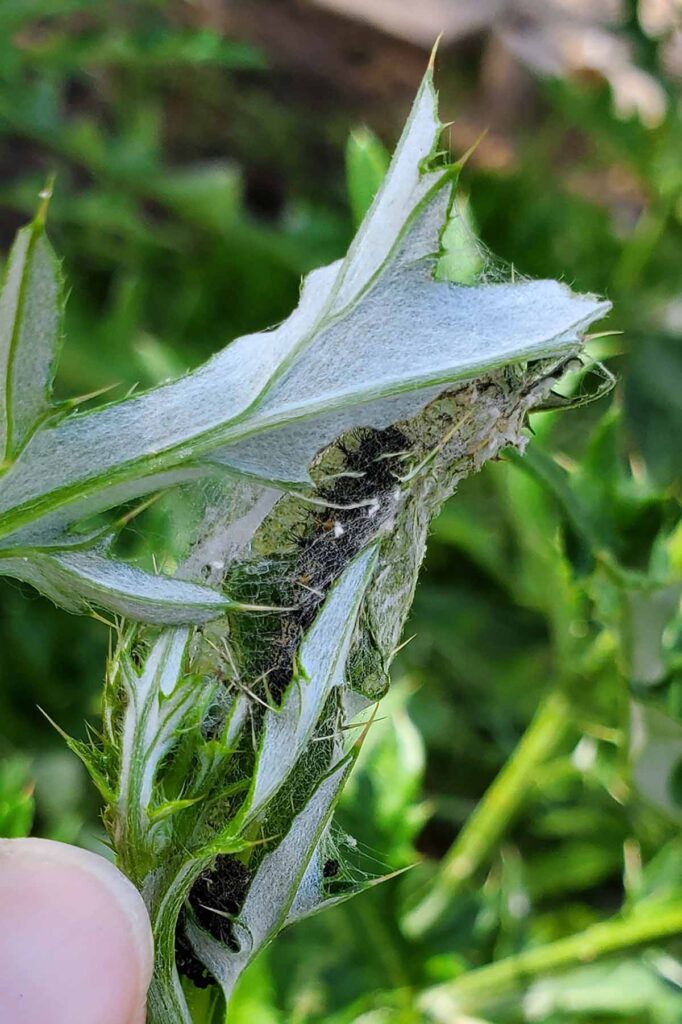
For more information on Monarchs, please see our page devoted to Monarchs and Milkweeds.
Factors to Consider in Planning your Landscape
We will focus on resident butterflies in our planning. When developing your native landscape to attract a variety of butterflies, you should consider the following variables:
- Host Plants – These plants function as food for the caterpillars. The female lays her eggs on these plants, and the caterpillar eats the plant until it forms a chrysalis. Caterpillars are typically fussier than butterflies about their food source.
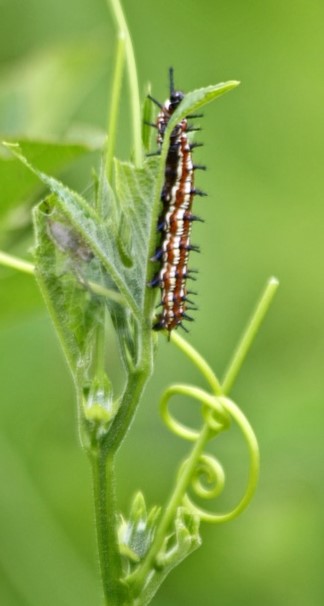
Native Plant Hosts with the Most
Certain caterpillars are “specialists”, only eating one plant species. While the “generalists” will feed on multiple plant species, but
often on plants belonging to one or a few families. Here in North Texas, some reliable host plants, and the resident butterflies they support include:
- False Indigo (Amorpha fruticosa) – Gray Hairstreak, Silver‐spotted Skipper, Southern Dogface
- Purple Passion Vine (Passiflora incarnata) – Gulf Fritillary, Banded Hairstreak, Variegated Fritillary
- Texas Hackberry (Celtis laevigata) – American Snout, Hackberry Emperor, Tawny Emperor
- Wax Myrtle (Morella cerifera) – Banded Hairstreak, Red-banded Hairstreak
Native Nectar Plants
Butterflies are often drawn by flower’s colors, patterns, and fragrance. Choose a variety of colors, but remember not all brightly colored flowers have nectar. Some native nectar plants to entice resident butterflies include:
- Blue mistflower(Conoclinium coelestinum) – Little Yellow, Pearl Crescents, Queen, Swallowtails
- Buttonbush (Cephalanthus occidentalis) – Hoary Edge, Horace’s Duskywing, Silver-Spotted Skipper
- Coral Honeysuckle (Lonicera sempervirens) – Pipevine Swallowtail, Spring Azure
- Frostweed (Verbesina virginica) – Great Purple Hairstreaks, Pipevine Swallowtail
The Best of Both Worlds
Below are some hearty “double duty” native plants of North Texas, serving as both a host to some butterflies and nectar source to others:
- Prairie Petunia (Ruellia humilis) – Buckeye
- Texas Frogfruit (Phyla nodiflora) – Gray Hairstreak, Phaon Crescent, Silvery Checkerspot
- Texas Paintbrush (Castilleja indivisa) – Buckeye, Silvery Checkerspot
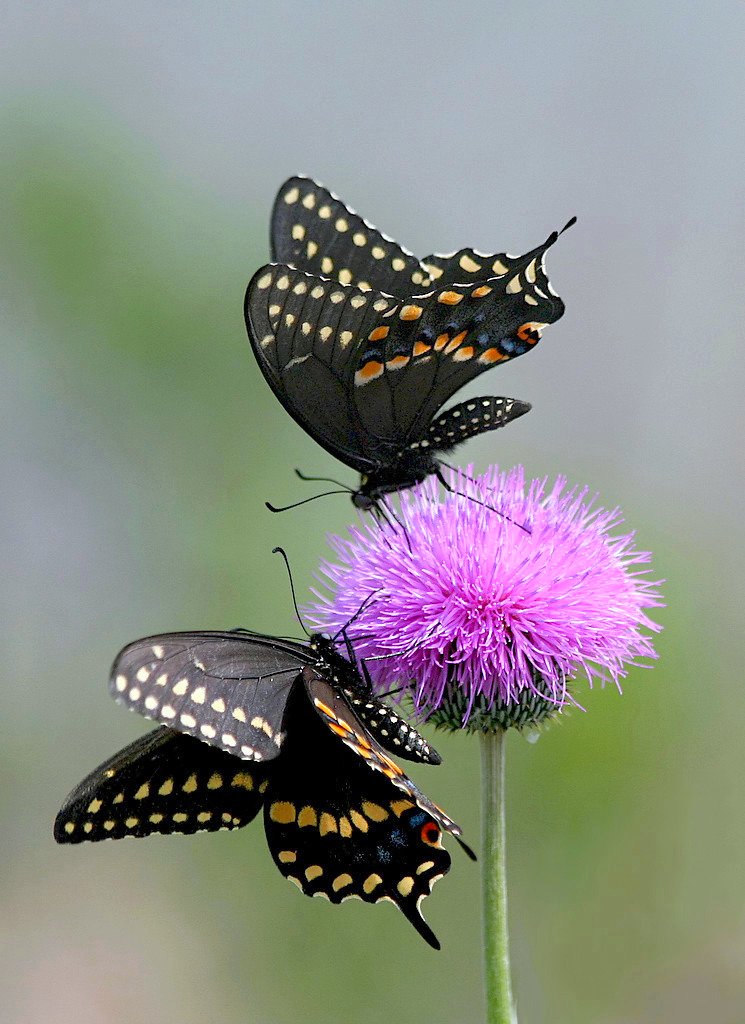
- Texas Thistle (Cirsium texanum) – American Lady, Black Swallowtail (image of Texas thistle)
Loss of habitats, along with increasing usage of invasive plants, has caused decreasing populations of Texas butterflies. Here in North Central Texas, there are an array of native plants to choose from to help boost our local butterfly population. By attracting butterflies, you gain the enjoyment of seeing their beauty, but more importantly, helping them create new generations of butterflies.
