

Buttonbush likes water
Depending on the time of year, its “flowers” are big white pincushions, pale to deep yellow globes, dark red balls or chocolate brown buttons.
San Antonio group tackles invaders
The Balcones Invaders Satellite is a small group of thoughtful, committed citizens on a mission to change the landscape of Texas.
You can help research rainfall patterns by collecting mesquite samples
“I could ask for no better monument over my grave than a good mesquite tree, its roots down deep like those of people who belong to the soil, its hardy branches, leaves and fruit holding memories of the soil….”
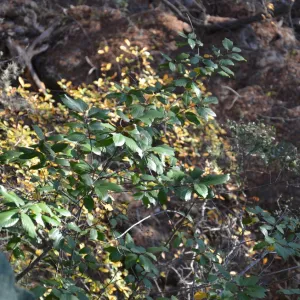
Double Up With NICE! Understory Plants
By Delmar Cain – Boerne Chapter, Native Plant Society of TexasPublished in the Boerne Star on February 28, 2014 The days move by swiftly, geese are flying north and the second month of 2014 will be gone before we know it. At times it is hard to get everything done
Register for our spring symposium
Dr Douglas Tallamy will be our keynote speaker April 26 at the Lady Bird Johnson Wildflower Center
Native plants for butterfly gardens
Butterflies are naturally more attracted to certain native plants because they have evolved together over thousands of years.
State Board will meet in McKinney
The State Board will hold its next quarterly meeting at the Heard Museum in McKinney on Saturday, April 19.
Meet our new Membership Coordinator
Please welcome Becky Etzler as our new Membership Coordinator
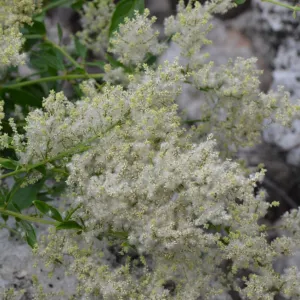
Two Law Officers, but I Got the ChickenThief
By Delmar Cain, Boerne Chapter – Native Plant Society of TexasPublished in the Boerne Star on February 14, 2014. Someone relayed a nasty rumor to me the other day that there were some folks who read this column regularly, but who didn’t always take my advice. “I am shocked, shocked
Monarch garden grants available in 2014
The Monarch butterfly population has declined to the lowest point in over twenty years according to research scientists.
Writers sought for website
**ARCHIVED POST ** Our website is looking for more stories to publish. We are looking for content about native plants and habitats, as well as information about chapter activities, projects, pollinators, book reviews and so forth. Photography and art work is also sought. Authors with experience writing for local newsletters
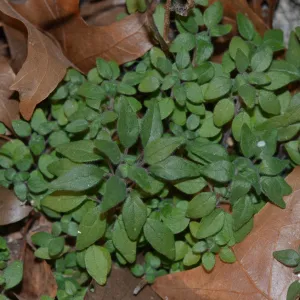
Native in Texas, and from Coast to Coast
By Delmar Cain – Boerne Chapter, Native Plant Society of TexasPublished in the Boerne Star on January 31, 2014. The golf courses in our area will not see much activity today other than at their bars and grills. It was 24 degrees Fahrenheit with wind chills into the teens. The
