


August 6 Lakes & Pines Chapter Meeting – “Everyday Hugelkulture” with Kent Ormsby
How we can use Hugelkulture principles in our everyday gardening and farming practices to increase soil fertility
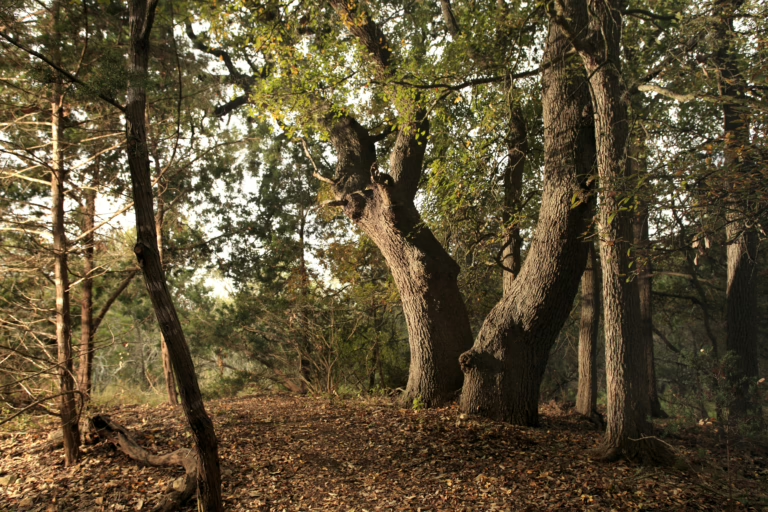
San Antonio Chapter Meeting September 2025
September 2025 Presentation by Cleveland Powell, Brad Weir, Juan Soulas Conservation Planners at SAWSCultivating Water Savings with Native Plants, A Retrospective of SAWS Conservation When it comes to saving water in a rapidly growing and drought-prone service area, SAWS Conservation’s thinking about what works in SA landscapes has changed a
Help us find our new Executive Director!
The Society seeks a dynamic leader to move our statewide, multi-chapter organization forward as we work to grow our impact by educating Texans about the important benefits of native plants in our landscapes. The Executive Director serves as the primary representative of the Society and is responsible for the management

The Beauty of Beautyberry: 7 Reasons to Love This Native Shrub
So often, common names of native plants do no justice to their attributes. But American Beautyberry (Callicarpa americana) is an exception, as its name aptly reflects its vibrant, iridescent purple berries.

August 5th Chapter Meeting
Land Stewardship for Birds Please join us on Tuesday August 5th for our chapter program on “Land Stewardship for Birds and the Importance of Native Plant Communities”. You can attend either in person at the Heard Museum in McKinney or virtually via Zoom. Our speaker, Rufus Stephens, will be discussing how diverse and healthy native plant communities

Be Prepared for the Next Wildfire with Fire-Resistant Landscaping July 22
A spark can quickly become a wildfire like it did during the Crabapple fire that burned nearly 10,000 acres and destroyed nine residences and several other buildings. Are you ready for the next fire? A fire could strike at any moment and with the right conditions threaten your home regardless if you live on acreage in the county or in a subdivision.
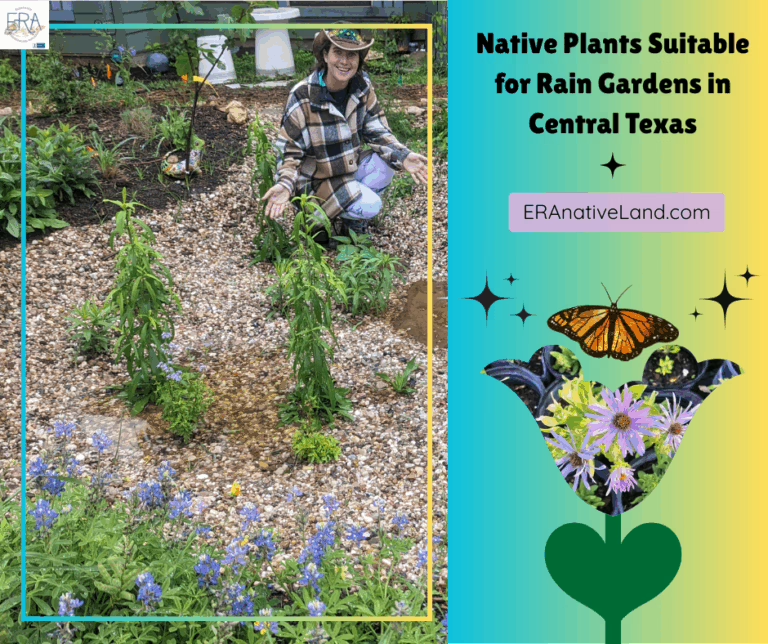
Native Plants Suitable for Rain Gardens in Central Texas
“From red and gold hues in the Fall to bright swaths of wildflower color in the Spring, Texas seasons manifest most vibrantly through the growth of our native flora. Utilizing native plant species in Texas landscapes encourages more biodiversity, healthier soil, and holds immense value to our native fauna, including pollinators. In this presentation, ERA highlights the benefits of some of our most breathtaking and instrumental native plants that are suitable for a range of conditions from soggy to crispy, revealing how these plants are used in rain gardens, and other landscapes, in Central Texas. Bring diversity home by growing native!”


14 on the 14th: Attract Hummingbirds with These Native Texas Plants
Welcome to our July #14onThe14th listing. This month, we are focusing on attracting one of nature’s jewels – Hummingbirds! 🐦🌺 These tiny, energetic birds love tubular, nectar-rich flowers, especially in shades of red and orange. Planting these Texas natives will make your garden a favorite refueling station during their long

Less Water, More Wow: Native Grasses
Native grasses have shaped Texas prairies for centuries, yet less than 1% of the state’s original 20 million acres of tallgrass prairie remains today, according to the Native Prairies Association of Texas. That makes tallgrass prairie one of North America’s most endangered ecosystems. The small remaining parcels of native grasses

Tips for Working With Your HOA
By Nancy Saint, Houston Chapter I had a frustrating visit last year from one of the two people on my Homeowner’s Association (HOA) Architectural Committee (AC). ACs are responsible for overseeing and regulating changes to the exterior appearance of properties within a community. They wanted me to “cut my weeds and

Photographing Biodiversity
Matt Buckingham is a naturalist, photographer, and protected species biologist based out of Lufkin. Matt received a bachelors in wildlife management from Stephen F. Austin State University (SFA) in 2007. In 2011 Matt graduated from SFA with a masters in biology with an emphasis on ecology and evolutionary biology. For his thesis, Matt studied the bird communities of Iguazu National Park, Argentina. Matt has a long history of working as a biologist with various species including American alligators, Neotropical migrant songbirds, Snowy Plovers in the Texas panhandle, and secretive marshbirds in the Chesapeake Bay. Matt previously worked as a conservation biologist for Bayou Land Conservancy, a land trust in the Houston area and as a biologist Texas Department of Transportation, where he worked on endangered species conservation, road ecology research, finding innovate ways to reduce impacts to wildlife from road construction activities, and developing solutions for wildlife/vehicle conflicts. Matt also worked as a biologist for the U.S. Fish and WIldlife Service with federally listed, proposed, and review species. Matt currently works for Ecosystem Planning and Restoration, LLC, where he works on research, conservation, and mitigation projects. Matt also works as a freelance photographer and author, and his images and articles have been published in a variety of magazines. Matt lives in Lufkin with his wife and son and spends as much time as possible exploring the Pineywoods around their home and beyond.
