

Eventually, in the journey of most native Texas plant enthusiasts is interest in collecting, saving, and sowing seeds. The reasons are many – economical, rewarding, and helping the ecosystem are just a few.
Our focus will be on perennials native to North Texas since they are the most popular type of native plant for seed collecting. But most of the discussion also applies to native shrubs and trees. However, care of native annual and fruit tree seeds requires more specialized practices.
Gathering Seeds
There are a few immutable rules on gathering native seeds:
- Do not gather seeds from public parks or spaces.
- Collect from private property only after approval from landowner.
- Do not collect from plants that are endangered or in minimal numbers on a property.
- Limit seed gathering to native plants that are numerous in the location and refrain from taking more than 10% of available seeds.
The simplest place to start collecting seeds is from your own native plants and distribute them to other areas on your property or share with family and friends for them to get started in native plants.
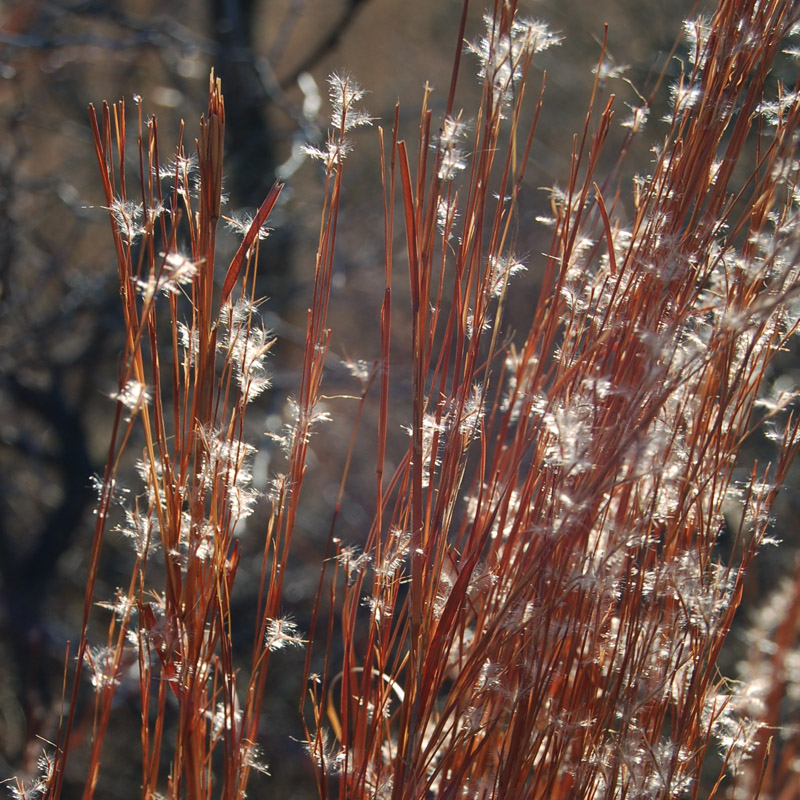
Autumn is the best time for seed gathering. Many native plant seeds become ripe at this time of year. The plant gets a chemical signal, stops producing any more seeds, and seals off the stem.
Tip #1 – Look for brown stems to tell when seeds are ripe for picking.
Tip #2 – Wear gloves when collecting seeds – many have irritating oils.
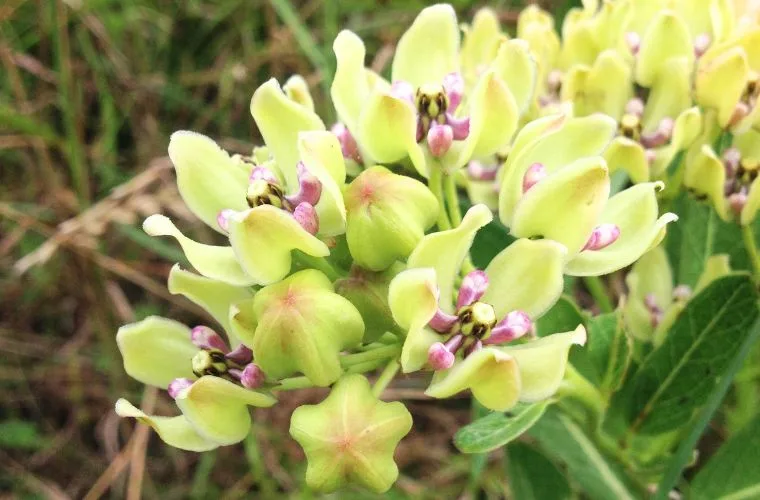
Tip #3 – For seeds like milkweed, be prepared to immediately corral the seeds; otherwise, the fluff will send them away before you have time to place them into a container.
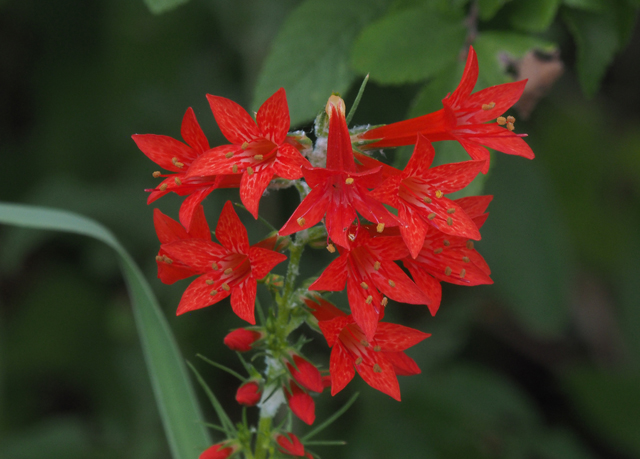
Tip #4 – With very fine seeds, like Standing Cypress (Ipomopsis rubra), accidental inhalation can be a problem, so be careful, and wear a mask if necessary.
Storing Seeds
Start by cleaning the seeds, separating the seed from other plant parts such as dried flowers and stems. By removing these items, you help reduce your storage needs and lower the possibility of insects or their eggs damaging the seeds, giving them a greater chance of germination.
Most importantly, only store seeds after 1 – 3 days of air drying. This is best done in single layers on canvas, screens, or trays.
Tip #5 – It is important to utilize paper bags for seed storage to provide some air circulation and help prevent molding.
Tip #6 – A simple but often overlooked best practice is ensuring you label the paper bag used for storage. Seeds that seem obvious upon gathering, will not be so obvious when the time comes to sow.
Tip #7 – Seeds should be planted within a year; some may be able to last longer, but the germination odds decrease.
To take your seed propagation game to the next level, you can utilize scarification – scratching the seeds surface, or stratifying – placing seeds in a cold environment to mimic winter. Learn more about these techniques for native plants, and also specifically for milkweeds.
Sowing Seeds
Typically, the best time for sowing native plant seeds in North Texas is fall. This gives them a chance to go through our weather cycles to help induce germination. Exposure to cold spells, rain, and soil abrasion are all enablers of germination in most native plants.
Native plants have close associations with fungi in the soil. So, without good soil contact, it is more difficult for plants to get a start. Experts recommend covering seeds with soil that is no more than twice their diameter. For most native perennial seeds, this equates to about 1/8 – 1/16” of soil.
Tip #8 – A common error is covering seeds with too much dirt, resulting in a failure to germinate. Minuscule seeds can be placed on top of the soil, provided there is good contact with the soil.
Tip #9 – To increase your chances of germination, ensure the seeds will not have too much competition upon germination. Clear the area, especially of invasives, to give your seeds a fighting chance.
An advanced approach is starting your seeds indoors to help increase the odds of germination in the spring. More information on this technique is available here (shown for milkweeds but applicable to most wildflowers).
Raising your native North Texas plants from seed is a wonderful way to add another interesting and rewarding element into your native landscape.
