“Land stewardship can be profoundly satisfying as you marvel at the beauty and complexity of the ecosystems around you,” said Stephens, a retired Texas Parks & Wildlife district leader. I’m really looking forward to sharing tips about attracting birds to your property regardless if it’s a city lot, a large ranch, or something in between.”
Nearly 50 years of data tells us that bird populations are declining at an alarming rate, but with thoughtful practices you can help reverse this trend. What you do on your property can restore and enhance bird habitats to produce the cover, food, and water needed for thriving bird populations.
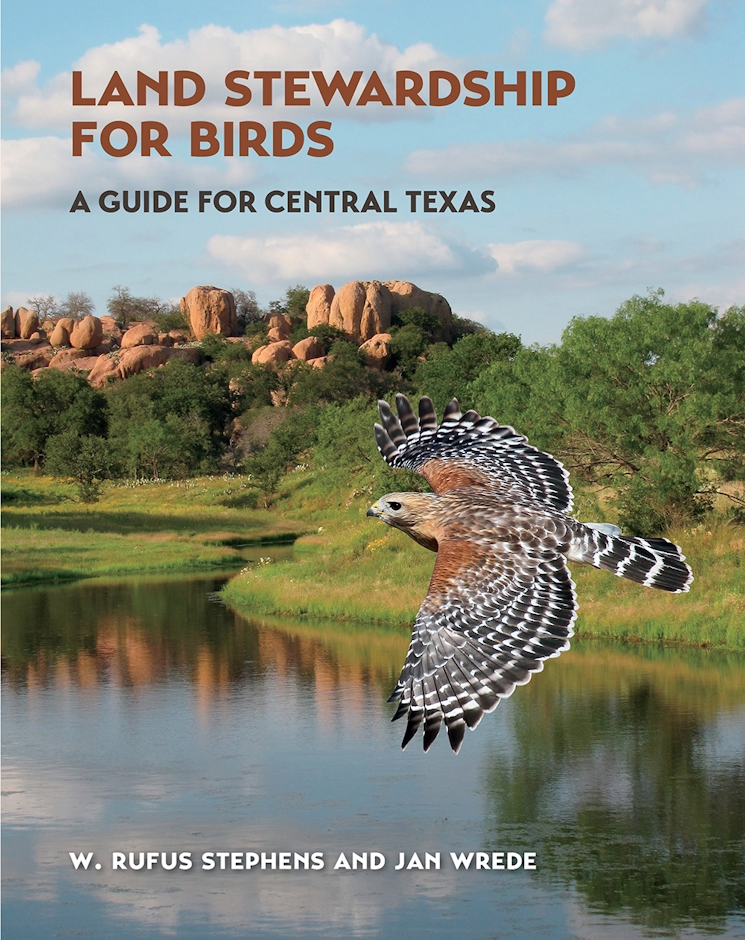
Author Rufus Stephens, co-author of the book, Land Stewardship for Birds: A Guide for Central Texas, will speak at 7:00 p.m. at the next meeting of the Fredericksburg Chapter of the Native Plant Society of Texas on Tuesday, August 27, about conserving and enhancing local habitats – live oak savannas, grasslands, and residential yards.
Stephens has long held a special interest and expertise in helping smaller-acreage landowners manage for a variety of wildlife. He retired in 2017 from Texas Parks & Wildlife Department after a 23-year career as an urban wildlife biologist, a district wildlife biologist, and most recently as the district leader for the 25-county Edwards Plateau Wildlife District. Over the years he has developed and conducted numerous workshops for landowners on how to write their own plans for wildlife tax valuation.
To reach a greater number of people interested in the conservation of Texas, Stephens and educator Jan Wrede, the author of Trees, Shrubs, and Vines of the Texas Hill Country, merged more than 75 years of practical land stewardship experience. They have co-authored both the recent book, Land Stewardship for Birds: A Guide for Central Texas, and in 2016 Attracting Birds in the Texas Hill Country.
Rufus Stephens, award-winning wildlife biologist and author
Signed copies of Land Stewardship for Birds: A Guide for Central Texas, will be available for sale at the meeting.
The Fredericksburg NPSOT chapter holds its monthly meetings on the 4th Tuesday of the month at St. Joseph’s Halle (212 W. San Antonio St., Fredericksburg). Social time with snacks begins at 6:30 p.m., and the meeting and presentation starts at 7 p.m. The public is invited to attend in person and via online streaming on the Fredericksburg Texas Native Garden youtube channel.
More information is online at Facebook (@fbgtxnpsot), Instagram (@npsot_fredericksburg_chapter), and on our website: https://npsot.org/chapters/fredericksburg/. Meetings are free and open to the public.
About the Region
Salado, the location of our Fall 2025 Symposium, lies at the intersection of two ecoregions: the Edwards Plateau (Limestone Cut Plain) and Blackland Prairie (Northern Blackland Prairie).
The Edwards Plateau area is also called the Hill Country; however, this general term covers a much larger area extending farther north. Spring-fed creeks are found throughout the region; deep limestone canyons, rivers, and lakes (reservoirs) are common. Ashe juniper is perhaps the most common woody species found throughout the region. Additional woody species include various species of oak, with live oak (Quercus fusiformis) being the most common. Sycamores (Platanus occidentalis) and bald cypress (Taxodium distichum) border waterways. This area is well known for its spring wildflower displays, though they may be viewed in spring, late summer, and fall, as well. According to Texas Parks and Wildlife, average annual rainfall in the Edwards Plateau ranges from 15 to 34 inches.
The Blackland Prairie extends from the Red River south to San Antonio, bordered on the west by the Edwards Plateau and the Cross Timbers, and on the east by the Post Oak Savannah. Annual rainfall averages 30 to 40 inches, with higher averages to the east. This region is dominated by prairie species. The most common grass species include little bluestem (Schizachyrium scoparium) and Indian grass (Sorghastrum nutans) in the uplands and switchgrass (Panicum virgatum) in the riparian areas and drainages. Common herbaceous flowering plants include salvias, penstemons, and silphiums. This area has suffered greatly from overgrazing and agricultural use. Few intact areas remain, though many of the plants can be found along county roadsides throughout the region.
Our fall Symposium host chapter, the Tonkawa Chapter, includes both of these ecoregions.