Fredericksburg Chapter

Crossroads of the Eclipses: How Plants and Dark Skies are Connected in the Texas Hill Country

Tuesday, June 27 Native Plant Society of Texas, Fredericksburg Chapter Meeting
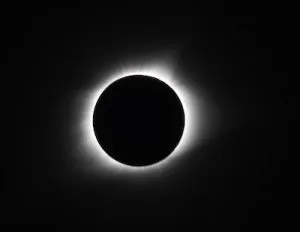


The annular solar eclipse of 2023 and the total solar eclipse of 2024 will place the Texas Hill Country at the crossroads of two remarkable celestial phenomena. Central Texas will become the epicenter of great activity and tourism during these events, hosting visitors from across the state, around the nation, and worldwide. The total solar eclipse’s path of totality passes through 83 Texas counties and 15 U.S. states. However, it is among the pristine streams, migrating birds, vibrant bluebonnets, and rolling terrain of the Hill Country where optimum viewing is forecast.

How dark skies and plants are connected is a topic addressed by Dawn Davies with Hill Country Alliance at the Fredericksburg chapter meeting on Tuesday, June 27. As Night Sky Program Manager, Dawn works with volunteers and local leaders across the region to promote night sky preservation and eliminate light pollution and its detrimental environmental effects. She also heads up the Hill Country Eclipse Team, an assembly of community and county-based task forces working together to prepare for the upcoming 2023 and 2024 solar eclipse events.

“We are excited to have Ms. Davies join us for our June meeting to share her insights on dark skies, the upcoming eclipses, and how plants might be affected,” said Deborah Simmons, President, Fredericksburg Chapter of NPSOT. “We hope the public will come join us to learn more and bring their questions.”

The chapter holds its monthly meetings on the 4th Tuesday of the month at St. Joseph’s Halle (212 W. San Antonio St., Fredericksburg). There is a social time at 6:30 p.m. and the meeting starts at 7 p.m.


Hill Country Alliance, a non-profit organization, is focused on raising public awareness and building community support around the need to preserve the natural resources and heritage of the Central Texas Hill Country.

 – Holly Simonette

Dawn Davies, June 27, 2023 Speaker for Fredericksburg chapter meeting

About the Region

Fall Symposium 2025 Logo - Teach for the Future

Salado, the location of our Fall 2025 Symposium, lies at the intersection of two ecoregions: the Edwards Plateau (Limestone Cut Plain) and Blackland Prairie (Northern Blackland Prairie).

The Edwards Plateau area is also called the Hill Country; however, this general term covers a much larger area extending farther north. Spring-fed creeks are found throughout the region; deep limestone canyons, rivers, and lakes (reservoirs) are common. Ashe juniper is perhaps the most common woody species found throughout the region. Additional woody species include various species of oak, with live oak (Quercus fusiformis) being the most common. Sycamores (Platanus occidentalis) and bald cypress (Taxodium distichum) border waterways. This area is well known for its spring wildflower displays, though they may be viewed in spring, late summer, and fall, as well. According to Texas Parks and Wildlife, average annual rainfall in the Edwards Plateau ranges from 15 to 34 inches.

The Blackland Prairie extends from the Red River south to San Antonio, bordered on the west by the Edwards Plateau and the Cross Timbers, and on the east by the Post Oak Savannah. Annual rainfall averages 30 to 40 inches, with higher averages to the east. This region is dominated by prairie species. The most common grass species include little bluestem (Schizachyrium scoparium) and Indian grass (Sorghastrum nutans) in the uplands and switchgrass (Panicum virgatum) in the riparian areas and drainages. Common herbaceous flowering plants include salvias, penstemons, and silphiums. This area has suffered greatly from overgrazing and agricultural use. Few intact areas remain, though many of the plants can be found along county roadsides throughout the region.

Our fall Symposium host chapter, the Tonkawa Chapter, includes both of these ecoregions.

Source: Wildflowers of Texas by Michael Eason