Evolving from Control to Stewardship
Transitioning to native Texas plants is not complicated, but it does involve significant changes from conventional landscaping practices. An unexpected guide is George Costanza. The Seinfeld character offered an insightful reflection about his life that we can apply to how we should approach tending native plants after maintaining non-native plants.
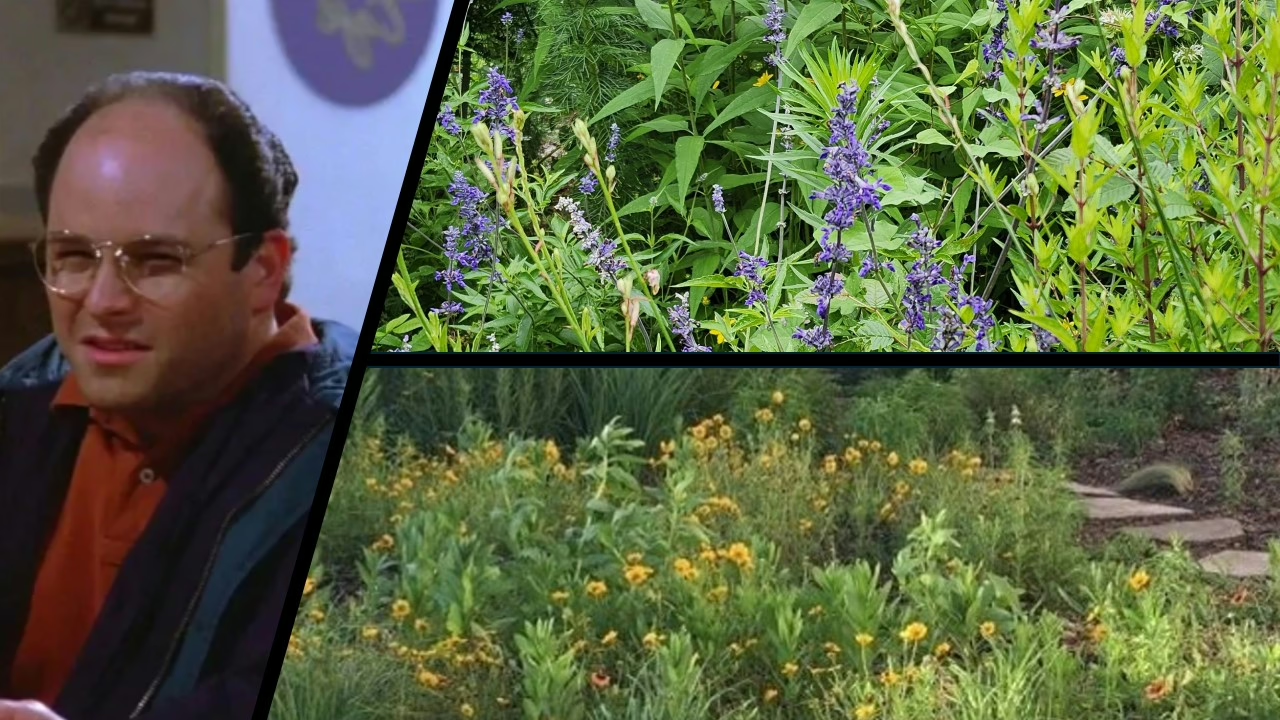
In the Seinfeld episode, “The Opposite”, Costanza has an epiphany after a lifetime of frustration and disappointment. He comes to this conclusion about his life choices and a new direction during his lunch menu choice, “Nothing’s ever worked out for me with tuna on toast. I want the complete opposite of tuna on toast…” Costanza later agrees with Jerry Seinfeld’s summation, “If every instinct you have is wrong, then the opposite would have to be right.”
Five “Opposite” Practices for Native Plant Success
If you are shifting from a non-native landscape to native plants, the “do the opposite” approach is surprisingly good advice. Actions typically performed on traditional landscapes, when applied to native plants, often yield poor results and frustration. Your success with native plants will stem from reversing the approach you took with a traditional landscape. If you have decided to plant native species, here are five practices and approaches to be inverted:
1. Instant Gratification → A Process
Traditional landscaping is often about immediate results: buying a “turnkey solution”. We fill our landscapes with plants like we decorate our living rooms, seeking an immediate and unchanging aesthetic.
However, expecting immediate results from native plants is unrealistic. Native landscaping rewards patience, not instant gratification. An often-used phrase about native plants:
“The first year they sleep, the second year they creep, the third year they leap.”
Native plants build their root systems first, which delays above-ground growth. This slow process of growth makes them more resilient and drought-tolerant.
2. Trying to Exert Control → Working in Tandem with Nature
Traditional landscapes are an attempt to exert control over nature through mowed lawns, manicured shrubs, and perfectly edged beds. Typically, because of certain aesthetic traits, we insert these foreign plants into soil types, climates, and overall ecosystems they were not meant for. This attempt at exerting control comes with increased costs and time to maintain these exotic non-native plants.
Native plants invite a more observational approach. You can spend more time enjoying your landscape, and watching for patterns, such as when blooms occur, which plants attract the most pollinators, and the impact of rainfall. The goal is not to dominate nature, but to follow nature’s lead. Native plants have evolved over thousands of years to thrive in Texas soil and climate. With minimal intervention, native plants will grow, reseed, and form natural communities, and over time, you transition from a gardener to a steward.
3. Regular Watering → Occasional Soaking
In the Texas heat, non-native turf lawns and exotic ornamentals need regular watering to stay alive. Most of these plants are from countries with greater rainfall than we receive here in Texas.
Native Texas plants have adapted to our large fluctuations in moisture and temperature. One common trait among our natives compared to exotic plants is a deep root system that can find and store moisture. With native plants, you can greatly reduce automated sprinkler time and focus on deep, occasional soakings. Watering is usually required when establishing new native plants, but then they will thrive with little to no supplemental irrigation.
4. Frequent Use of Chemicals → Ecological Balance
In landscapes with non-native plants, we are taught to use fertilizers to help make plants grow and pesticides to keep insects at bay. However, applying those chemicals can harm your landscape’s ecosystem, including pollinators and other insects.
Because native plants evolved with our Texas soil, climate, and insects, they do not require fertilizers or pesticides to thrive. Abstaining from these chemicals helps build healthier soils and supports a balance with insects and their natural predators. Working with nature, not against it, is a simpler, cheaper, and more effective way to garden.
5. Uniformity → Diversity
A conventional landscape typically prizes uniformity: an expansive lawn with an exotic grass species, a row of the same evergreen shrub, and a few seasonal exotic annuals. This lack of variation may appear tidy, but it creates a static landscape that offers little habitat, requires constant upkeep, and has limited resilience.
But in nature, a more diverse mixture of native plant types – grasses, perennials, ground covers, shrubs, or trees – with a variety of species, provides changing colors and forms through the seasons while supporting a bevy of pollinators and birds. Using multiple species within these plant types adds visual beauty and increases resilience. If one species struggles, others can fill the gap and help keep the landscape functioning as a dynamic, thriving community.
When ‘The Opposite’ Is the Right Choice
The Costanza character is certainly no role model; however, his “do the opposite” revelation applies remarkably well when moving away from non-native plants. Having made the choice to use native plants in your landscape, you are taking a big step in helping your local ecosystem and creating a healthier, more vibrant yard. Switching to native plants saves time and money on chemicals and maintenance, freeing time to observe and learn from nature as your landscape becomes more resilient and beautiful.