

Brighten Up your Landscape with a Bold and Beautiful Texas Native Plant
“Keep your face to the sunshine and you cannot see the shadow. It’s what sunflowers do.” Helen Keller
Continuing our “going big” theme, another plus-sized North Central Texas native perennial are Maximilian Sunflowers (Helianthus maximiliani). Under optimal conditions, they can reach upwards of 8 feet tall, but typically are 4 – 5 feet.

As you can probably surmise by the name, they have bright yellow flowers, up to 5 inches in width, that appear in late summer to early fall. Plus, they colonize readily, and a grouping can expand up to 9 feet wide, making a bold statement in the landscape.
Origin of Plant Name
An interesting sidenote is the plant’s name. It is part of the large Helianthus genus, within the Asteraceae family. Maximillian in Latin is “greatest”, or at first glance can be thought of as referring to its large size. However, the term is in honor of the German explorer and naturalist – Prince Maximilian of Wied-Neuwied. He was a pioneer in expeditions to Brazil, and in 1832 to the United States. It was his travels up the Missouri River where he encountered Helianthus maximiliani. Additionally, he traveled with Karl Bodmer, a well-known artist who produced accurate and beautiful depictions of Native Americans and the landscape.
Growing Maximillian Sunflowers
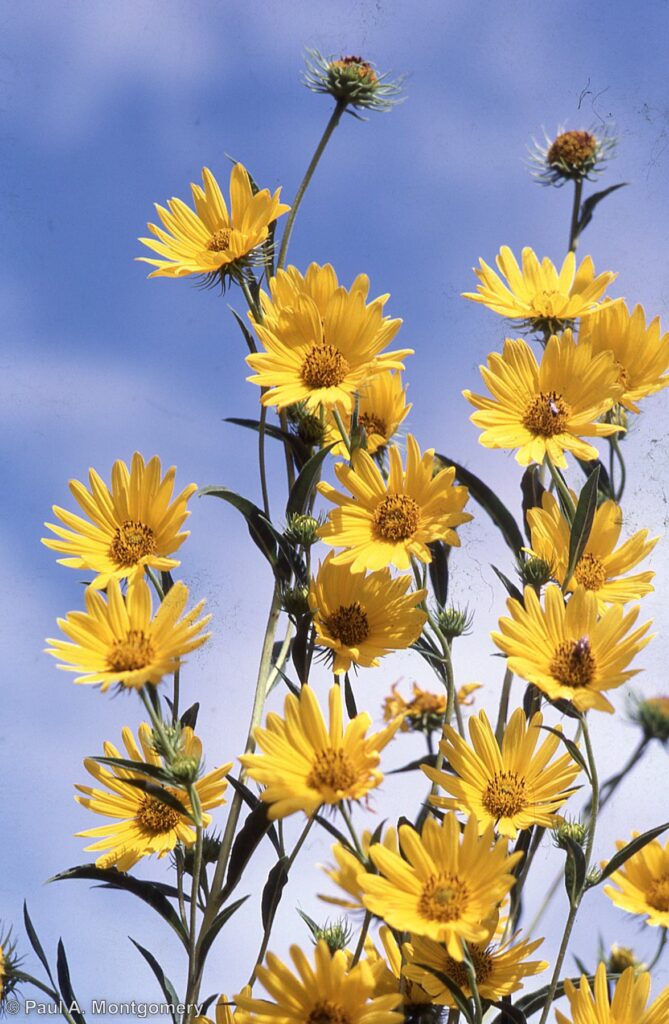
As with most sunflowers, Maximilian requires full sun to live long and prosper. It does best with some deep watering during its first growing season, but after getting established, it requires little supplemental watering. Plus, like many natives, it does not require highly fertile soil, which can cause too strong of growth, resulting in weakened stems, and the plant falling over.
As mentioned earlier, they grow by forming a circular colony, spreading out to nearly 9 feet in width over several years. Dividing the rhizomes in the winter helps to keep the plants strong and provides more specimens for other areas of your landscape.
An Indispensable Texas Native for Wildlife
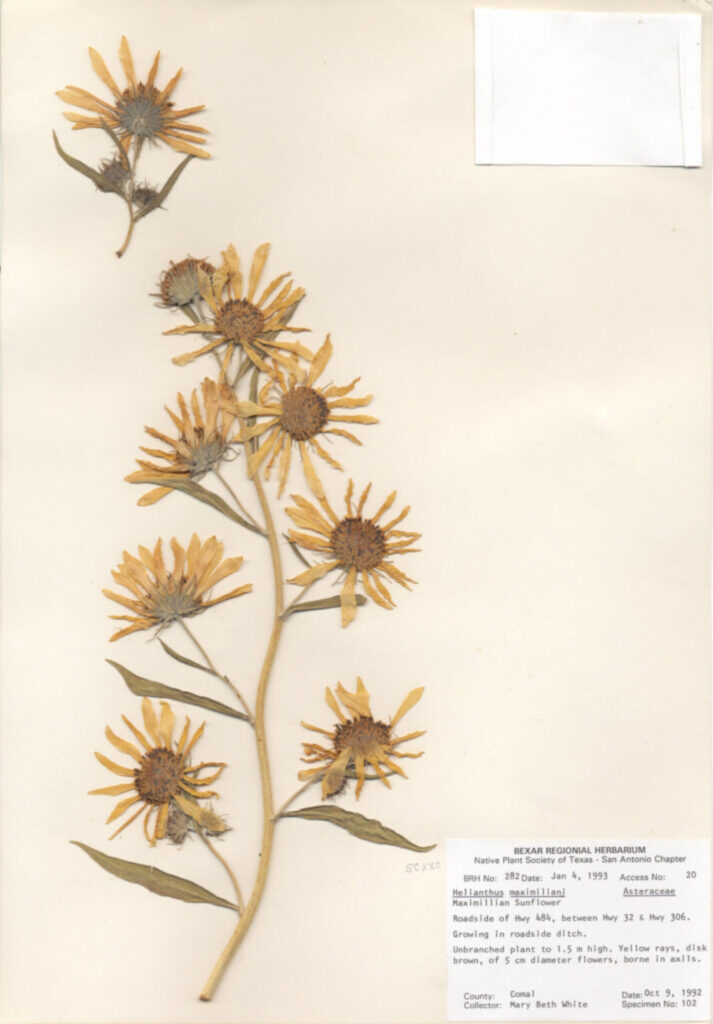
Helianthus maximiliani, with their abundant bright yellow flower heads, deliver a large crop of nectar, pollen, and seeds for your local wildlife. Bees and Butterflies utilize the large amount of nectar produced in the late summer to fall blooming period to help sustain them as other plants’ blooms expire. In addition, the bumper crop of seeds produced helps feed our local birds and other wildlife throughout the winter.
The plant’s open flower form and shallow disk florets provide an easy entry to nectar and pollen for most pollinators regardless of their size or tongue length. Additionally, Maximilian flowers follow the sun throughout the day, providing the vulnerable pollinators with a flat landing platform and a warm place to feed.
Maximilian Sunflower’s Range
Its native range is over much of central North America – broadly from the Mississippi River to the Rocky Mountains and southern Texas into the Canadian plains. A native prairie perennial, it grows in mixed-grass prairies in this long swath across North America. Plus, it takes advantage of roadsides and other disturbed areas to flourish.
Landscaping with Helianthus Maximiliani
This sunflower is ideal if you plan to do some wildscaping. Other areas include along a fence, the back of a perennial garden, or in tough sunny conditions with poor soil. Including it in a pocket prairie or small wildflower meadow is ideal for maximizing this plant’s strengths. Not only will you gain the bold impact made by the plant’s size, but the abundance of bright yellow flowers adds a great fall color to your landscape.
Companion Plants
In keeping with its natural surroundings of the North American prairies, some ideal companion plants are native grasses, including:
- Indian Grass (Sorghastrum nutans)
- Big Bluestem (Andropogon gerardii)
- Switchgrass (Panicum virgatum)1
Plants to avoid are small delicate native perennials that it will overwhelm. Planting with other sturdy prairie natives will complement and showcase your Maximillian Sunflowers.
When making your landscaping plans, be sure to include the addition of Maximillian Sunflowers. They will not only make a strong visual impact but will benefit your local wildlife and ecosystem.
