

Bringing together eye-catching blooms, fragrance, and adaptability
Ribes aureum var. villosum (synonym Ribes odoratum) is a hardy native deciduous shrub with early-season flowering, a noticeable fragrance, and strong wildlife support. We began with its scientific name, because it has many common names, all with a nod to its edible berries, including Clove Currant, Golden Currant, and Buffalo Currant. In wildscapes, its thicket-forming habit and informal look, make it right at home. It is a “tweener” in many aspects, well-suited to the “in-between” conditions that are neither consistently dry nor consistently wet and occupying a middle ground between a wildlife magnet with some rough edges and a showy feature shrub.
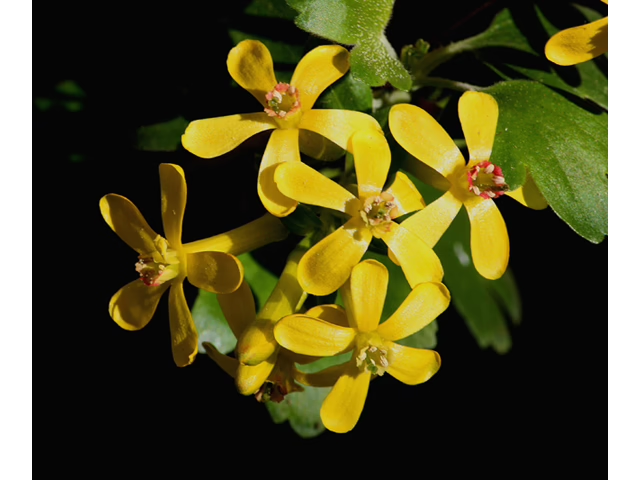
Four-Season Interest
Clove Currant is a deciduous, multi-stemmed shrub not typically available commercially, but it can often be found at native plant sales.
- Flowers: In late winter to early spring, here in North Texas, the shrub produces a bonanza of trumpet-shaped, golden-yellow flowers. For an extra dose of color, each bloom is tipped with a touch of red as it ages.
- Foliage: The leaves are palmately lobed (like tiny maple leaves). Come autumn, the bluish-green leaves transition into shades of burgundy, orange, and gold.
- Form: Usually 5 – 10 feet in height and width; it has an arching habit that is often not too bulky nor too spindly.
- Fragrance: The “Clove” in Clove Currant stems from its flower’s sweet and spicy aroma of vanilla and clove. If possible, place the plant near paths, patios, or similar spots where the fragrance can be easily enjoyed in spring.
- Fruit: After flowering, small edible black berries develop and ripen later in the season, providing food for birds and other wildlife.
Resilient by Nature
Remarkably adaptable, Clove Currant can thrive in a variety of conditions in the landscape.
- Cold Hardiness: It is hardy in USDA zones 3 to 8, so it handles North Texas winters with ease. But like many natives, very young plants can benefit from protection during extreme freezes.
- Growth Habit: The shrub will form colonies over time through suckering. For wildscapes and wildlife, this is a benefit, but it will require some extra maintenance if placed in a more formal native garden.
- Light: While it thrives and produces the most flowers and fruit in full sun, it is adaptable to part shade. Plus, in hotter climes during the summer, some afternoon shade can help prevent the leaves from getting “crispy” around the edges.
- Moisture: Once established, it is nearly drought-tolerant, but it does appreciate occasional deep watering. But avoid locations that are persistently wet, as they can increase the potential for disease.
- Soil Preference: Clove Currant tolerates a wide pH range, including calcareous and clay-heavy soils common in North Texas, as well as poor or sandy substrates. The key element required in all soil types is good drainage.
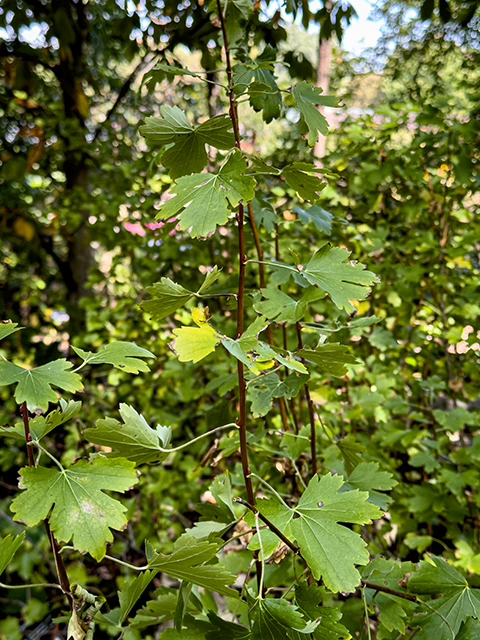
Because of its growth habit, it is ideal for naturalized plantings. The suckering habit can be utilized for erosion control on slopes or as a ground cover in larger spaces. Alternatively, plant en masse for an informal hedge, with its arching form providing visual interest.
Native Range and Habitat
The Villosum variety is the Eastern representative of Grossulariaceae (Currant family). Its native range stretches from the Great Plains down into the Texas Panhandle and North Central Texas, extending east toward the Mississippi River Valley.
Clove Currant is most often found in the wild along woodland edges, thickets, and river or stream corridors. These locations provide dependable sunlight and moisture throughout the year. It fits nicely into landscape “edges,” such as between open lawn and tree cover, along the back of a border, or in naturalized areas.
Though not common in the “wilds” of North Texas today due to urbanization and habitat fragmentation, it remains a component of native flora and is often found in remnant natural areas or along fencerows and roadsides. Additionally, the species has been affected by concerns about other members of its family that can serve as a host for White Pine Blister Rust. As a result, it has been banned in some states with substantial White Pine populations. However, in North Texas we have no native White Pines (5-needled) and few in cultivation.
Wildlife Value
Its early flowering habit provides insects and hummingbirds with pollen and nectar when few shrubs are blooming. Later in the year, the berries are consumed by birds and other wildlife. Birds love the cover and nesting available within its branching structure. As a host for beneficial insects and an early source for nectar and pollen, it assists the early waves of native bees and predatory insects that help control garden pests naturally throughout the year.
Beauty, Fragrance, and Function
Clove Currant is a resilient, wildlife-friendly shrub that delivers beautiful spring flowers and clove-like fragrance. With some sunshine, decent drainage, and room to grow, it can serve as a structural plant, natural screen, or part of a wildscape. Ribes aureum var. villosum is a testament that native Texas plants can be just as showy and fragrant as exotic ornamentals.
