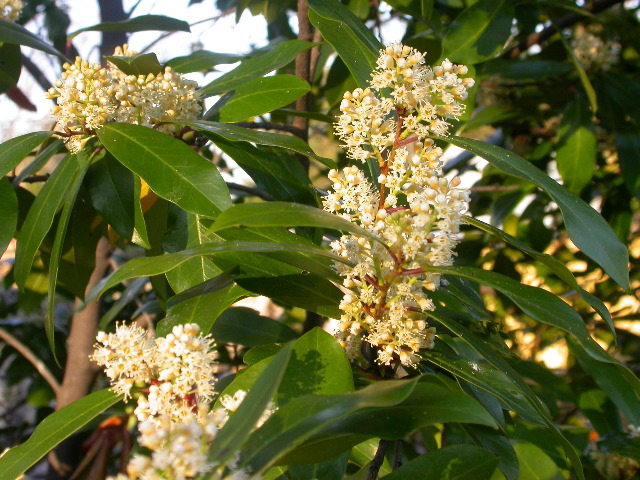
A Beautiful Evergreen Tree Native to North Texas
While NPSOT and others have written before about the highly invasive non-native Ligustrum, the damage this single plant is doing to North Texas wooded areas and wildlife cannot be overstated or repeated enough. Ligustrum covers a variety of plant species and is widely available at nurseries and home improvement stores with the common name of Privet. The Privet’s prodigious production of seeds and lack of natural enemies to help keep it in check, makes it a terror, especially when it adjoins natural areas. Inevitably, the Privet’s seeds will be dispersed, and soon it will overtake all native plants, creating a monoculture.
North Texans are Fighting Back Against Privets
Amy Martin recently wrote two fantastic articles on how North Texans are battling Privets and some hard-fought success stories in their campaign to remove them. Included in the articles is a quote from our former chapter president, Carol Clark, regarding a Collin County greenbelt that Privets have overtaken, and sums up why the battle is so critical to preserving our local ecosystem:
“No buzzing of insects, no flutters of wings, no birdsong. There are no small scurryings, no animals in sight. There is nothing here but Privet.”
Ligustrum is crowding out native trees and other species across Texas. But it is especially troublesome in our parks and other natural areas that adjoin commercial or private land where landscapers or homeowners have utilized Privets. The prevalence of Privets is pushing out critical native pollinator-friendly plants and impacting our native bees, birds, and other fauna.
Removal Brings Fast Results
A US Forest Service study in Georgia brought clarity to the tremendous impact of Privets on wildlife. Privet that had taken over a forested area resulted in an average of just 9 native bee species and a total of 35 bees per test plot. After removing the Privets, a dramatic turnaround occurred in just two years. The reinvigorated plots had an average of 33 native bee species and 418 bees per plot, a nearly fourfold increase in species and a twelvefold increase in total bees.
The Ideal Replacement
So, there is hope, along with the hard work required to remove Privets, that we can, in reasonably short order, start to turnaround the damage done by them. However, for homeowners and commercial landscapers, there needs to be a substitute – a native plant that can be used instead of Privet. A plant that offers:
- Evergreen foliage
- Beautiful flowers
- Privacy hedge
- Adaptability to various soil types and conditions
- Tolerance of varying levels of moisture and sunshine
- Relatively fast-growing
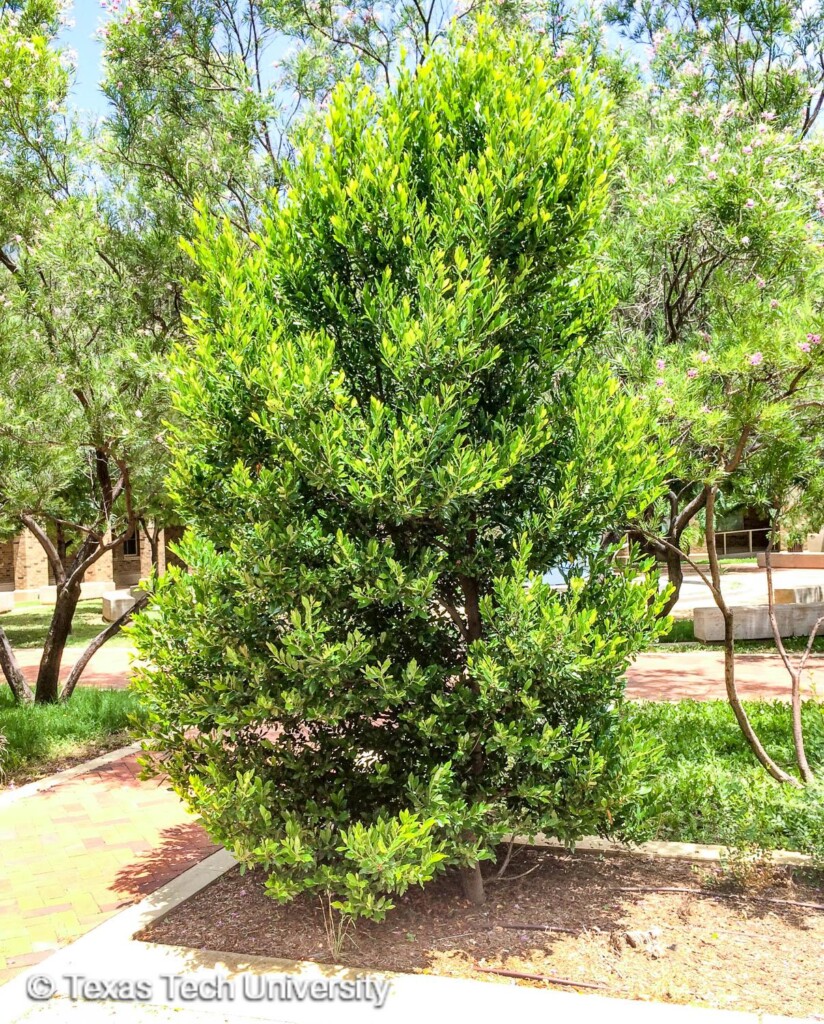
That species is the Carolina Cherry Laurel (Prunus caroliniana) – a native plant that can help stop the Privet’s proliferation and start its decline in North Texas and across the state. The Cherry Laurel’s characteristics make it not just a substitute for the Privet, but a superior choice for homeowners and commercial landscapers.
Evergreen and Adaptable
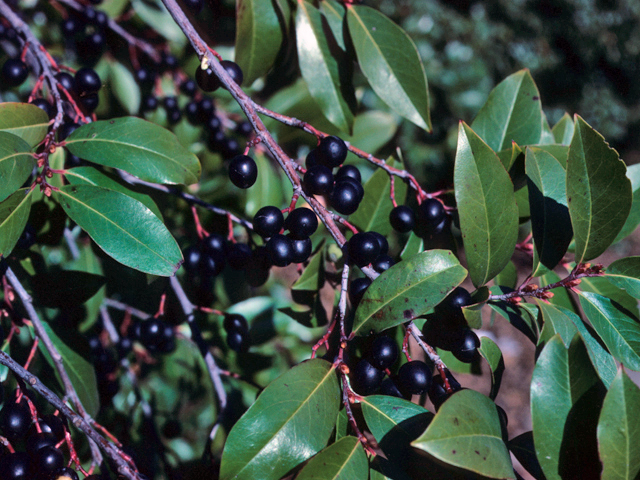
Carolina Cherry Laurel is an evergreen tree native to the Southeastern United States, ranging from the Carolinas to the eastern half of Texas, and following the Gulf Coast states. It typically grows from 20 to 35 feet high and up to 20 feet wide in a pyramidal form. With tolerance for sun to part shade, the plant is adaptable with a preference for moist soil but will tolerate some minor drought conditions.
For home landscapes, Prunus caroliniana is excellent for providing privacy with its evergreen foliage and attractive semi-glossy leaves. It is relatively fast-growing, but they are not suited to severe pruning and training into unnatural shapes. In the spring, the plant produces an abundance of fragrant white flowers.
Enables a Diverse Ecosystem not a Monoculture
The Cherry Laurel is a host plant for a variety of butterflies, including coral hairstreak, eastern tiger swallowtail, red-spotted purple, and viceroys. In addition, various birds, especially robins and cedar wax-wings, consume the dried fruit.
If you find your local nursery is not carrying Cherry Laurels, kindly ask if they can order the plant. Making them aware of your interest, even if they do not supply currently, helps to potentially spur them to stock in the future.
Lastly, obviously, this article’s title is incomplete – it is not the Carolina Cherry Laurel alone that is the Privet’s worst nightmare. It is the combination of the Cherry Laurel, dedicated plant enthusiasts willing to do the dirty work of removing Privets, and homeowners and landscapers not using the invasive and damaging Privet. The accumulation of seemingly small actions, taken together, can make an enormous impact and help make sure that the Privet’s nightmares are ones that do not end.