

How Wasps Help North Texas’ Native Plants
If you are like most people, you view wasps as an often-hostile intruder with little to offer our ecosystem. If you share this feeling, you are in good company.
Aristotle wrote that wasps were “devoid of the extraordinary features” that bees possessed and had “nothing divine about them”. However, as some recent books have helped bring to light, wasps are an under-appreciated contributor to our ecosystem and native plants.
“… a world without wasps would be just as devastating as a world without bees, beetles, or butterflies.” Seirian Sumner, author of Endless Forms – The Secret World of Wasps
Getting to Know Wasps
Typically, when we think of wasps, we associate them only with the social wasps, like hornets and paper wasps. Yet, the vast majority of wasps are solitary or parasitic. There are hundreds of thousands of wasp species worldwide, which is likely understated due to their small size, remoteness of habitat, and lack of intense study. While there are no available estimates of the number of wasp species in Texas, the estimate for the United States is about 10,000. With our state’s size and biodiversity, we likely have thousands of wasp species.
Wasps are in the same Order – Hymenoptera – as bees and ants. About 100 million years ago, wasps that lost their wings branched off to form ants. And bees branched off from wasps about 75 – 90 million years ago and went on a vegetarian diet. Seirian Sumner pointed out that “bees are simply wasps that have forgotten how to hunt”.
For a species with relatively little focus from the scientific community, three recent books hope to broaden our view and appreciation of the wasp.
- Wasps – The Astonishing Diversity of a Misunderstood Insect by Eric Eaton
- Endless Forms – The Secret World of Wasps by Seirian Sumner
- Wasps: Their Biology, Diversity, and Role as Beneficial Insects and Pollinators of Native Plants by Heather Holm
How Wasps Benefit Native Plants
Their fierce appearance and occasional aggressive behavior belie the significant benefits wasps provide our North Texas flora. Our ecosystem benefits from wasps’ pollination, insect control, seed dispersion, and protection of microorganisms.
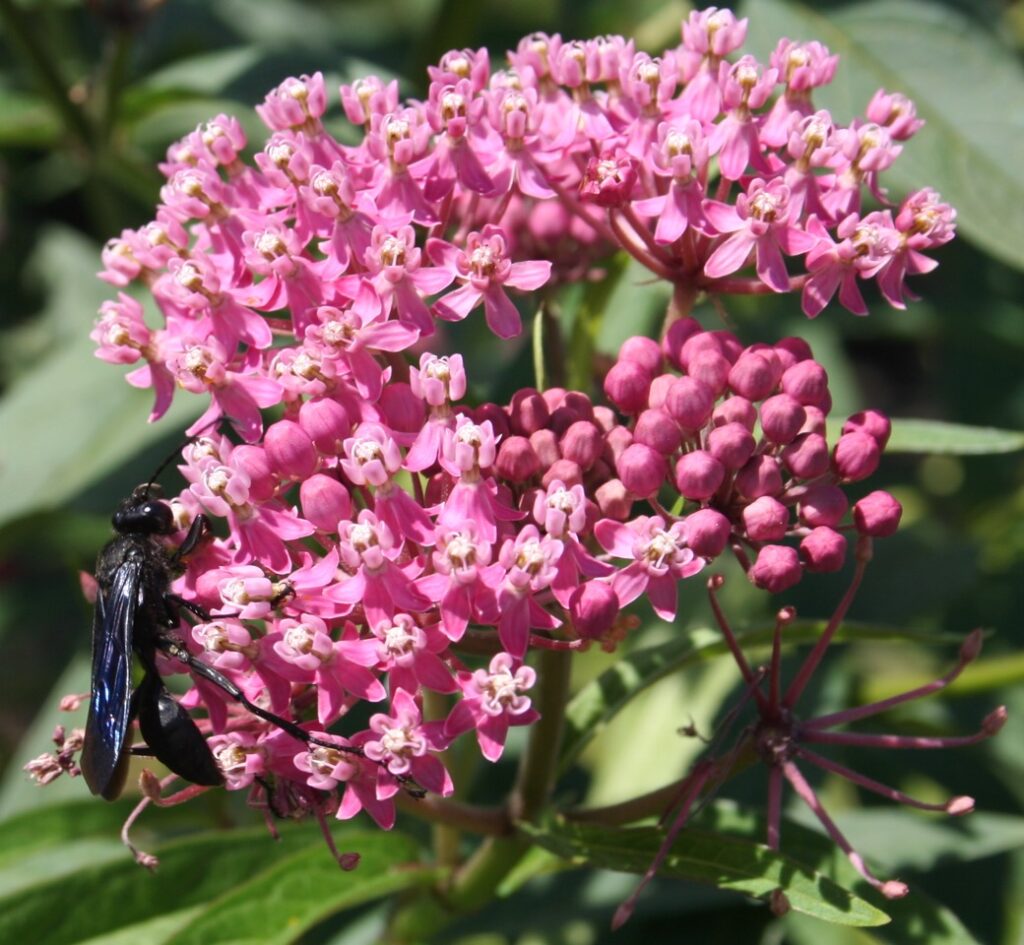
Being carnivorous, their interest in flower blossoms stems from the nectar, not the pollen. They need to supplement their meat intake with sugar and water from the nectar. Hence, they are “incidental pollinators”, moving grains of pollen as they feast on nectar and dropping the occasional grain on a stigma.
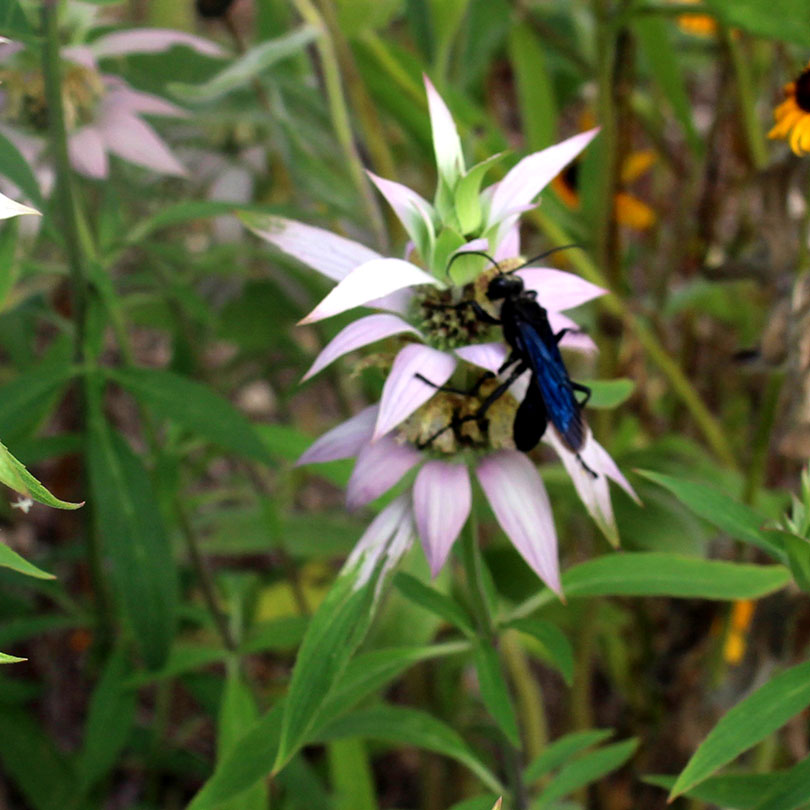
They are built for the job with their astounding aerobatics and long-lasting memories to locate pollen sources and return again and again. But with relatively short tongues, they need flowers with shallow nectaries. In North Texas, the thread-waisted wasps, paper wasps, great black wasps, and many other beneficial wasp species provide their services to a multitude of native plants, including:
- Swamp Milkweed (Asclepias incarnata)
- Common Winterberry (Ilex verticillata)
- Variety of Beebalms (Monarda spp)
- Tall Goldenrod (Solidago altissima)
- Aromatic Asters (Symphyotrichum oblongifolium)
- Golden Alexanders (Zizia aurea)
Another crucial benefit wasps provide is controlling insect populations. A sobering fact for insects, almost all have at least one wasp species as an enemy. Wasps act as a biocontrol on the population of insects such as grasshoppers, katydids, cicadas, and spiders.
Seeing Past the Stinger
We have just lightly touched on this remarkable insect that has been under-appreciated for millennia and brings a multitude of benefits to our ecosystem. A parting thought for all of us – let’s begin viewing wasps in a new light, unclouded by past biases, and with greater awareness of wasps’ importance to our North Texas native plants.
