


Coralberry: The Engineering Wonder of the Understory
For humans, Coralberry’s (Symphoricarpos orbiculatus) dense tangle of branches can appear to be unruly and uninviting. But for wildlife, that dense thicket serves many functions. This native Texas shrub’s ecological engineering abilities give inhabitants of our local ecosystems shelter, protection, and sustenance.

Winners announced for 2025 Contests
Congratulations to the winners of the 2025 contests – video, photography, and chapter newsletter.

Boerne Chapter Meeting Tuesday, November 4
Join us at our Tuesday, November 4th chapter meeting! We’re excited to welcome Jon Zeitler, retired Science and Operations Officer from the National Weather Service Forecast Office in Austin/San Antonio, as our upcoming speaker on Weather and Climate. Jon brings over three decades of experience in meteorology and climatology. His

Enjoy the NPSOT Benefits — Become a Boerne NPSOT Member!
We invite you to join the Boerne Chapter of the Native Plant Society of Texas (NPSOT – Boerne)! Being a member of our Boerne Chapter has so many benefits! As part of your membership: You will have the opportunity to participate in monthly meetings on various topics of interest to

What Happened to that Plant?
It’s time to reflect on what happened in your landscape this year as you head into prime native planting season. Arlon Motsch, an avid native plant gardener, photographer, and water conservationist will share his insights about what worked, what didn’t, and look at a few plants that need more time to tell. “Learning,” he said, “has come from many local sources like NPSOT, friends, friendly neighbors, nature centers, gardening programs, and just hands-on getting it done.”

14 on the 14th: Sun-Loving Perennials for Hot Texas Summers (and Falls)
Time for another #14onThe14th, this one is dedicated to the Sun Worshipers! Here are 14 native Texas perennials that are tough enough to handle the North Texas Sun! ☀️ These native perennials thrive in the hot, dry conditions of a North Texas summer. They are water-wise, resilient, and beautiful bloomers
Grant Proposals
Grants are available for public gardens in the counties served by Pines and Prairies – Grimes, Montgomery, and Walker. To apply for a grant, please download and complete this form and email it to pinesandprairiesnpsot@gmail.com.

Gulf Muhly Grass, the N.I.C.E. grass that dances into Fall with a sweep of deep pink
Gulf Muhly Grass, Muhlenbergia capillaris, creates a stunning perennial grass display in the fall when delicate, feathery, rose-colored spikelets (flowers) dance in autumn breezes above slender dark green leaves. Consider mixing it with agaves and yuccas to soften a xeriscape landscape or complementing a fading summer display.
San Antonio Chapter Meeting October 2025
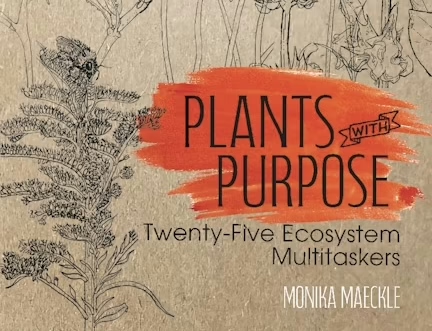
October 2025 Presentation by Monika MaecklePlants with Purpose Can you eat it? Make tea from it? Does it serve wildlife? Does it taste good or provide a health benefit? Is it low maintenance? Does it have a fun story? Does it provide a unique landscape service? Oh, and is it
Bringing Back Burns: The Reintroduction of Prescribed Fire After 18 Years
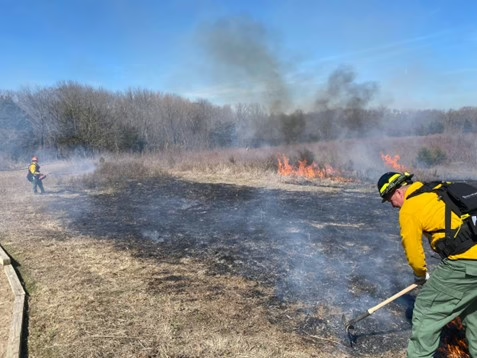
Prairie restoration is a long-term process, which requires individuals involved to consider not only the desired outcomes of next month and next year, but to integrate changes which increase the overall resilience of the habitat indefinitely.
