

Move over Hill Country wildflowers! Our Hill Country native grasses are beautiful and important, too. Gillespie County Horticulture Extension Agent Elizabeth McMahon will discuss what exactly makes a native grass “beautiful,” show examples of “beautiful” grasses in the Texas Hill Country, and talk about how native grasses are just as important as wildflowers. McMahon will speak at the May 27 meeting of the Fredericksburg chapter of the Native Plant Society of Texas (NPSOT) about the native grasses in our area. A grass identification activity is included in the evening.
“Our native grasses can help reduce water use in town or country landscapes,” said McMahon. “By adding one or more of our ‘Big 4’ Texas grasses, you’ll add variety to your yard and help water seep into the aquifer into the future.”
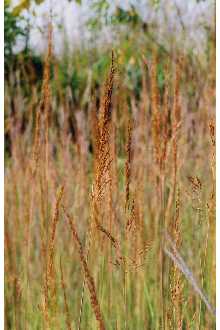
The “Big 4” Texas grasses are: little bluestem (Schizachyrium scoparium), big bluestem (Andropogon geraridii), yellow Indiangrass (Sorghastrum nutans), and switchgrass (Panicum virgatum).
McMahon has served as the Gillespie County Horticulture Extension Agent since July 2016, and leads the home and commercial horticulture programs, as well as coaches the local 4-H Range & plant identification team. She graduated from Texas A&M University in 2010 with a double major in Rangeland Ecology & Management and Horticulture, and was a native plant nursery intern at the Grand Canyon National Park the following year. She received her Master of Science from Oklahoma State University. She worked for AgriLife Extension as a research assistant at the Viticulture & Fruit Lab and served as Brazoria County’s Horticulture Extension Agent before coming to Gillespie County. McMahon grew up in Harper, Texas, where she currently lives, and enjoys cooking and gardening in her spare time.
NPSOT Fredericksburg holds its monthly meetings on the 4th Tuesday of the month at St. Joseph’s Halle. There is a social time with snacks at 6:30 p.m. and the meeting starts at 7 p.m. Meetings are free and open to the public.
