

“The recent Crabapple Fire brought attention to the need for defensible space around our homes,” said Jonathan Watt, president of NPSOT Fredericksburg. “We need to take a look with fresh eyes and new information about how to be better prepared for the next wildfire or debris burn that gets out of control. Our Texas native plants can help us prepare and conserve water at the same time.”
Dayziah Petruska, Wildland Urban Interface Coordinator for Texas A&M Forest Service Region 6 (which includes Gillespie County) presents the basics of fire behavior at the July 22 meeting of the Fredericksburg Chapter. Property owners can prepare for and decrease the risk of structure loss in wildfire situations. Dayziah details home hardening strategies and fire-resistant landscaping throughout.
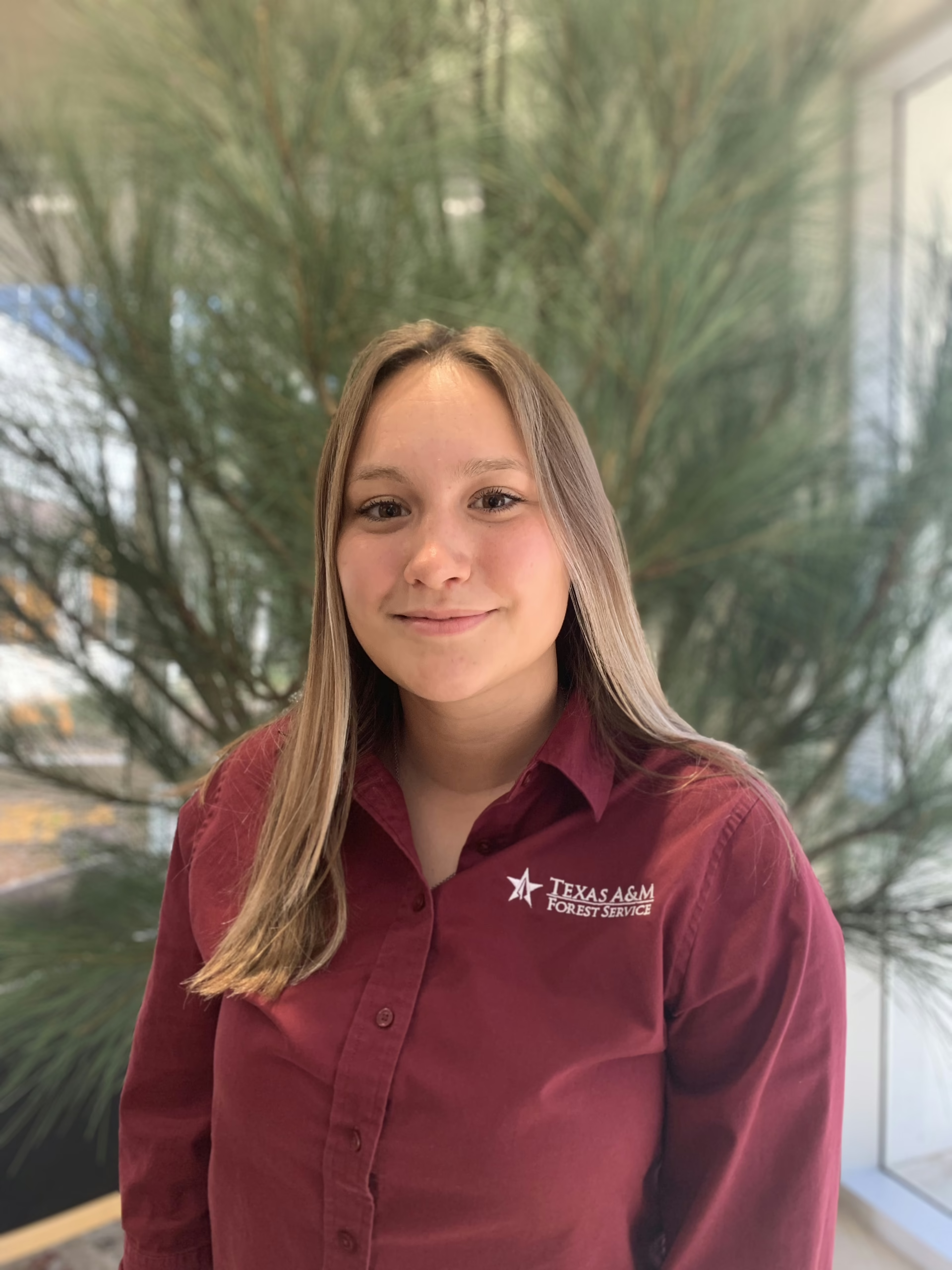 “I’m very interested in the way that we can pair traditional and modern land management techniques to improve natural landscapes while concurrently reducing wildfire risk,” said Petruska. “We all need to think about how the landscaping around our homes can help protect the places where we live.”
Petruska started with Texas A&M Forest Service in 2020 as an Urban and Community Forester out of College Station. That year, she graduated from Texas A&M University with degrees in both Forestry and Ecological Restoration. During college, she participated in research using fire to control invasive woody species in West Texas. She is actively part of Texas’s Initial Attack Hand Crew and serves as a Public Information Officer during wildfire incidents.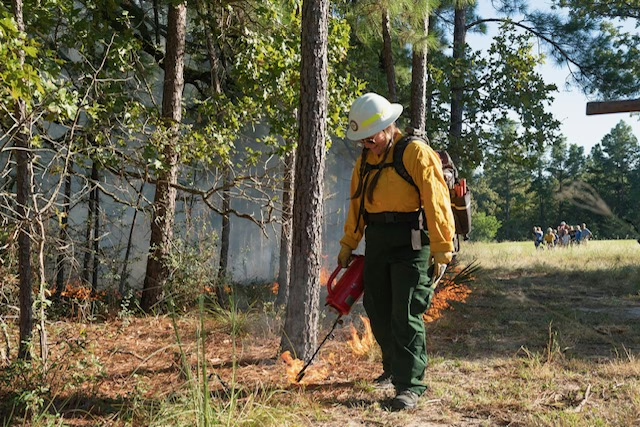
The public is invited to attend the free, in person presentation or via online streaming (https://www.youtube.com/@fredericksburgtexasnativeg4884).
More information is online at Facebook(@fbgtxnpsot), and
Instagram (@npsot_fredericksburg_chapter)
