Texas Area Plant Lists

Are you looking for plant lists for your home, property, school, or other location? The best way to find plants native to your area is using the Native Plant Database. The following lists have been curated for certain areas in Texas. If your area is not included below, or if you want to further filter the lists, then the Native Plant Database is the best option.

Find your Ecoregion

Don’t know which ecoregion your home or property is in? Use our interactive Texas ecoregion map to find your ecoregion and see  plant lists for each ecoregion.

Plant Lists by Ecoregion
  • Sort by

Cactus & Succulent
Groundcover, Herbaceous

Plant Lists Instructions

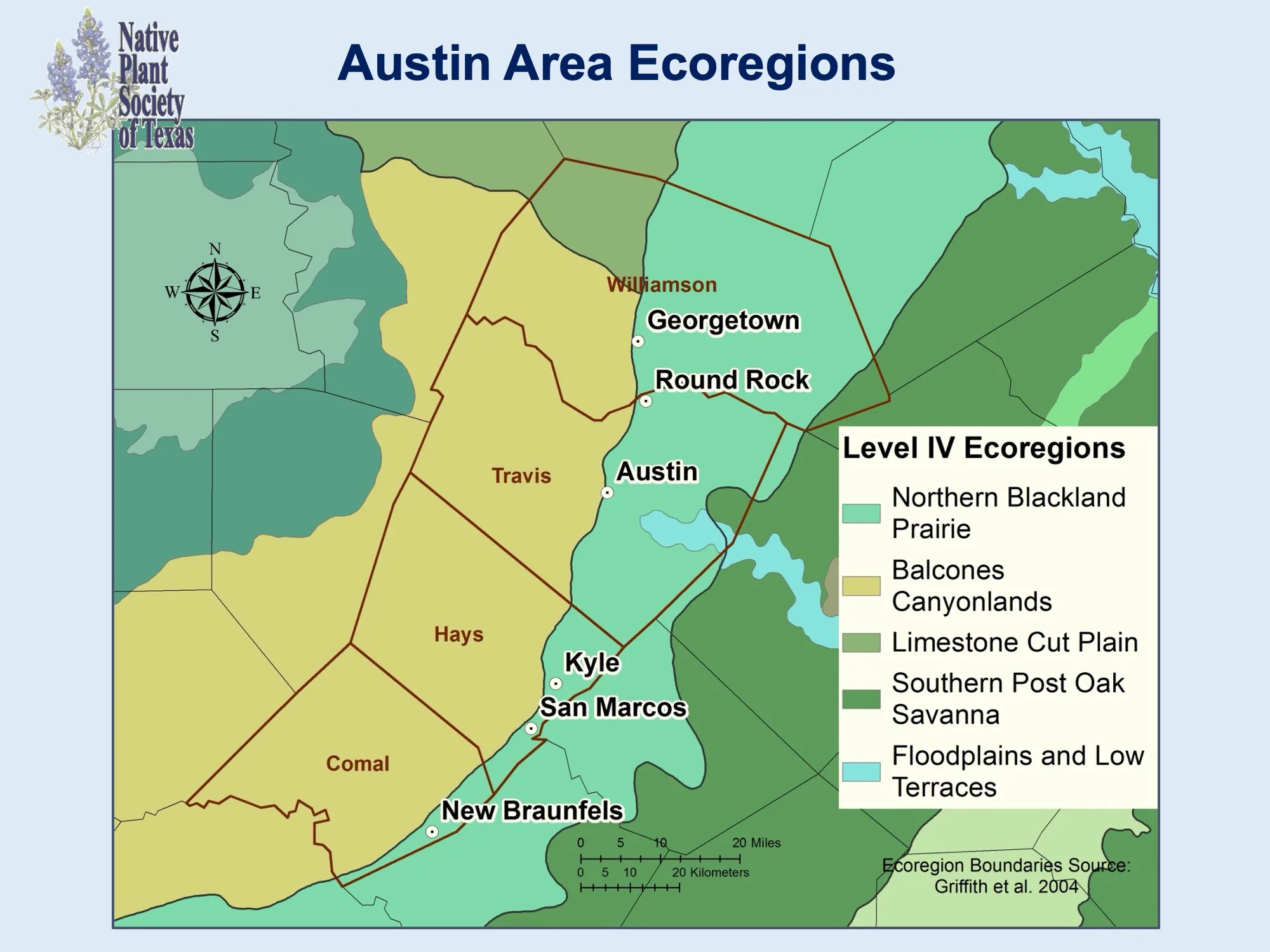
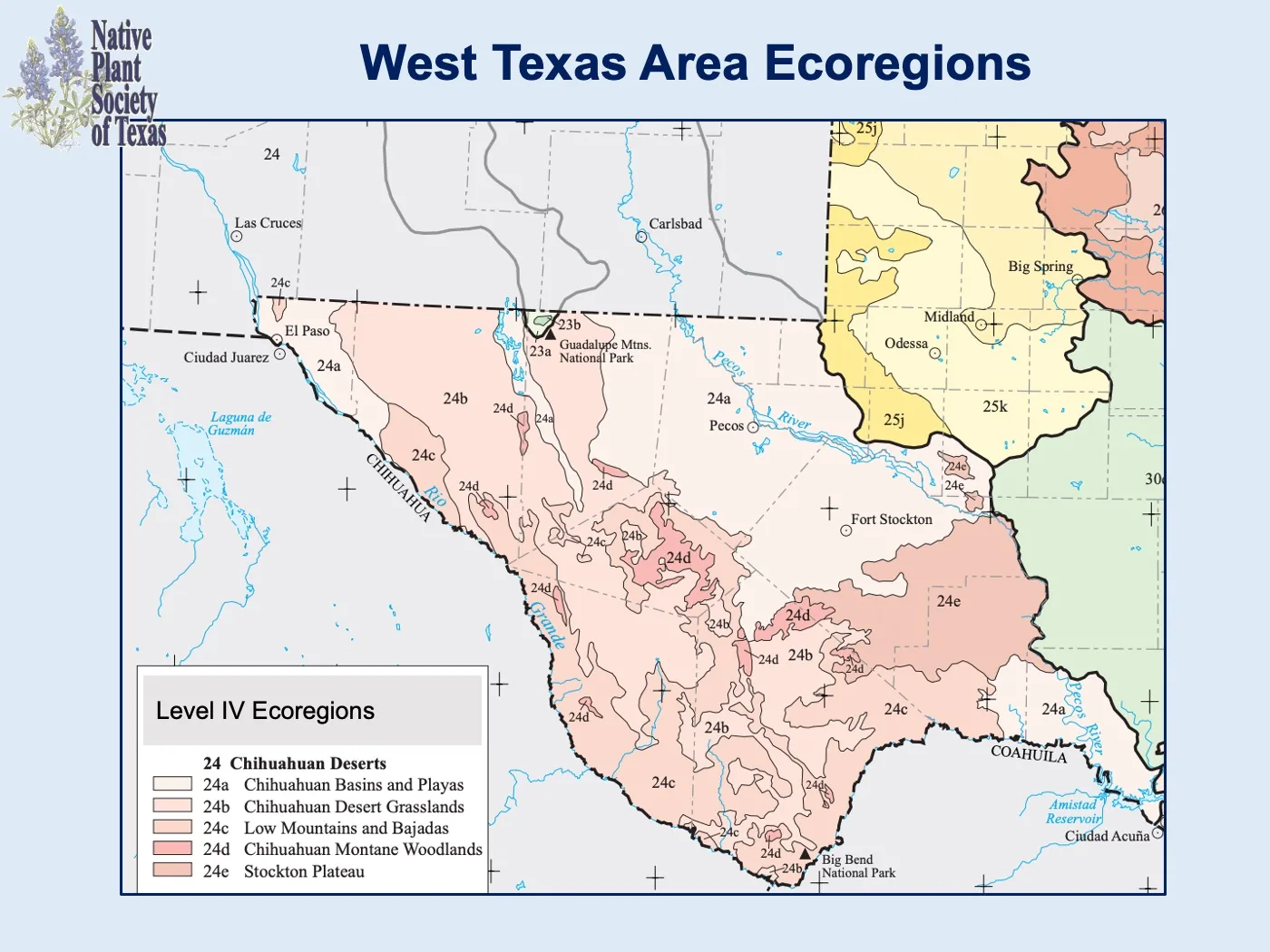
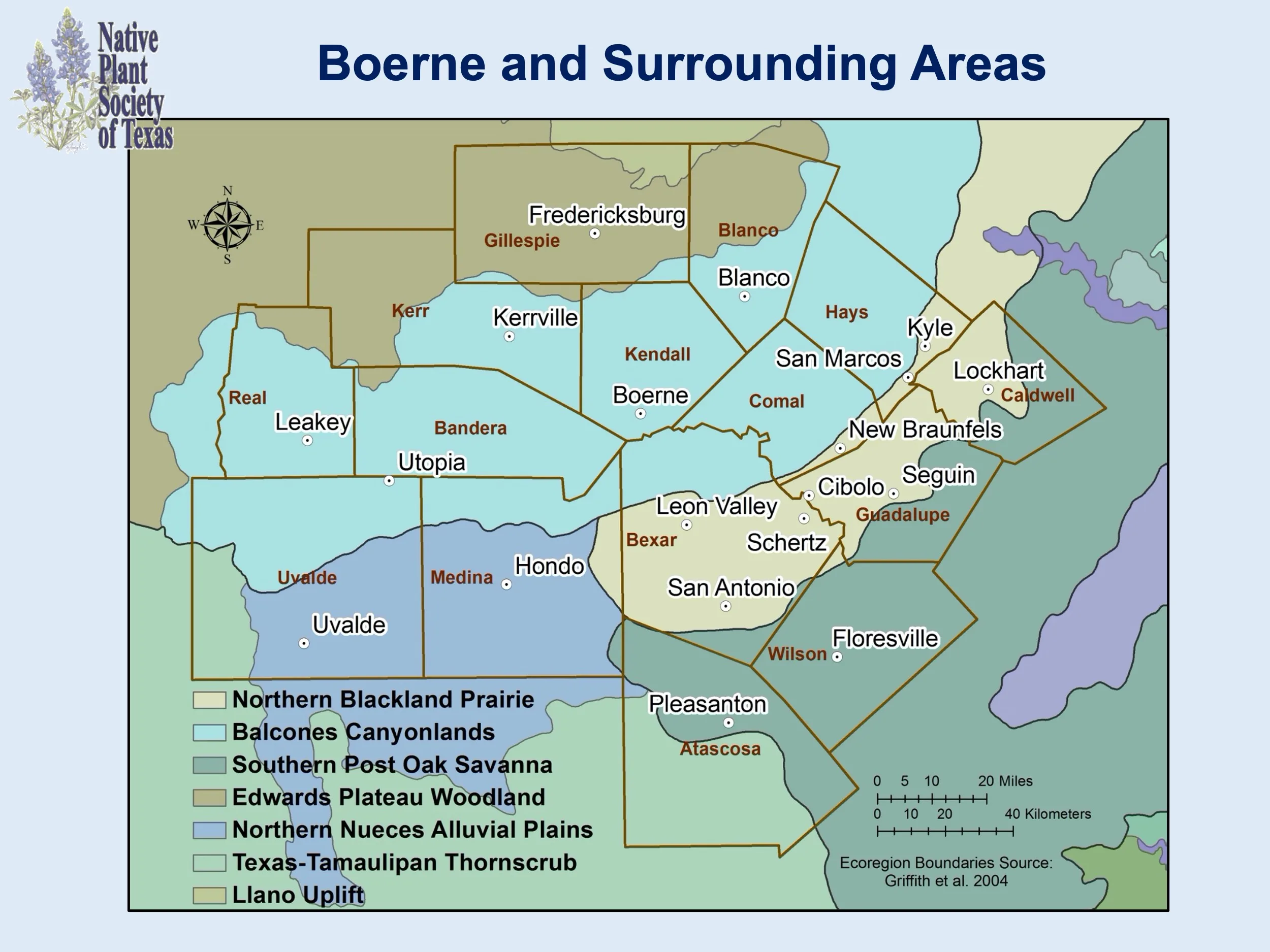
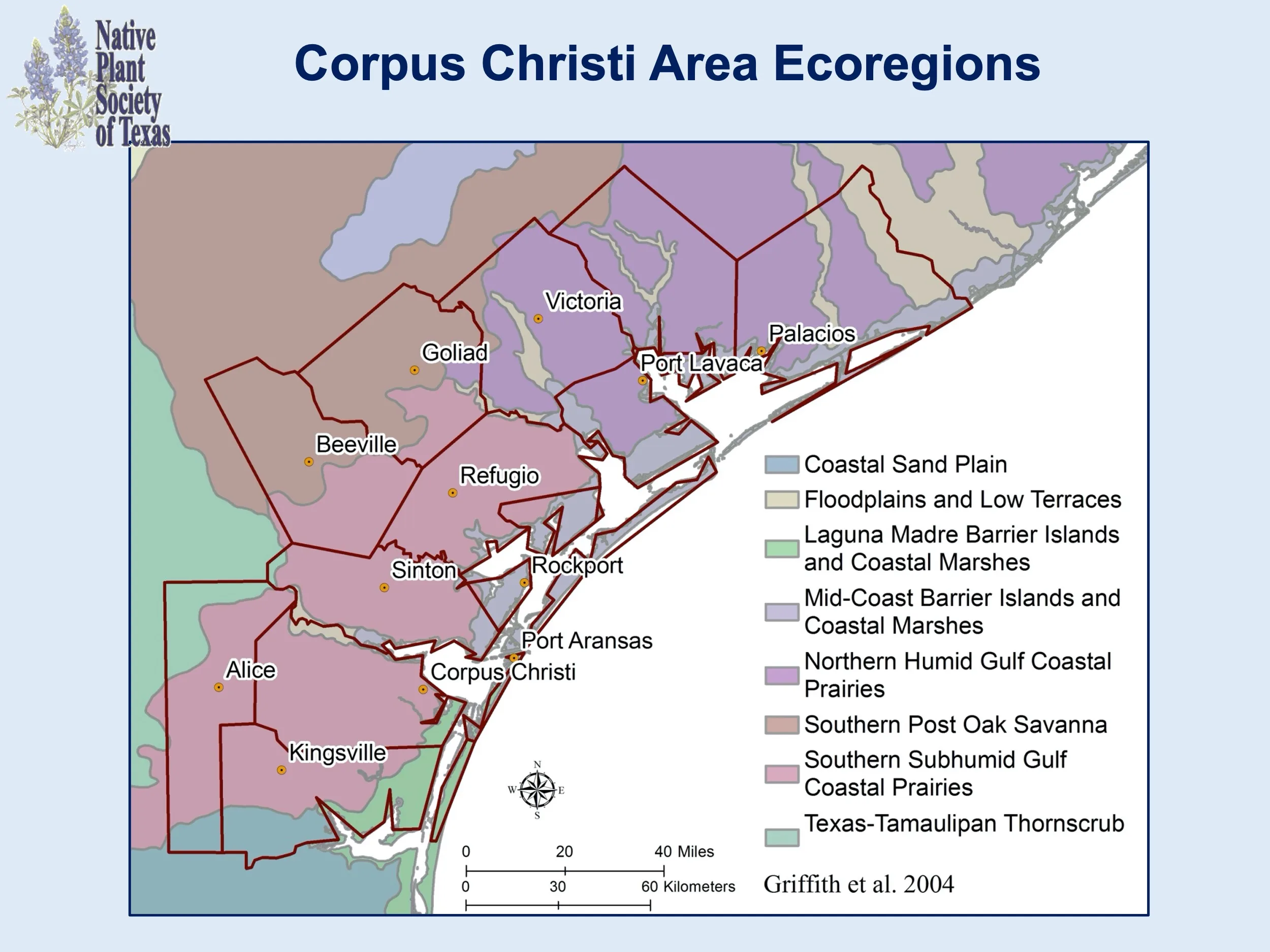
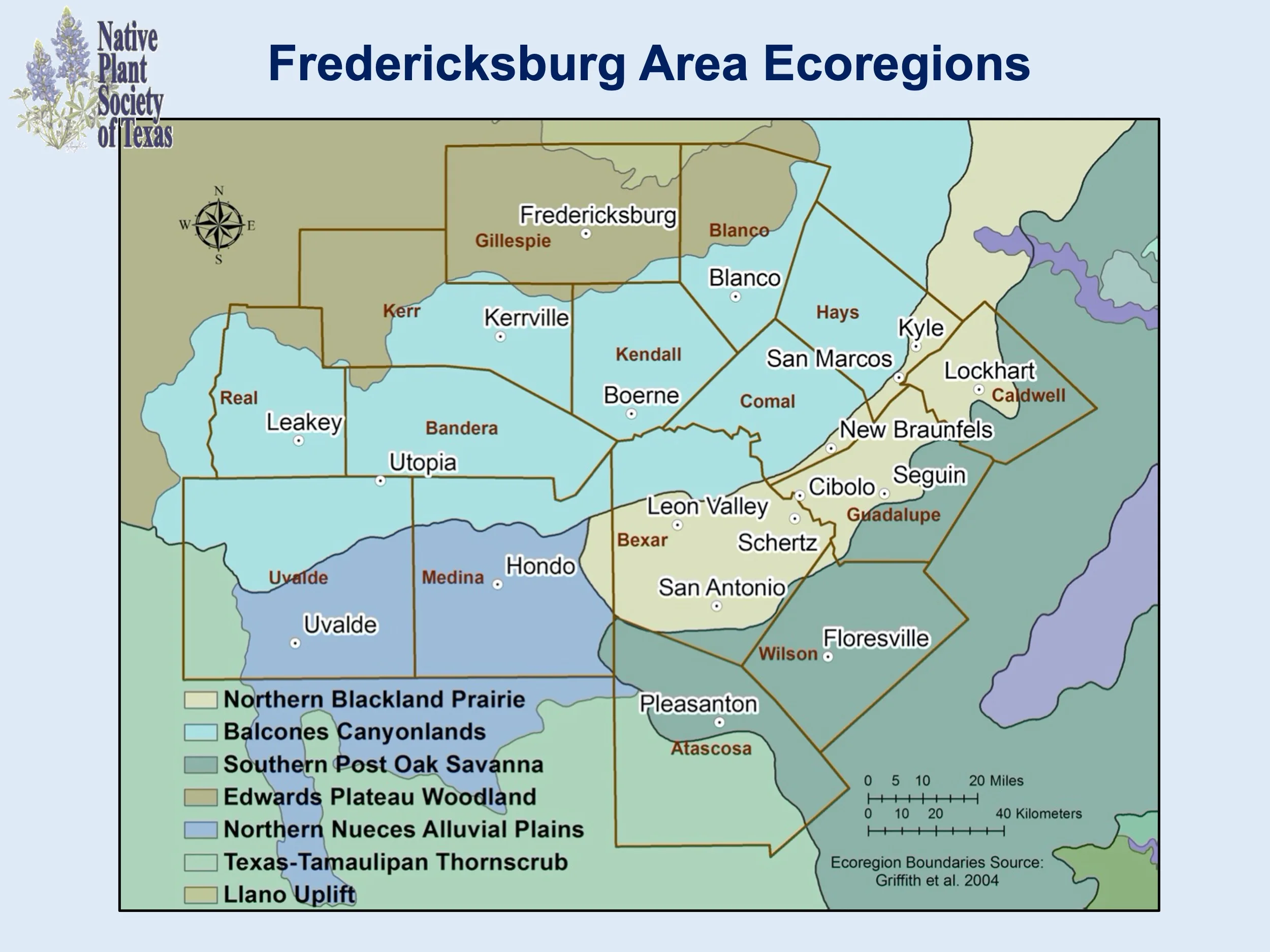
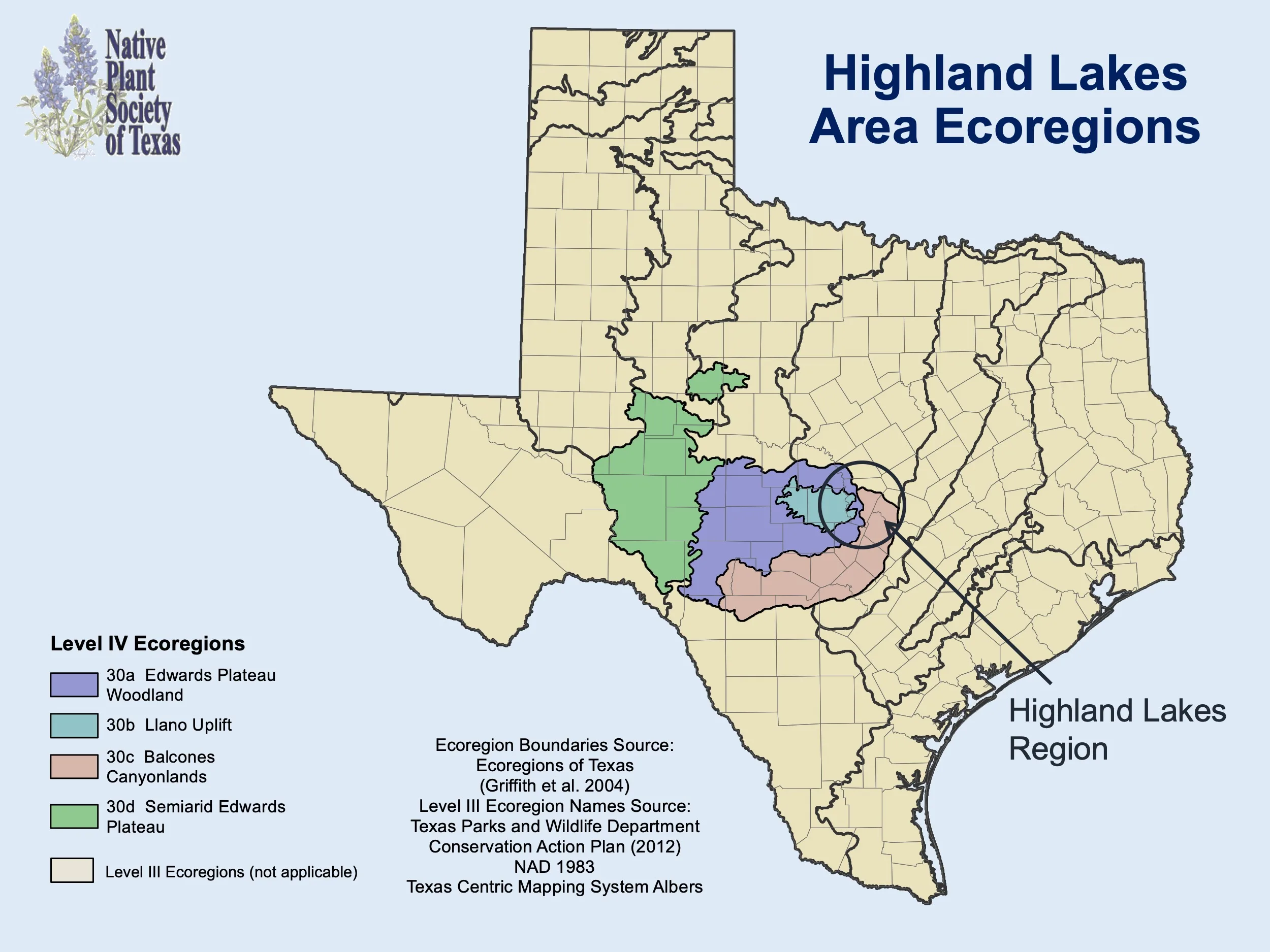
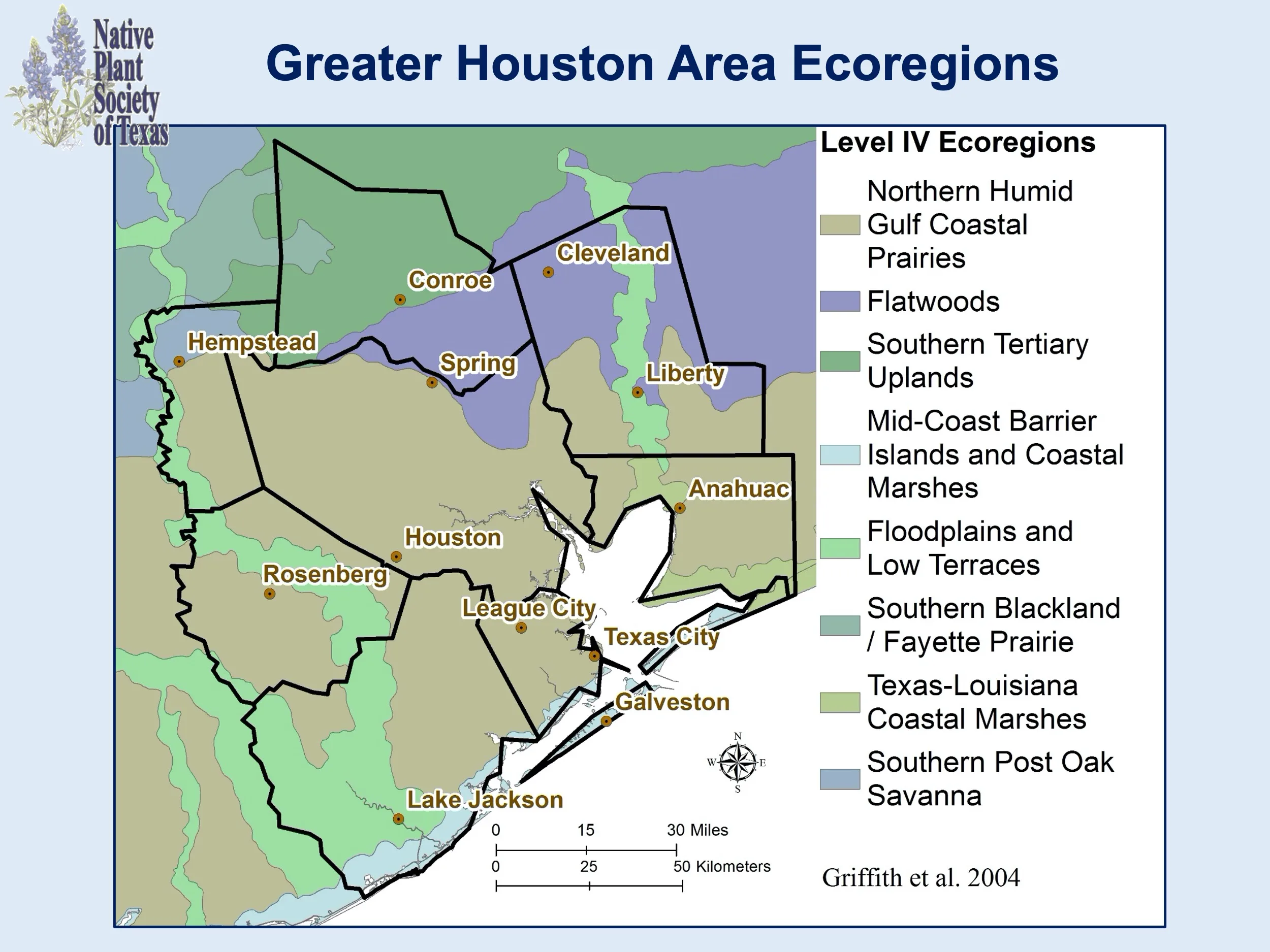
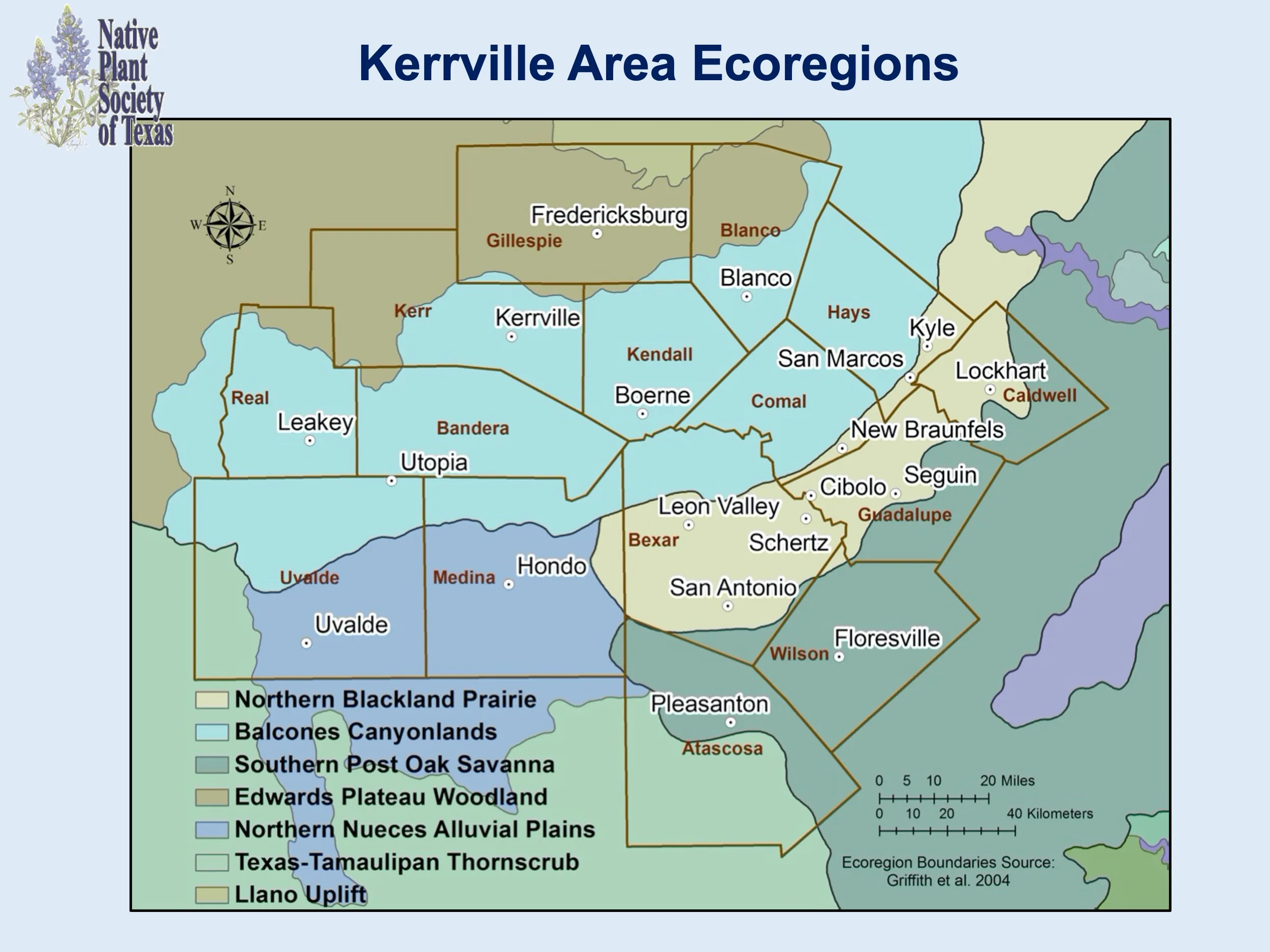
To get a list of native landscape plants that will work in a certain location, first find that location on one of the area maps. Then download the list corresponding to that area.

Try our interactive plant list browser which displays lists of plants for every NLCP class NLCP Plant List page. You can also download the lists.

To best use the NLCP PDF lists pay close attention to the “native region” column on the list. The abbreviations in this column are defined in the footnotes on each list and are correlated to the Level IV eco-regions shown on the maps. In some cases your location may appear on more than one map. In that event you may use any of the lists associated with your area. Lists were created for use in classes for particular events and are not meant to be exhaustive lists of suitable plants for a location.

Area MapNLCP PDF Plant List
Austin AreaAustin Area Plant List
Big Bend AreaBig Bend Gardeners Guide
Boerne AreaBoerne Area Plant List
Corpus Christi AreaSouth TX Area Area Plant List
Fredericksburg AreaFredericksburg Area Plant List
Highland Lakes AreaHighland Lakes Area Plant List
Houston AreaGreater Houston Area Plant List
Kerrville AreaKerrville Area Plant List
Conroe Area (Montgomery County)
Greater Houston Area Plant List
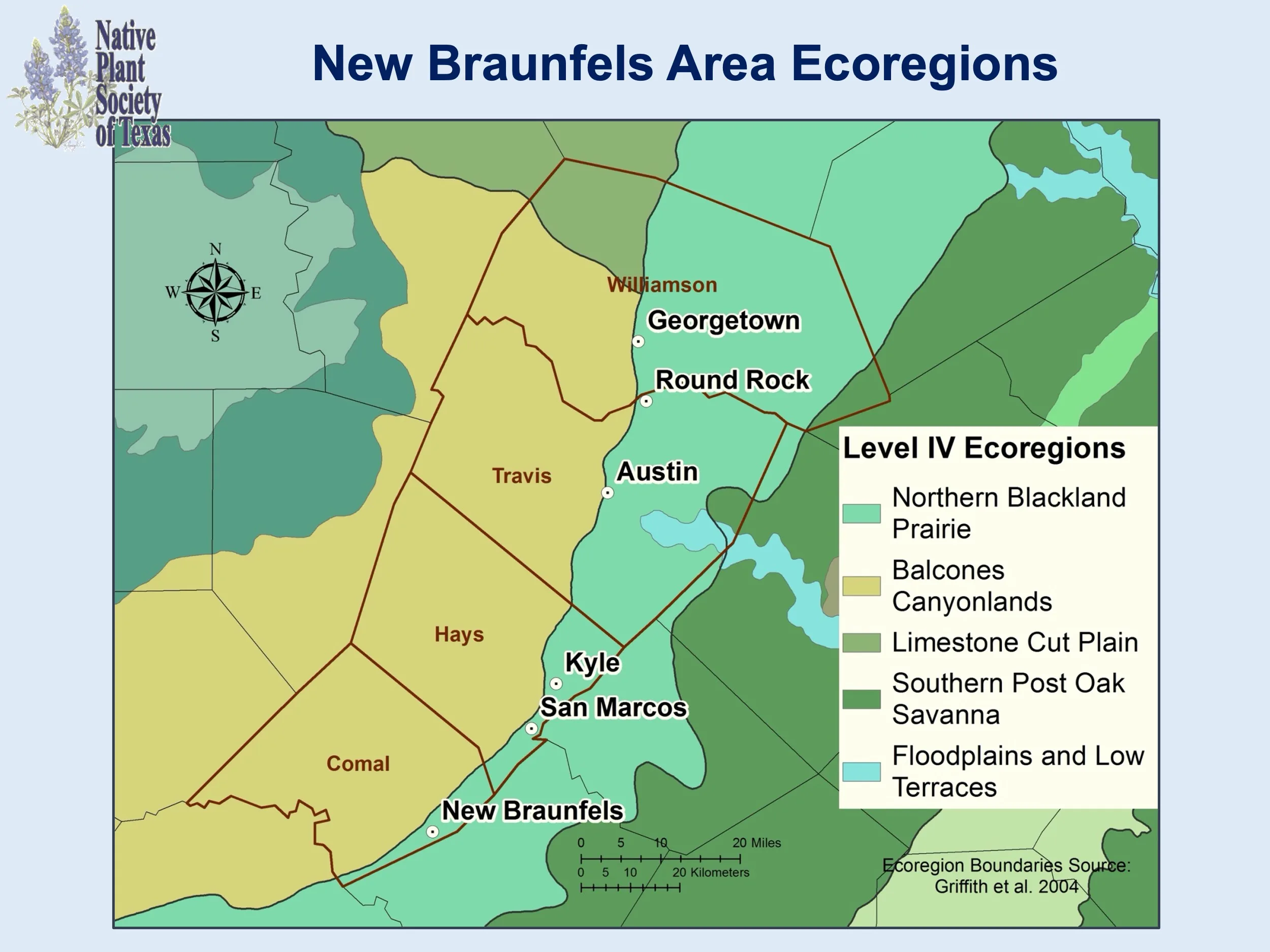
New Braunfels Area
New Braunfels Area Plant List
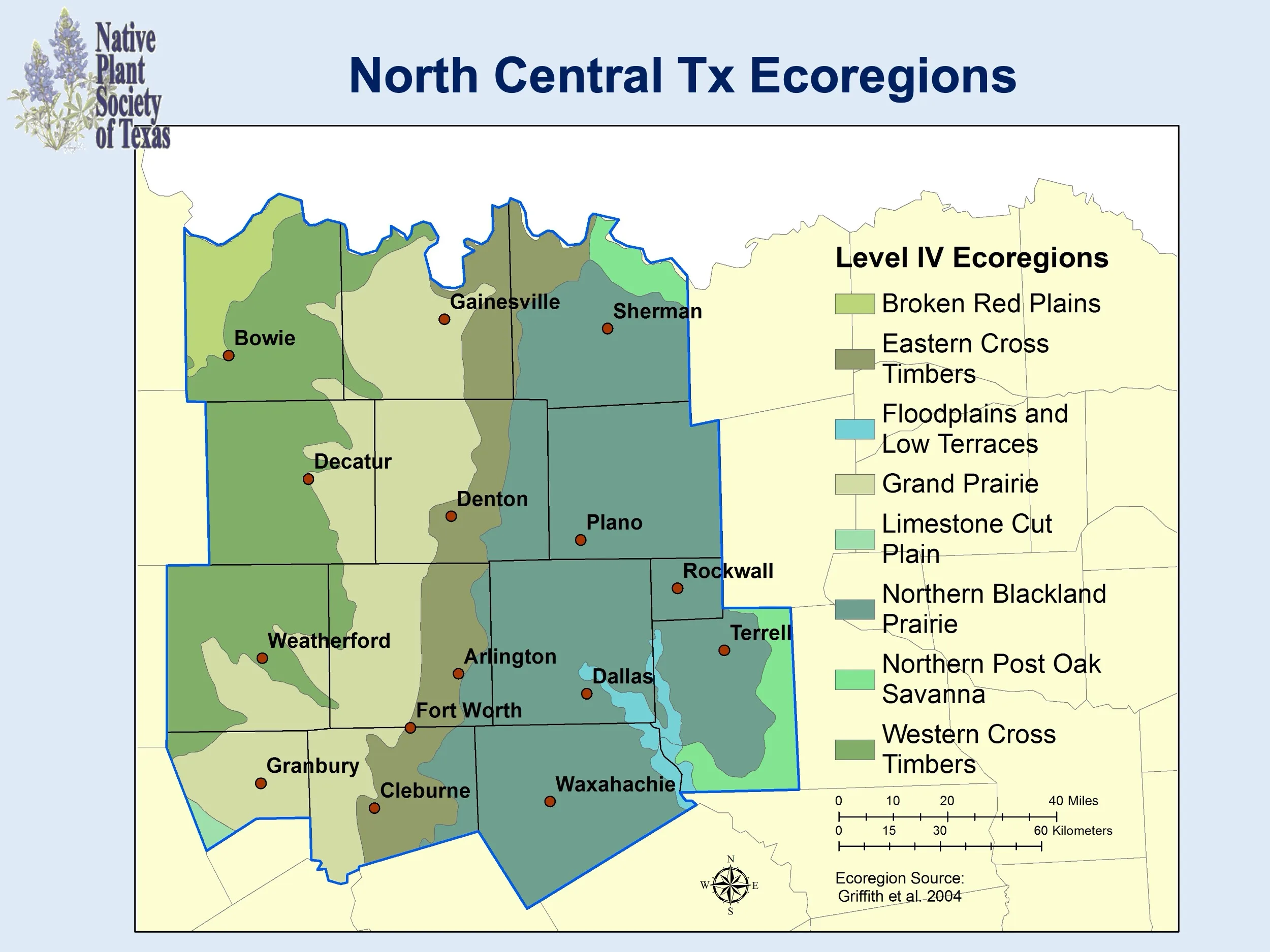
North Central Texas AreaNorth Central TX Area Plant List
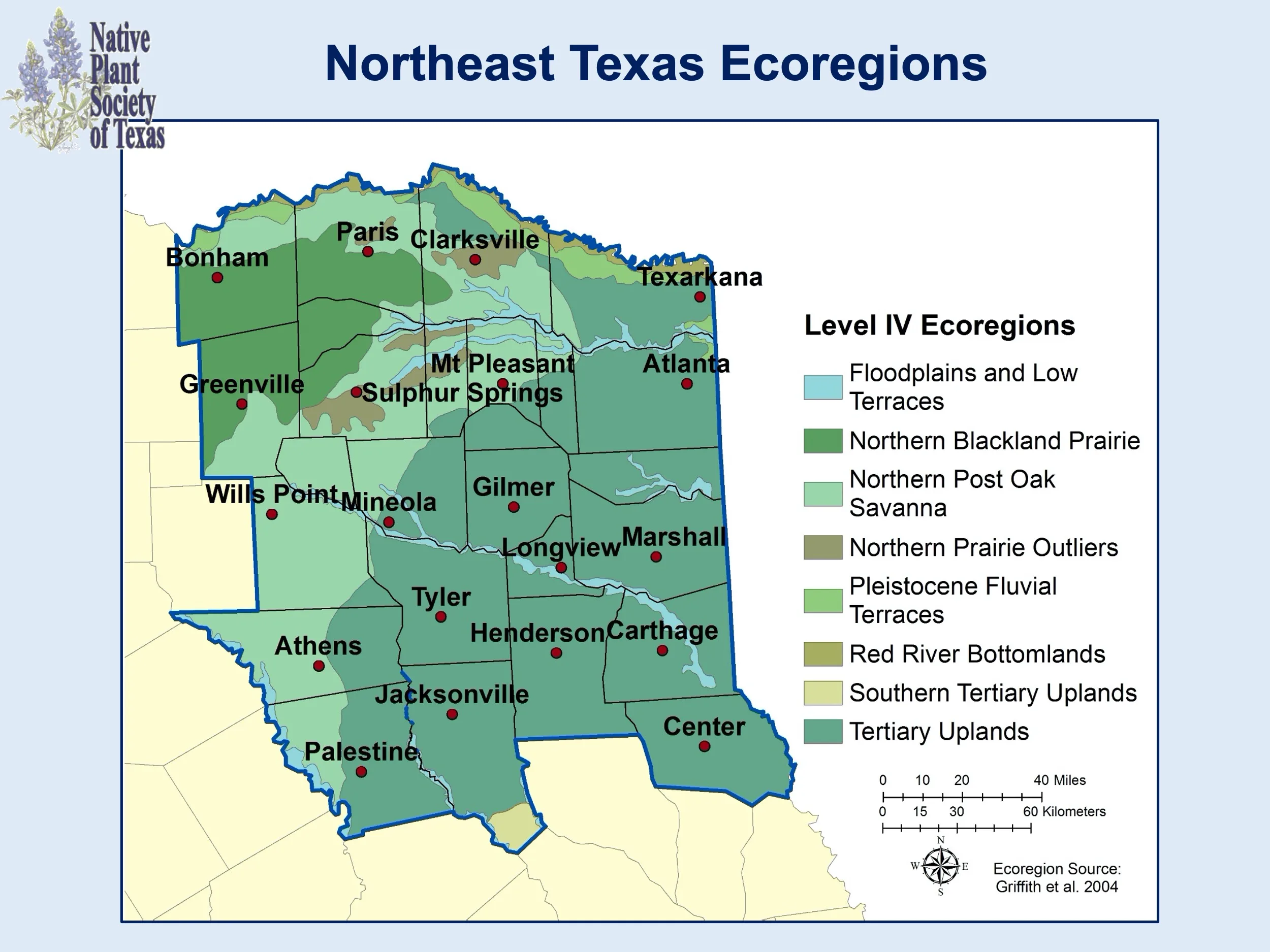
Northeast Texas AreaNortheast TX Area Plant List
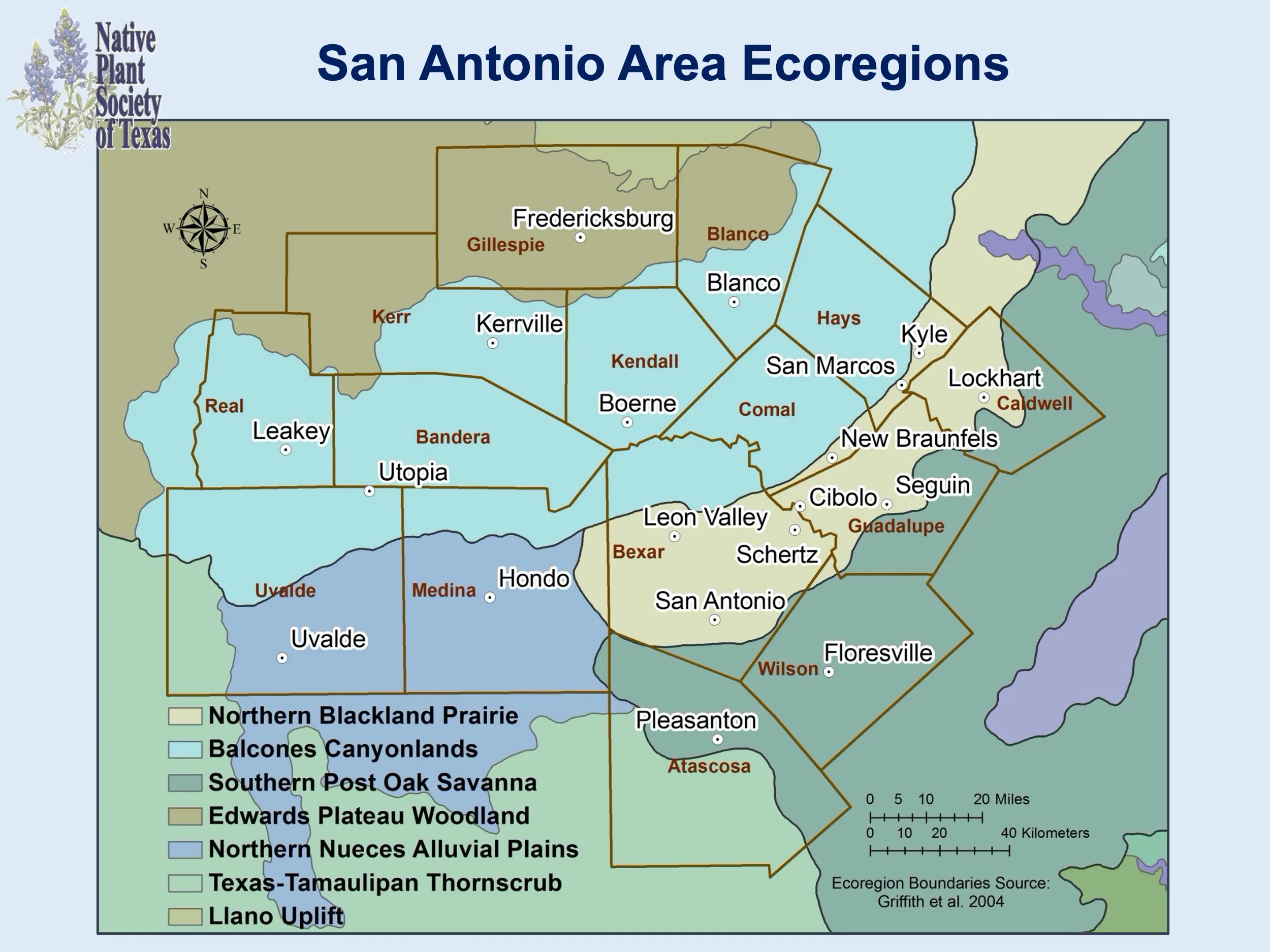
San Antonio AreaSan Antonio Area Plant List
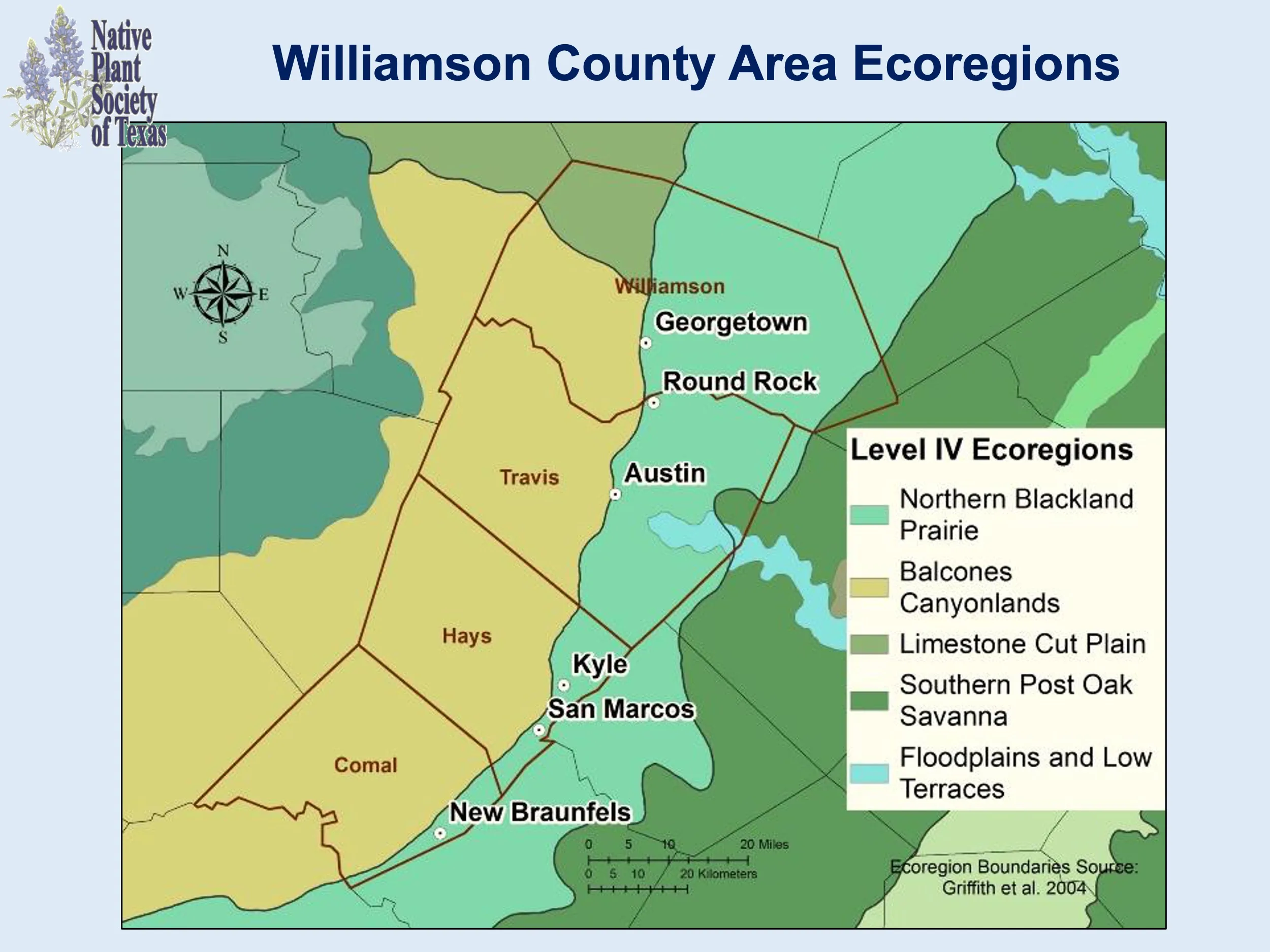
Williamson County AreaWilliamson County Area Plant List

About the Region

Fall Symposium 2025 Logo - Teach for the Future

Salado, the location of our Fall 2025 Symposium, lies at the intersection of two ecoregions: the Edwards Plateau (Limestone Cut Plain) and Blackland Prairie (Northern Blackland Prairie).

The Edwards Plateau area is also called the Hill Country; however, this general term covers a much larger area extending farther north. Spring-fed creeks are found throughout the region; deep limestone canyons, rivers, and lakes (reservoirs) are common. Ashe juniper is perhaps the most common woody species found throughout the region. Additional woody species include various species of oak, with live oak (Quercus fusiformis) being the most common. Sycamores (Platanus occidentalis) and bald cypress (Taxodium distichum) border waterways. This area is well known for its spring wildflower displays, though they may be viewed in spring, late summer, and fall, as well. According to Texas Parks and Wildlife, average annual rainfall in the Edwards Plateau ranges from 15 to 34 inches.

The Blackland Prairie extends from the Red River south to San Antonio, bordered on the west by the Edwards Plateau and the Cross Timbers, and on the east by the Post Oak Savannah. Annual rainfall averages 30 to 40 inches, with higher averages to the east. This region is dominated by prairie species. The most common grass species include little bluestem (Schizachyrium scoparium) and Indian grass (Sorghastrum nutans) in the uplands and switchgrass (Panicum virgatum) in the riparian areas and drainages. Common herbaceous flowering plants include salvias, penstemons, and silphiums. This area has suffered greatly from overgrazing and agricultural use. Few intact areas remain, though many of the plants can be found along county roadsides throughout the region.

Our fall Symposium host chapter, the Tonkawa Chapter, includes both of these ecoregions.

Source: Wildflowers of Texas by Michael Eason